Compare condition, not assumptions
Review the entry condition report and agent checklist, then photograph current marks, worn pile, chips, scuffs and damage. High traffic can create removable soil, but it can also flatten carpet, wear coatings or expose defects that cleaning cannot reverse.
Use material-specific methods
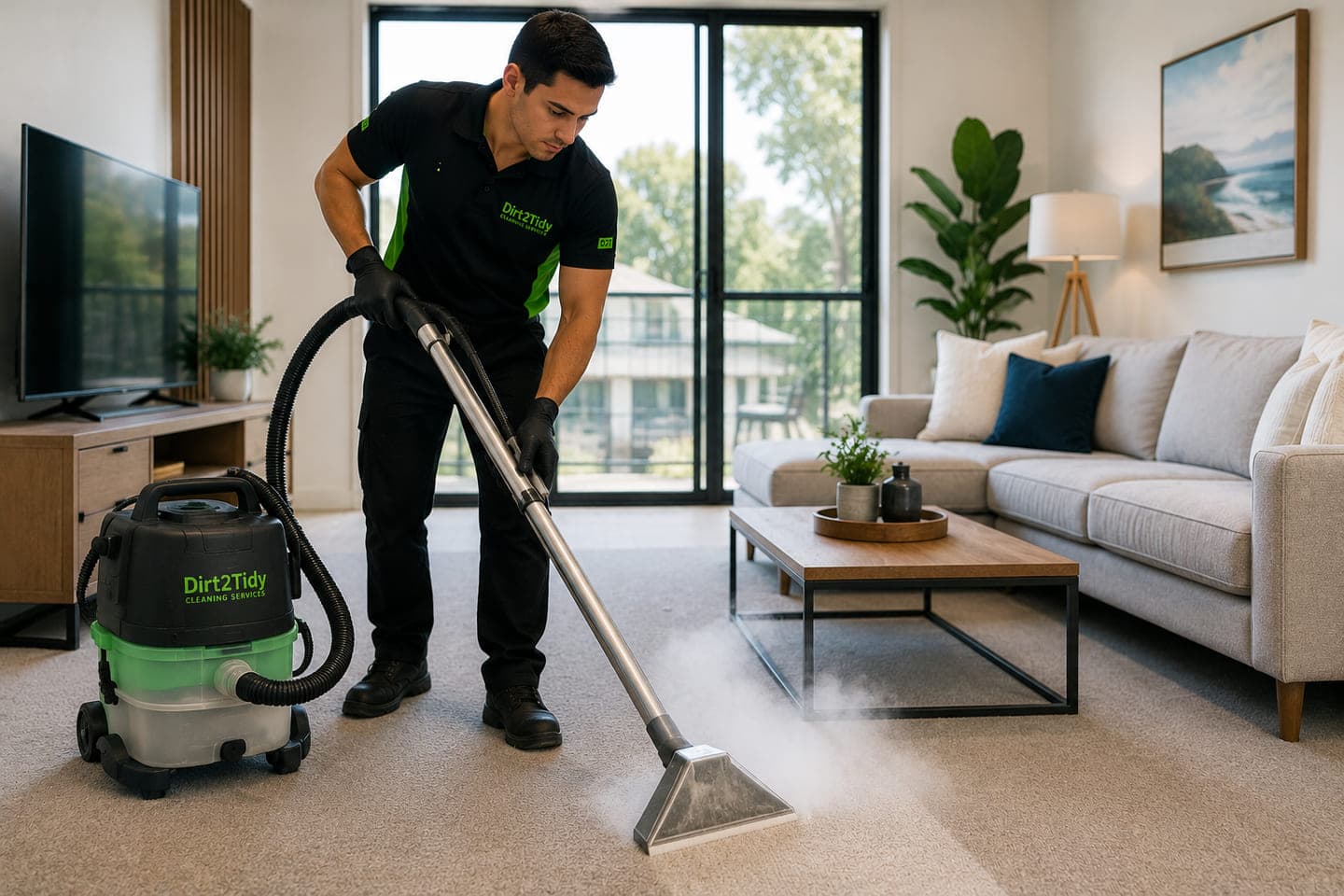
Vacuum and mop only with methods approved for the floor, and check carpet fibre, backing, dye and care instructions before wet work. Test walls, paint, timber, stone, vinyl and carpet in discreet areas. Avoid abrasive scrubbing, excess water and chemicals chosen by guesswork.
Manage access and drying
Clear belongings, arrange keys and utilities, keep pets and visitors away and allow suitable drying before inspection. Do not block exits, drag heavy furniture or use unsafe ladders. List carpet, upholstery, stairs, windows and appliances separately when they need different equipment or time.
Keep handover expectations realistic
Cleaning can address agreed soil and residue, not worn finishes, structural damage, stains that have changed the material or a bond outcome. Dirt2Tidy can quote an end-of-lease scope; repairs, restoration, pests, mould-like growth and water damage need separate providers.