Identify the fabric and condition
Read the furniture care label and note fibre, coating, backing, loose seams, fading, prior treatments and stains. If the label is missing or the item is antique, delicate or damaged, seek specialist advice before using water, heat or solvent.
Understand common method differences
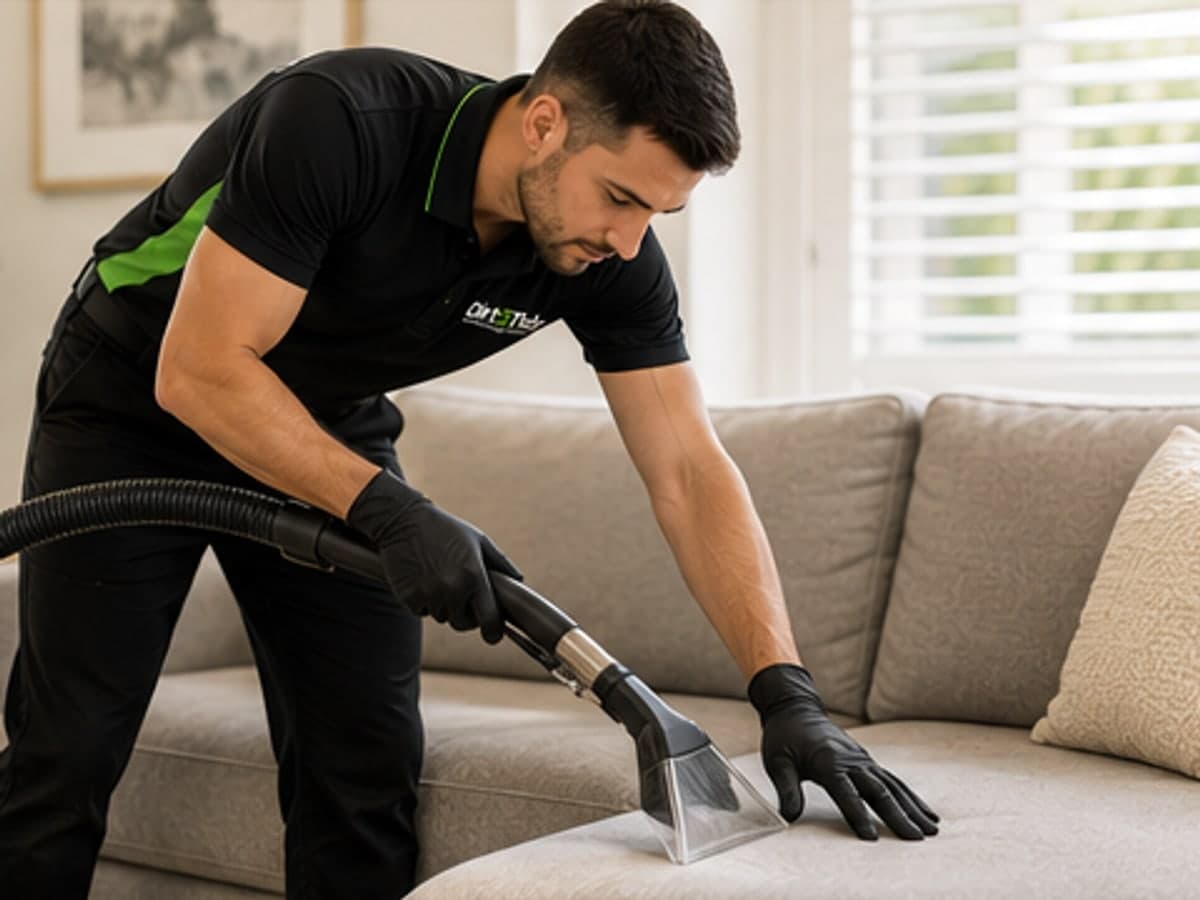
Dry methods, low-moisture processes and hot-water extraction each have different uses and limits. Suitability depends on the care instructions, construction and condition. Do not assume steam disinfects, restores colour or removes every stain.
Prepare the furniture safely
Vacuum loose soil with an attachment suitable for the material. Blot spills rather than rubbing or soaking. Keep pets and children away from cleaning products, and test a product only where the manufacturer permits it.
Compare a professional service
Ask what furniture parts are included, which method and products are planned, drying time, access needs, exclusions and likely limits. Cleaning does not repair broken frames, restore worn fibres, remove all odours or guarantee a particular result.