Identify the upholstery and check its care code
Look for the furniture maker’s care label or instructions and identify the fabric where possible. Codes and cleaning recommendations vary; do not infer that a water-based product, solvent or extraction machine is suitable without checking the specific material.
If the label is missing, the fabric is delicate or the item is valuable, seek specialist advice before applying anything.
Match the product label to the material and stain
Read the cleaner’s directions for approved fabrics, dilution, application, contact time, ventilation and removal. Do not assume that an all-purpose, eco-labelled or pet-labelled product is compatible with every upholstery finish or stain. Avoid unverified stain-removal promises and do not use carpet or appliance products on furniture unless both sets of instructions allow it.
Test carefully and avoid mixing products
Where the furniture maker and product label permit, test in a hidden area and allow it to dry before treating a visible section. Follow the exact amount and blotting or rinsing method; excess moisture can affect fabric, filling and backing.
Use one product at a time and never combine cleaners or add an unapproved fragrance, protectant or household ingredient.
Compare tools and consider a specialist
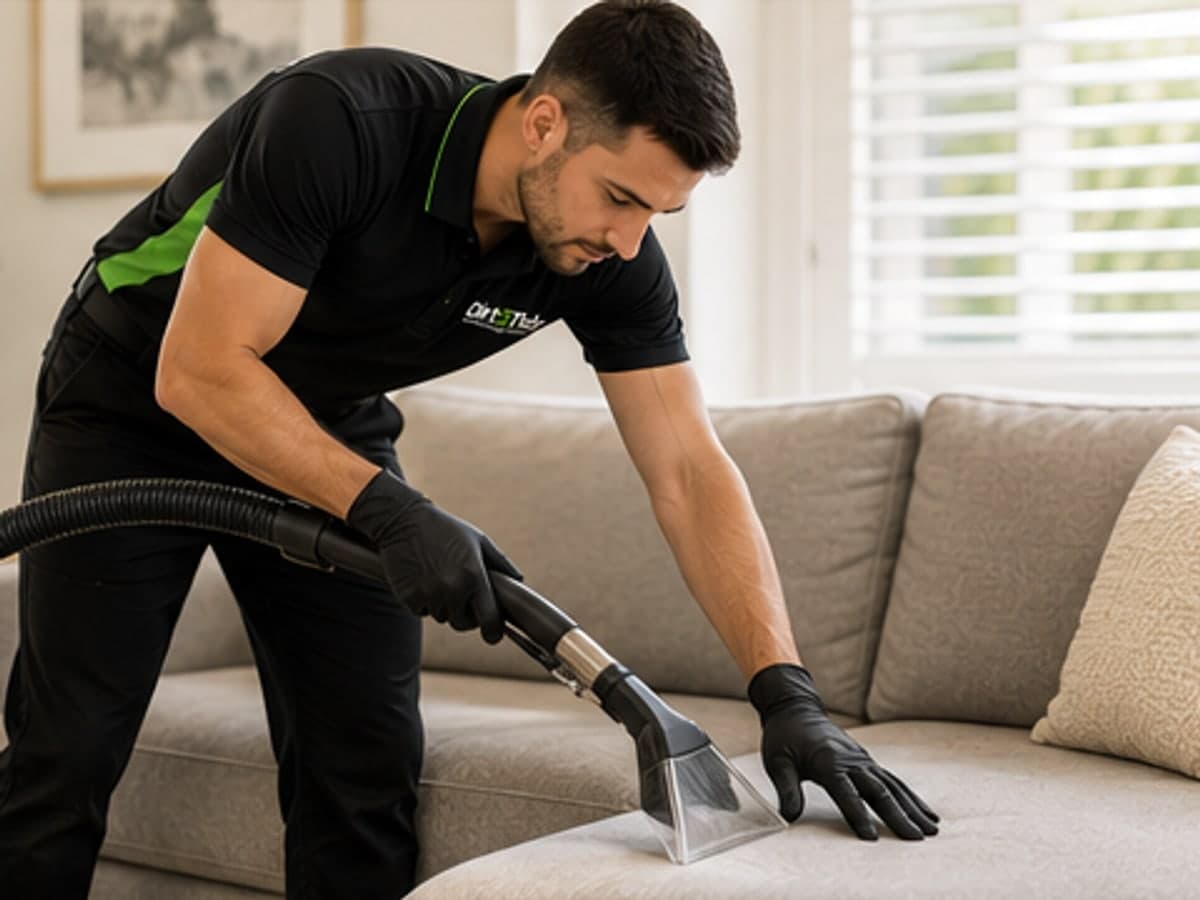
Compare a product or machine by fabric compatibility, control of moisture, extraction, attachments, care instructions and the task—not by an unsupported ranking. Some upholstery should not be wet-cleaned. Set-in stains, dye transfer, delicate fibres and large items may need a qualified upholstery cleaner with experience of that material.