How to Remove Tough Grease Stains in Your Kitchen This Holiday Season

Discuss effective ways to remove tough grease stains from your kitchen this holiday season. Learn DIY tips and benefits of professional cleaning services

Deep oven cleaning with professional equipment in an Australian kitchen

Why Grease Stains Are So Persistent – Remove Tough Grease Stains When to Call in the Professionals: The holiday season means extra cooking, baking, and entertaining, which also means your kitchen will likely face a heavy workload.

One common byproduct of all this festive cooking is stubborn grease stains that can cling to surfaces, appliances, and even walls.

Tackling these tough stains can be a hassle, but with a few effective tips—and the help of professional cleaning services like Dirt2Tidy —you can keep your kitchen sparkling clean and ready for the holiday season. Before diving into the cleaning tips, it helps to understand why grease is such a formidable opponent.

Grease splatters from cooking often cool and harden, bonding with kitchen surfaces and forming a sticky, stubborn residue. Left untreated, it can dull the shine of your kitchen and attract dust and dirt, making it even harder to clean.

What makes these stains even more persistent is their composition: stubborn grease stains generally consist of soap emulsified with vegetable oil and minerals. This unique blend not only clings tenaciously to surfaces but can also pose a fire hazard, since built-up grease is highly flammable.

So, tackling grease isn’t just about keeping your kitchen looking great—it’s also a matter of safety. Fortunately, the right methods and tools can cut through grease effectively, leaving your kitchen spotless.

  1. Basic Supplies for Tackling Grease Stains Here’s a list of go-to supplies for dealing with kitchen grease: These everyday items are effective and non-toxic, making them safe for both your kitchen and the environment. [lead-form form-id=1 title=Fill to Get Free Cleaning Checklist]
  2. Use Vinegar and Water for Light Grease Buildup White vinegar is acidic and works well to cut through light grease. Mix equal parts white vinegar and water in a spray bottle. Spray directly onto the greasy surface. Let it sit for a few minutes, then wipe away with a microfiber cloth.\ For areas with extra buildup—like glass stovetops, gas knobs, or those pesky nooks and crannies—let the vinegar solution sit for up to 10 minutes to help break down stubborn grease and gunk. While you wait, soak removable parts like gas grates in hot, soapy water to loosen any caked-on residue. After soaking, use a sponge or non-abrasive old toothbrush to gently scrub all surfaces, paying special attention to tight spaces. Tip : Vinegar also acts as a natural deodorizer, making it a great choice for countertops, stovetops , and other surfaces that may accumulate food odors.
  3. Baking Soda for Stubborn Grease Spots Baking soda’s mildly abrasive texture helps break down tough grease without scratching surfaces. Make a paste by mixing baking soda with a small amount of water.

Apply the paste to stubborn grease spots and let it sit for 5–10 minutes. Scrub gently with a soft sponge or cloth, then wipe away with a damp cloth. Tip : Baking soda is particularly useful for tackling grease on stove burners, oven doors, and other high-grease areas.

For Ovens and Heavily Greased Appliances Ovens are notorious for accumulating thick layers of oil splatters and baked-on residue. Rather than reaching for harsh chemical cleaners, try this eco-friendly method: Remove metal racks and soak them in hot, soapy water for about 30 minutes to loosen grime.

Prepare a thick baking soda paste and coat the interior oven surfaces—avoid applying to any heating elements. Let the paste sit for several minutes (or longer for tougher stains) to help break down grease and stubborn buildup. Spray a white vinegar solution over the baking soda paste; it will fizz and help lift the grime.

Scrub with a sponge or soft cloth, then wipe everything down with a damp cloth until clean. Finish the racks by scrubbing, rinsing, and drying before placing them back in the oven. For control knobs and panels, simply wipe with a damp cloth to prevent damage.

Bonus Tip: This baking soda method also works wonders for cleaning BBQ grills and preventing future grease buildup. You may also like to read about- “Why Dirt2Tidy is Your One-Stop Solution for Top-Quality Domestic Cleaning Services”

  1. Lemon Juice for an Extra Grease-Fighting Boost Lemon juice has natural acidity and acts as a gentle degreaser while adding a fresh scent to your kitchen. Squeeze fresh lemon juice directly onto a greasy area or combine it with dish soap for a stronger solution. Let it sit for a few minutes, then scrub and rinse with a damp cloth. Tip : Lemon juice is ideal for cleaning cabinet doors and handles, which can accumulate grease from frequent handling.
  2. Dish Soap for Everyday Cleaning Dish soap is formulated to cut grease, so it’s a simple yet effective way to clean up grease in the kitchen. Apply a small amount of dish soap to a sponge or cloth and scrub greasy surfaces.
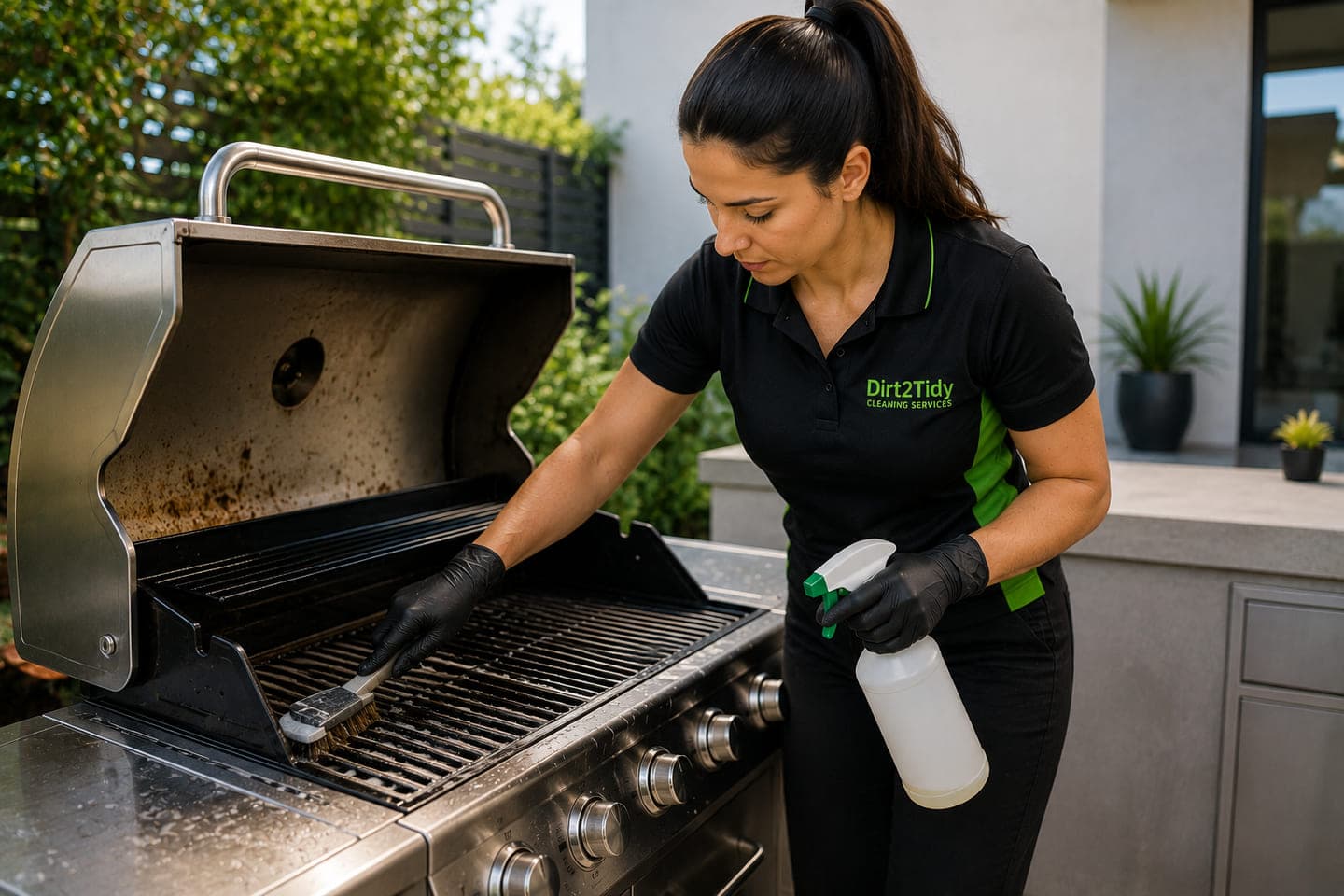
BBQ cleaning with professional equipment on an Australian outdoor grill
Keep cleaning moving

Related Cleaning Services

More from Dirt2Tidy

Related Cleaning Guides