Vacuum carefully before treating a spill
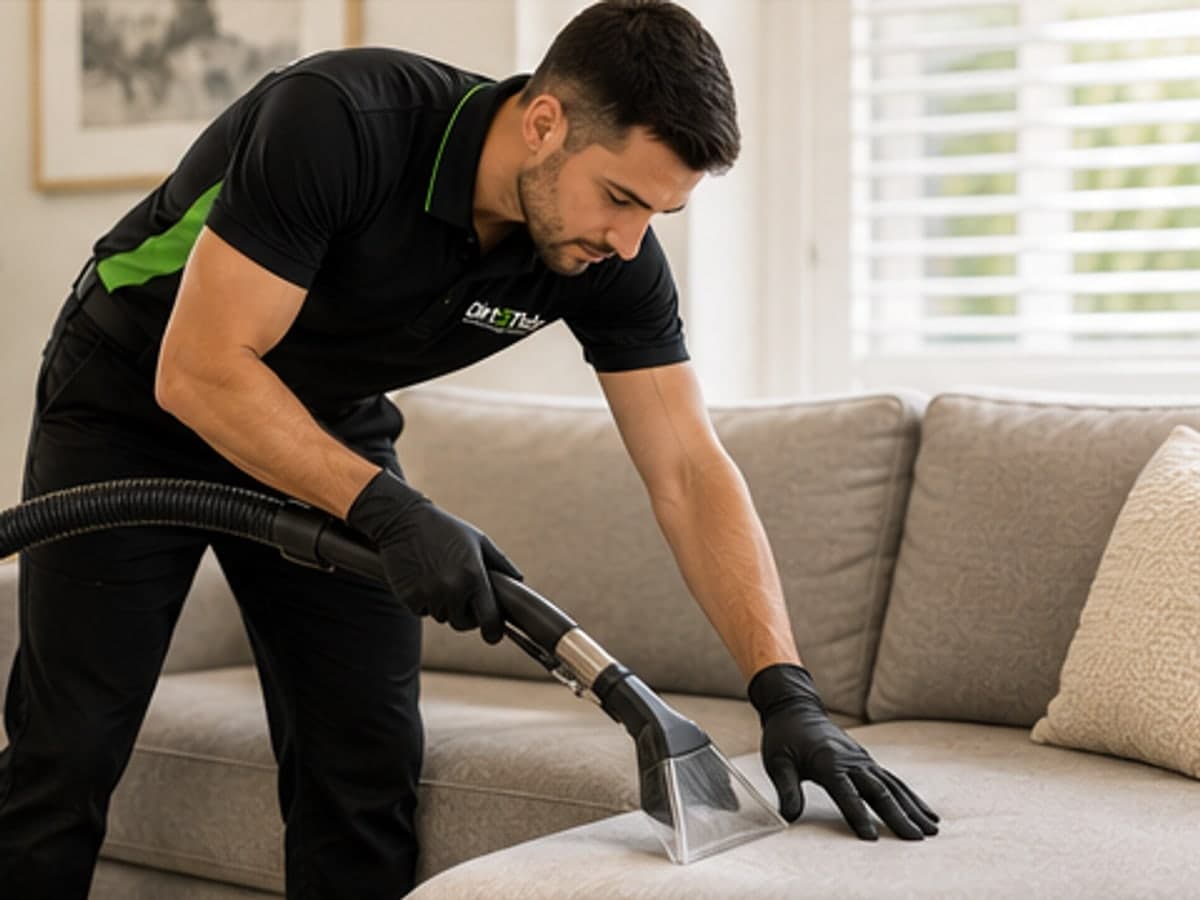
Use an upholstery attachment at a setting appropriate to the fabric. Work gently over seams, folds and under removable cushions, stopping if the tool snags or pulls fibres. Removing loose dust first can help prevent it from spreading during later treatment.
Blot spills and check the care label
Blot fresh liquid with a clean absorbent cloth without rubbing or saturating the fabric. Check the furniture care label or manufacturer guidance before applying water, solvent, detergent or steam. Care codes are product-specific guidance, not permission to flood the upholstery.
Test only compatible products
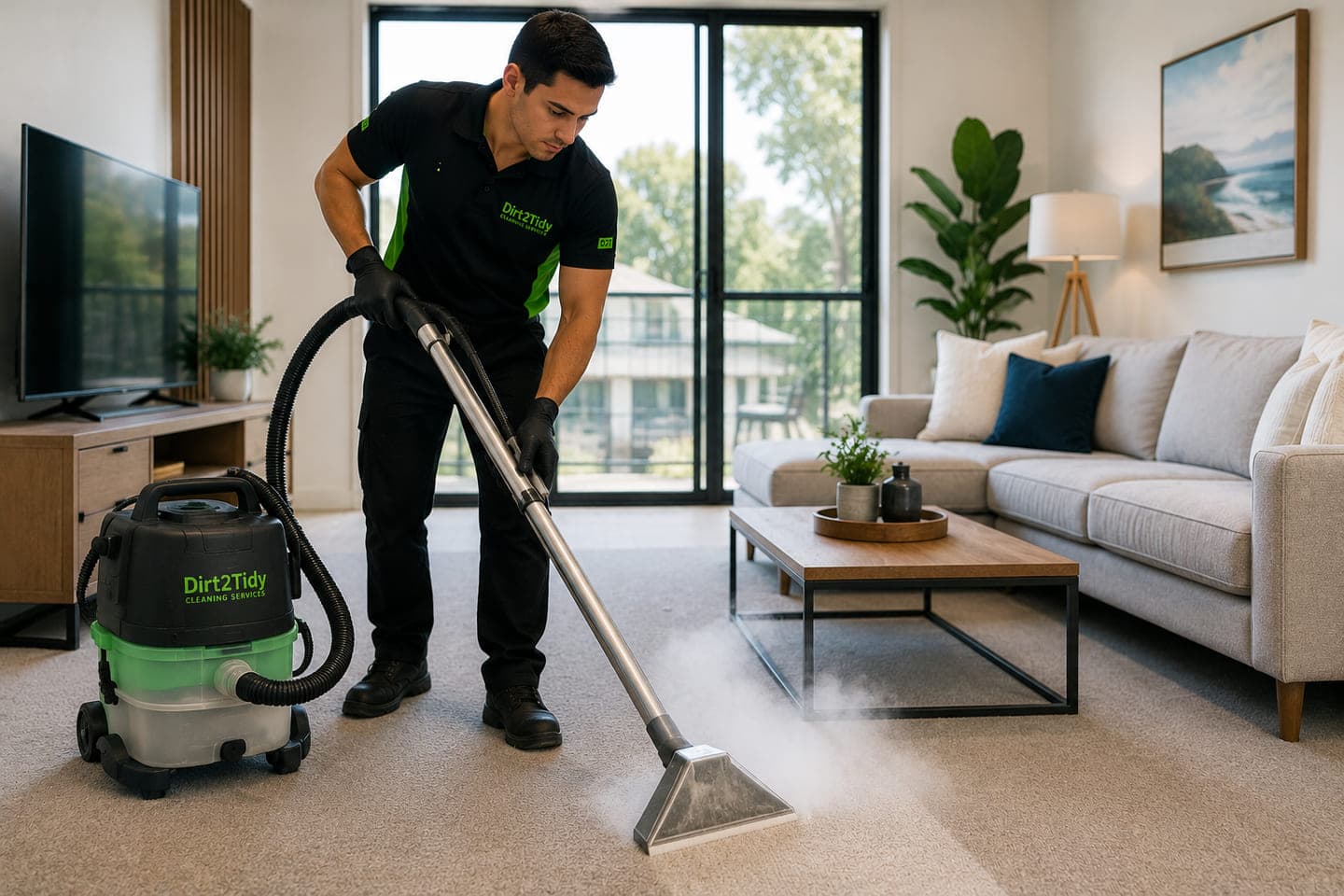
If the maker permits a cleaning product, test it discreetly as directed and watch for colour transfer, texture change or damage. Avoid vinegar, baking soda, alcohol, bleach and homemade mixtures unless the manufacturer confirms compatibility. Stop if the material reacts.
Know when to call a specialist
Large or set-in stains, delicate fibres, dye transfer, persistent odour, mould-like growth or water damage may need specialist assessment. Ask about method, drying, risks and exclusions. Cleaning cannot repair worn fibres, bleaching, broken frames or all stains.