
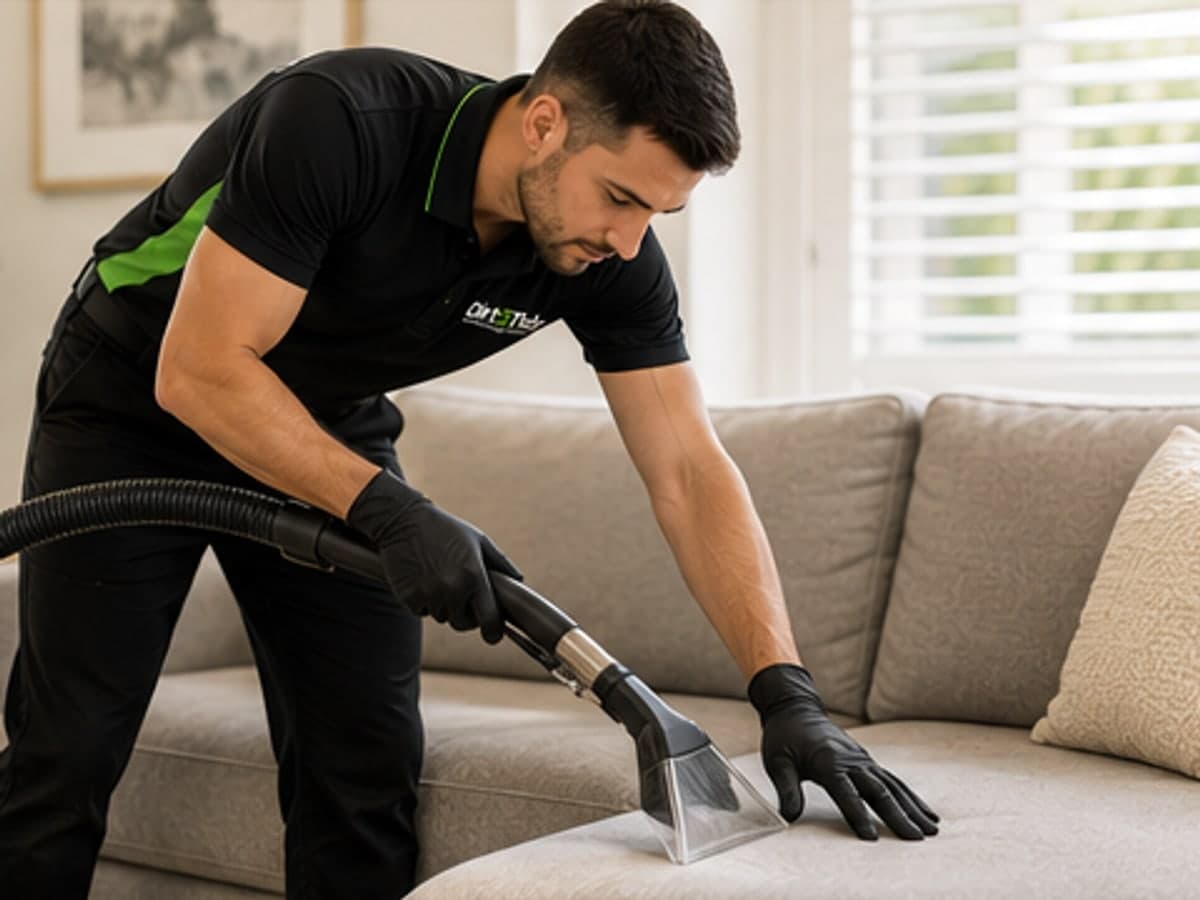
Check the label and construction
Identify fabric, leather, backing, seams, removable covers and care code before applying liquid. A method suitable for one item can shrink fabric, transfer dye or damage backing on another. Follow the maker's instructions and test only as directed.
Avoid untested products and over-wetting
Vacuum gently with a suitable attachment and blot a fresh spill only if care guidance permits. Do not mix products or apply vinegar, solvents, detergents or protectors by guesswork. Excess moisture can affect padding, wood frames and drying.
Know the limits of DIY
Permanent stains, dye transfer, chemical marks, odour in fillings and worn fibres may remain. Heavy furniture, fragile items and rugs or mattresses need their own scope. Cleaning does not repair upholstery or guarantee stain removal.
Prepare a professional quote
Share furniture type, material/care label, dimensions, stains, prior products, access and photographs. A provider can assess whether upholstery cleaning is appropriate and define the items included.