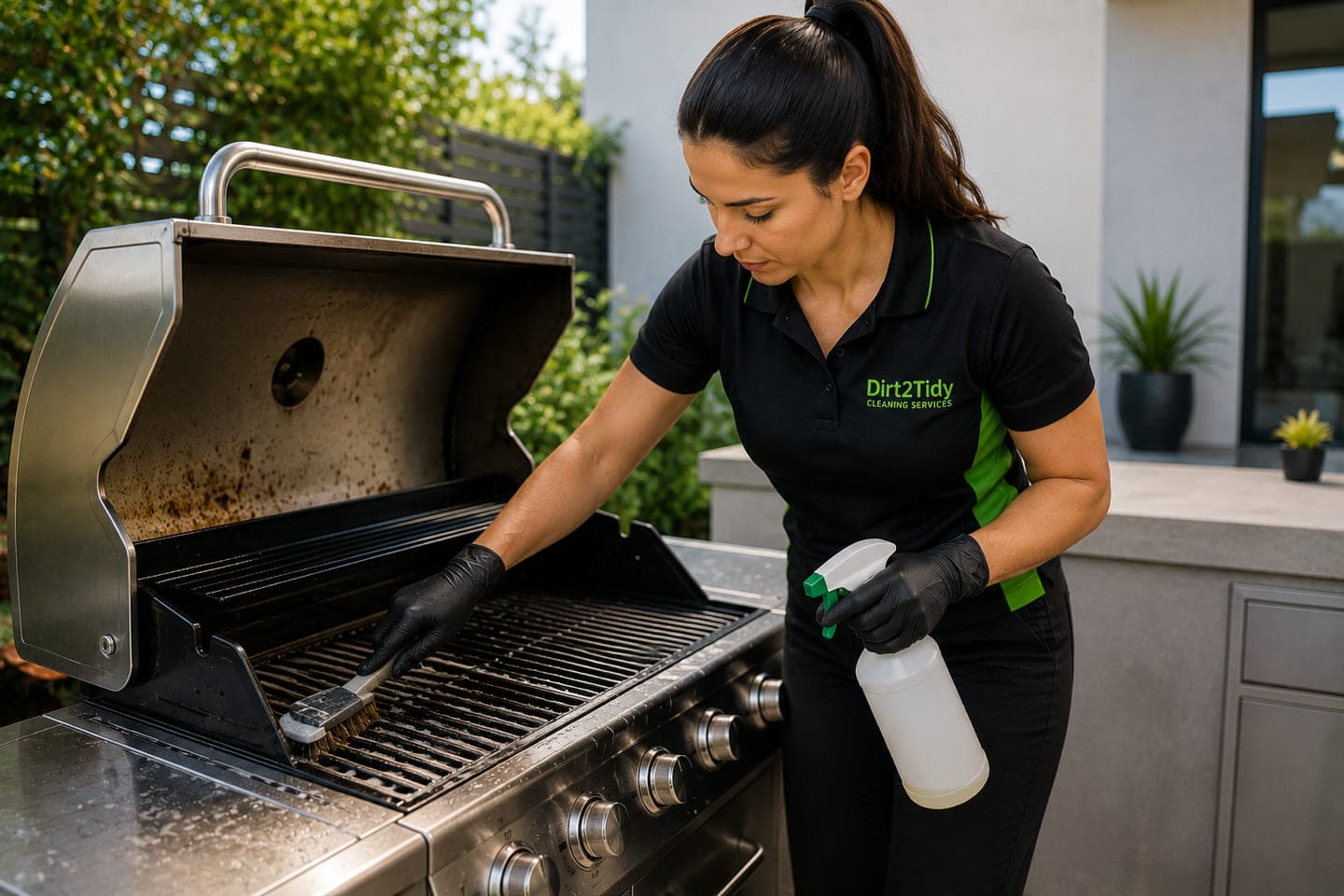
Identify the cooktop and turn it off
Confirm whether the surface is glass-ceramic, induction, enamel or a gas hob. Switch it off, let it cool and keep children and pets away. Do not clean a cracked surface or attempt electrical or gas repairs.
Remove loose food gently
Wipe loose debris with a soft cloth. Use a scraper or removable-part cleaning method only if the exact appliance manual permits it; an unsuitable blade or abrasive pad can scratch or chip a finish.
Choose a compatible product
Use a cleaner listed for the cooktop material and follow its application and removal directions. Do not mix vinegar, baking soda, degreaser, oven cleaner or another chemical. Keep liquid away from burners, ignition points, controls and seals.
Stop if residue is damage or a fault
Permanent discoloration, cracks, pitting or a damaged coating may not be removable. If a burner, coil, ignition or electrical control is faulty, contact an appropriately qualified technician rather than dismantling the appliance.