
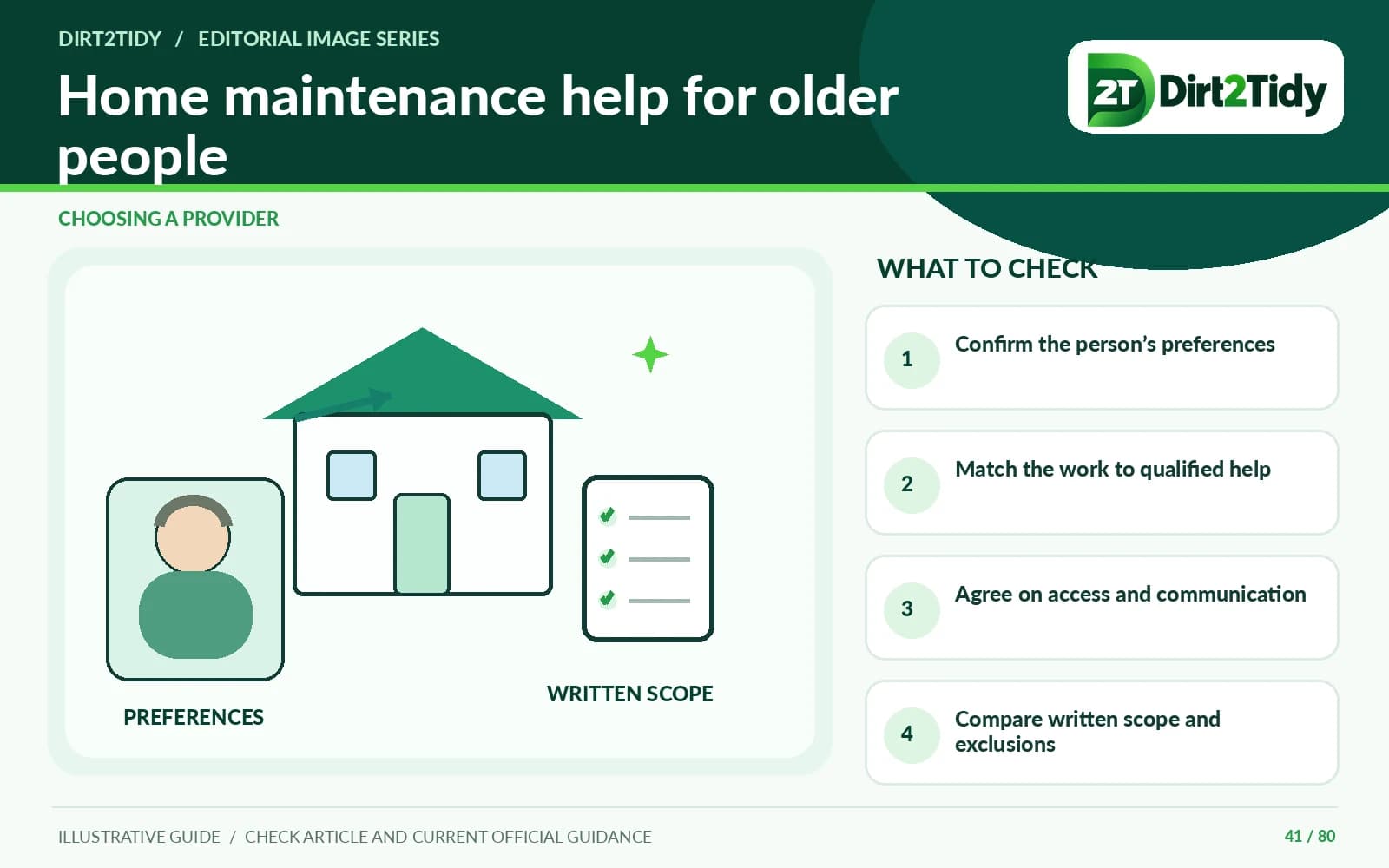
Define the task and the person’s preferences
List what needs doing, where, when and what the person wants the provider to communicate or avoid. Confirm who is authorised to request the work and how the person wishes to participate in the decision. Do not assume a family member can consent or make decisions for another adult.
Match the work to an appropriately qualified provider
Routine cleaning, electrical work, plumbing, building repairs, gardening and personal care are different scopes. Ask what the provider is qualified and insured to do for the exact task and verify relevant claims with the responsible regulator or issuing body. A cleaning provider is not automatically a repairer, health professional, home-care worker or accessibility assessor.
Confirm access and communication arrangements
Agree how appointments are confirmed, how the provider will identify themselves, who may be contacted if the person is unavailable and how keys or entry codes are handled. Share only information needed for the service and get agreement on any person who will receive updates. Put these arrangements in writing.
Compare written scope, price and exclusions
Ask for a written task list, rooms or areas, materials or products, access requirements, price basis, extra-work approval, cancellation terms and complaint process. Confirm separately whether materials, disposal, travel or follow-up are included. Do not rely on an oral promise for a service outside the written scope.
Use independent advice for care or safeguarding needs
If the request involves personal care, health, mobility, home modifications, government-funded support or concerns about abuse or neglect, contact the appropriate government service or qualified aged-care professional. This article does not determine eligibility, legal authority, care standards or funding.



