Why rapid re-soiling can happen
Too much detergent or incomplete rinsing can leave a sticky residue that attracts loose soil. A damp carpet can also pick up dirt from footwear or furniture. Other explanations include soil that was not removed, pile distortion, wicking from the backing or a fresh spill. Do not apply another product until the cause is understood.
Check the carpet before treating it
Identify the fibre, backing, dye and manufacturer care instructions. Note whether the dark area is a traffic lane, a spot, a watermark or a change in pile direction. Test any proposed method in an inconspicuous area and stop if colour transfers, texture changes or the area becomes wetter.
Support drying and low-residue care
Follow the cleaner's drying instructions, keep traffic and pets off damp carpet and provide safe airflow where appropriate. Vacuum only when the carpet is dry and the manufacturer permits it. Avoid powders, household detergents, steam or repeated spot treatment by guesswork, as residue and moisture can compound the problem.
When to request an assessment
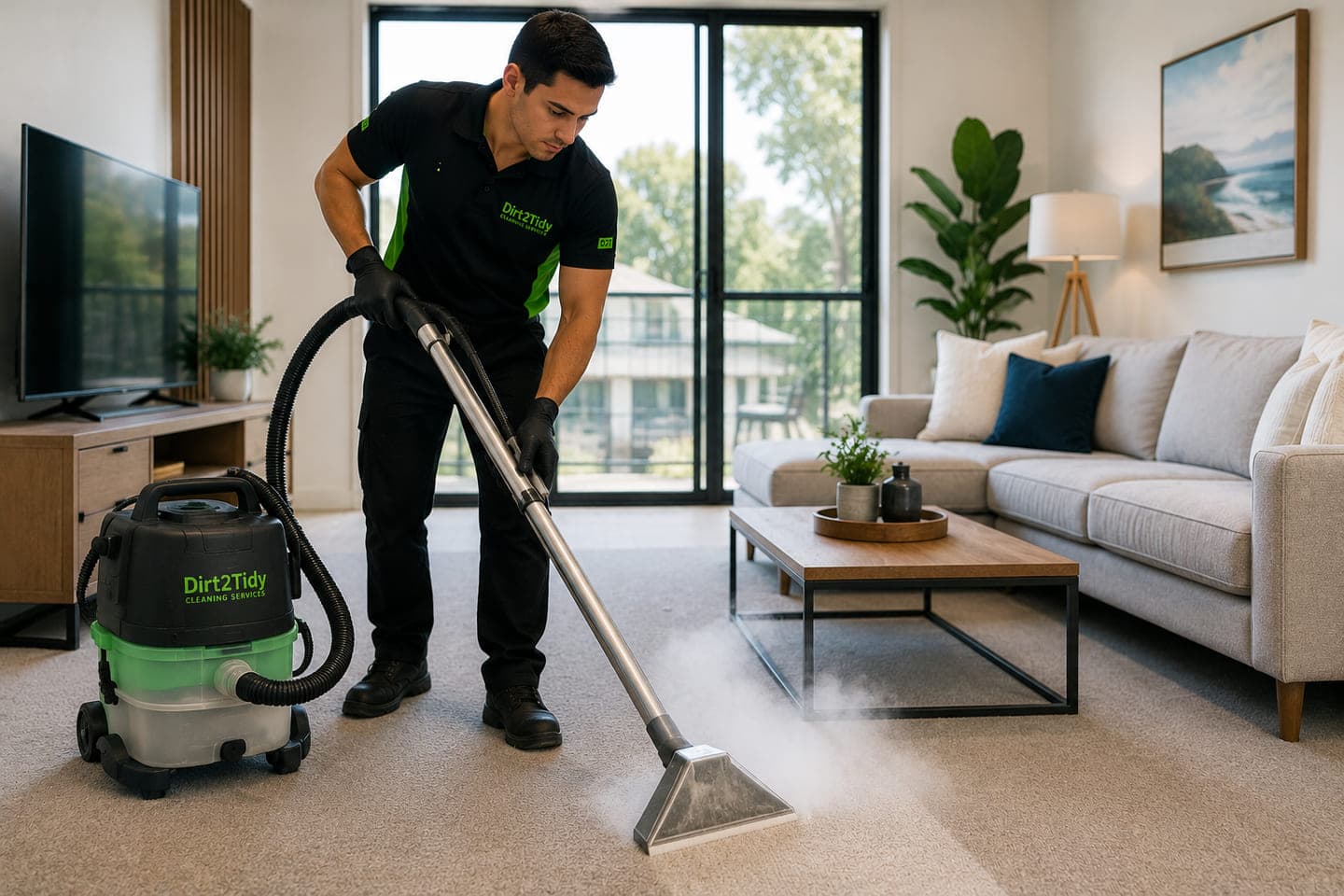
Contact the cleaner if the result changes as it dries and provide the service date, products used, photos and affected rooms. Persistent wicking, odour, water damage, dye transfer, mould-like growth or damaged backing needs a qualified carpet or remediation specialist. Dirt2Tidy can quote suitable carpet cleaning after the material and condition are confirmed.