
Define the workplace scope
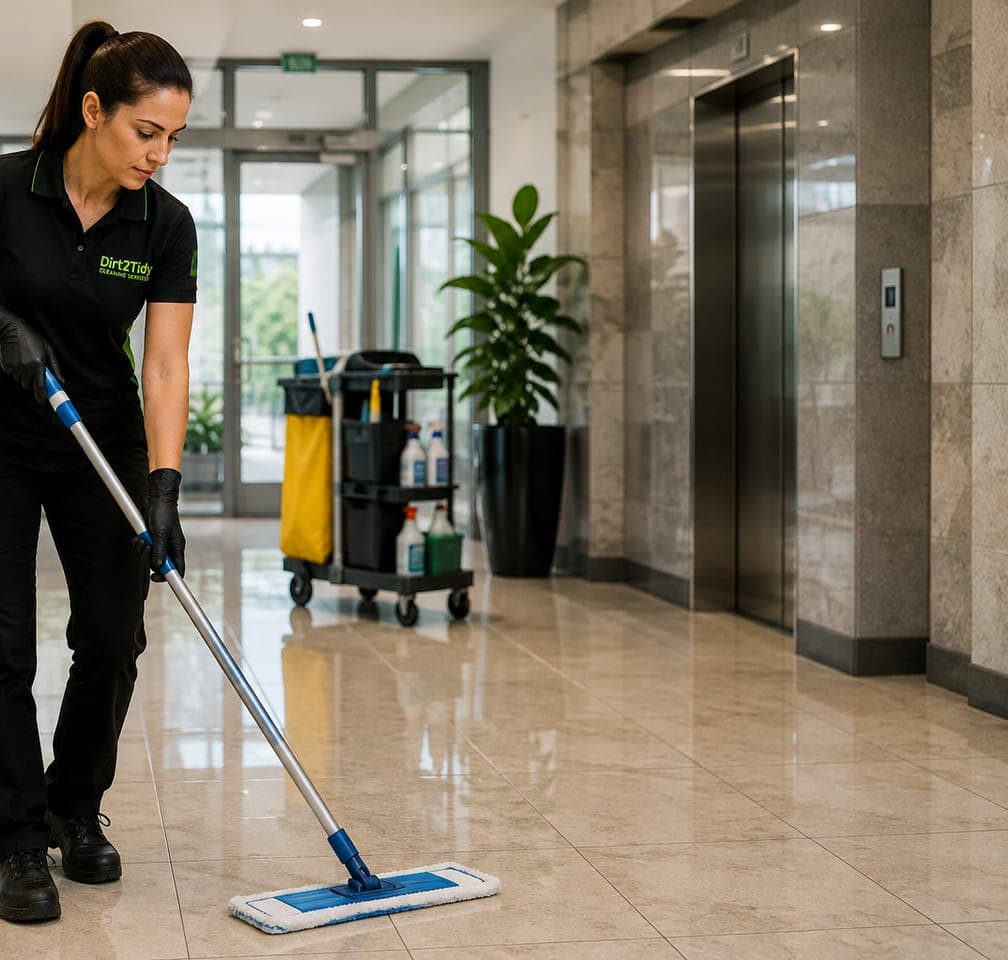
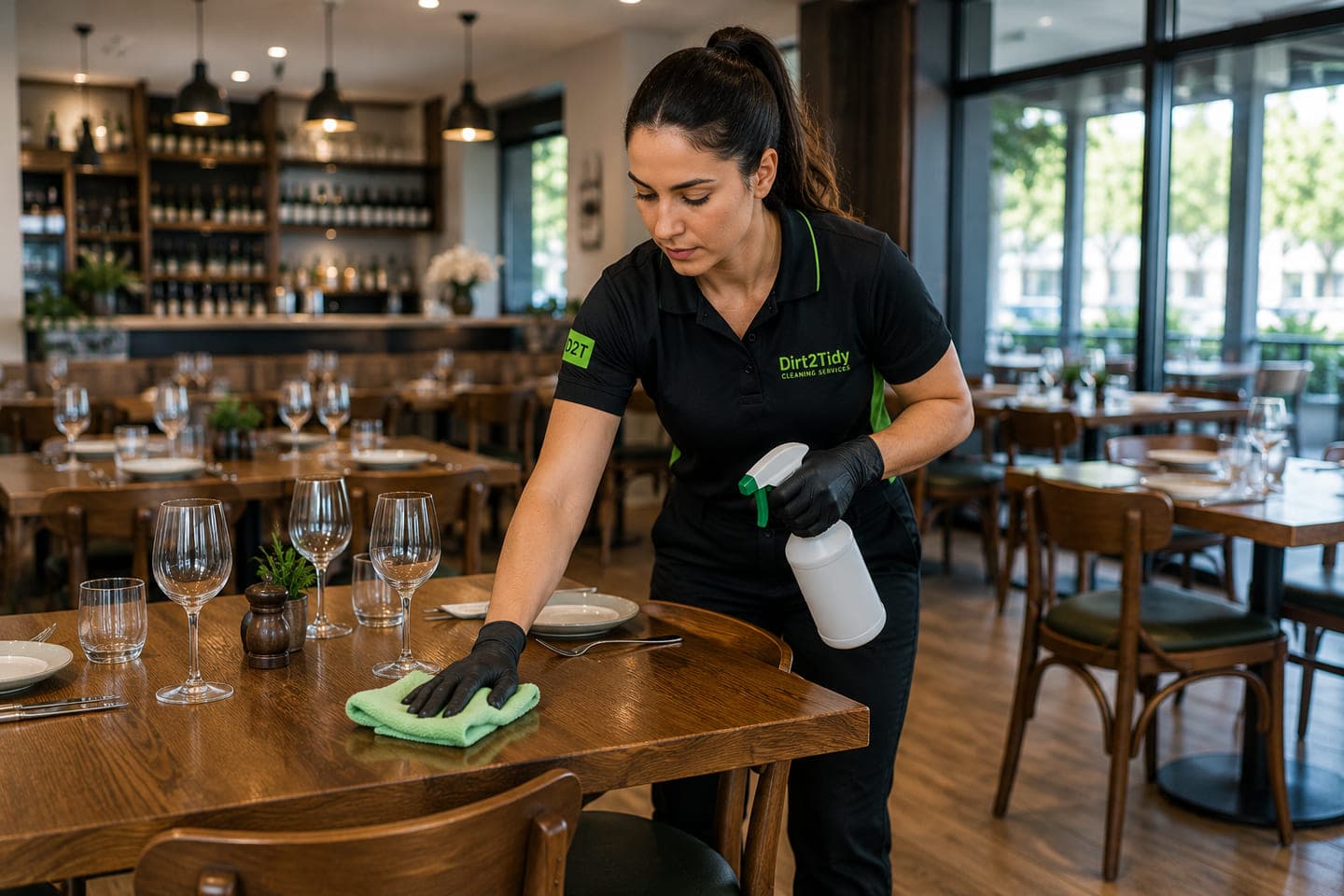
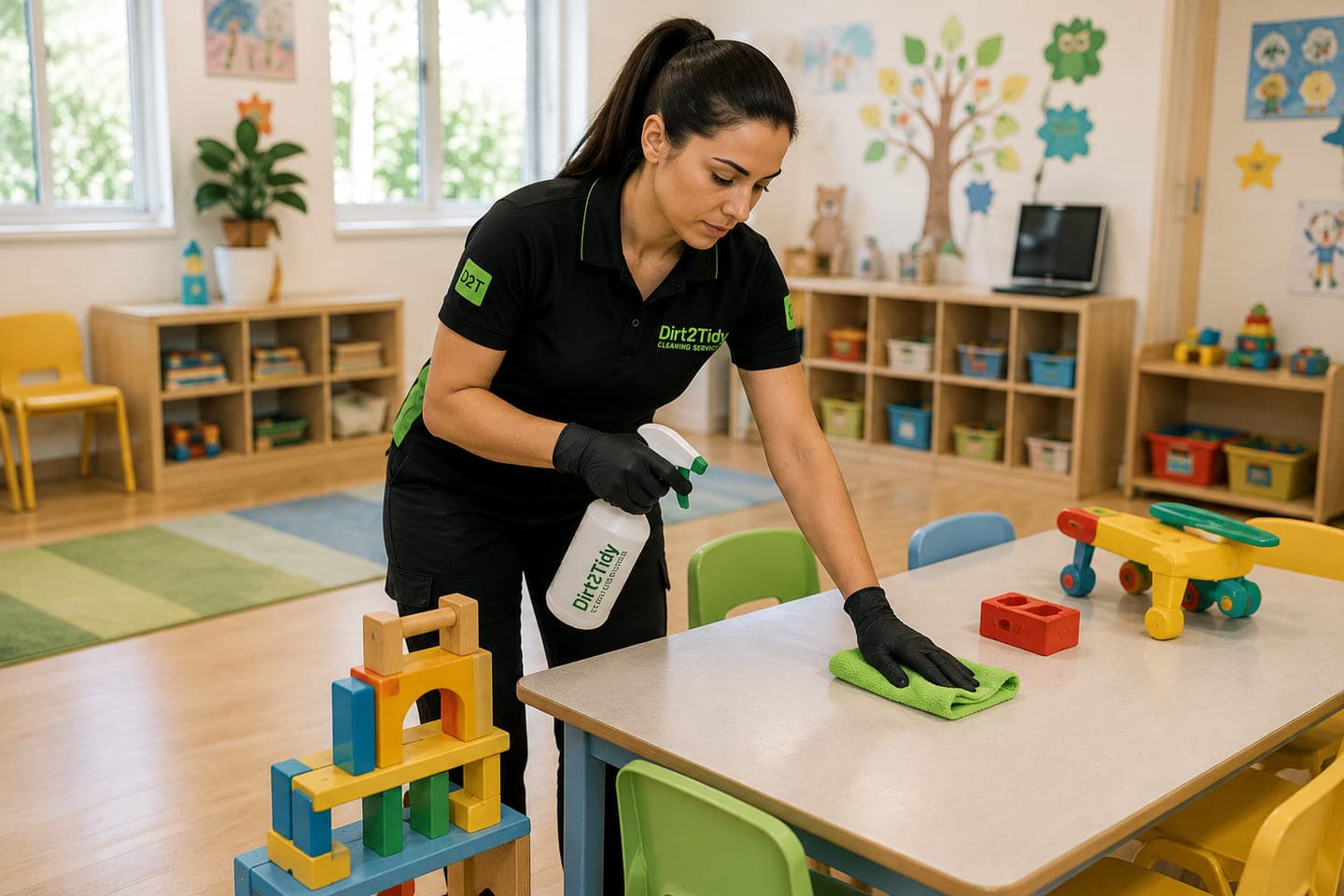
List offices, reception areas, kitchens, washrooms, floors, touchpoints, bins, glass and any restricted rooms. Separate daily, periodic and specialist tasks. Tell the cleaner about occupancy, access, alarms, parking, food handling, pets, visitors and surfaces so the quote reflects the site rather than a generic package.
Use a repeatable cleaning routine
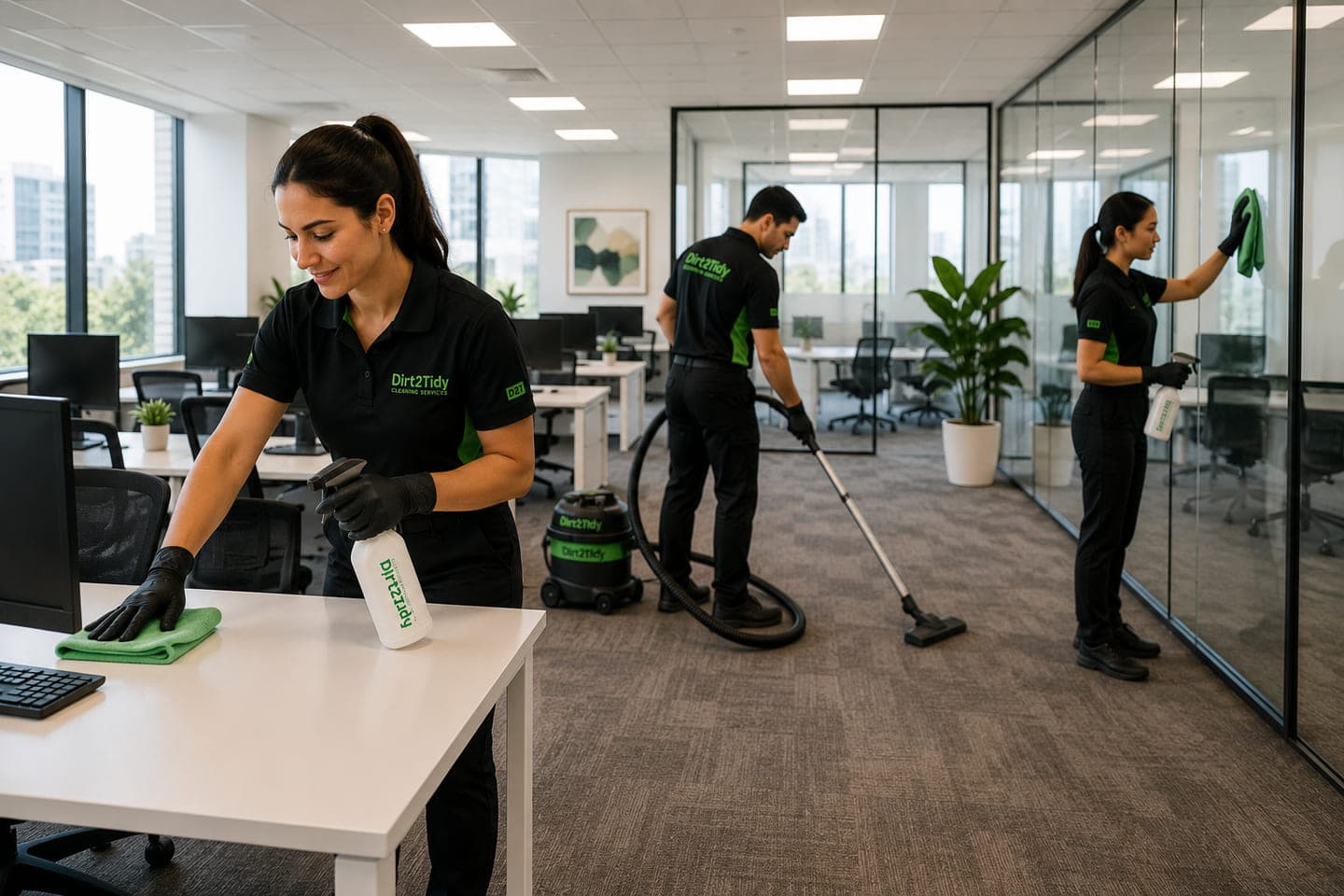
Remove ordinary waste safely, clean high-touch areas with a compatible product, vacuum entrances and traffic lanes, and keep washrooms stocked to the agreed scope. Use signs or barriers for wet floors and protect electronics from spray. Product labels, site procedures and ventilation requirements take priority over speed.
Keep hazards outside the ordinary scope
Sharps, bodily fluids, asbestos, unknown powders, strong chemical residues, pests, mould-like growth and unsafe access need the appropriate specialist or workplace process. Do not ask a cleaner to improvise PPE, mix products or enter an unsafe area. Record maintenance defects separately from cleaning observations.
Review quality without inventing promises
Use a checklist, note missed access or changed rooms and review the scope when the workplace expands. A professional quote should state inclusions, frequency, equipment, access and optional work. Dirt2Tidy can discuss a commercial cleaning scope after the premises and priorities are clear.