Identify the workplace tasks and frequency
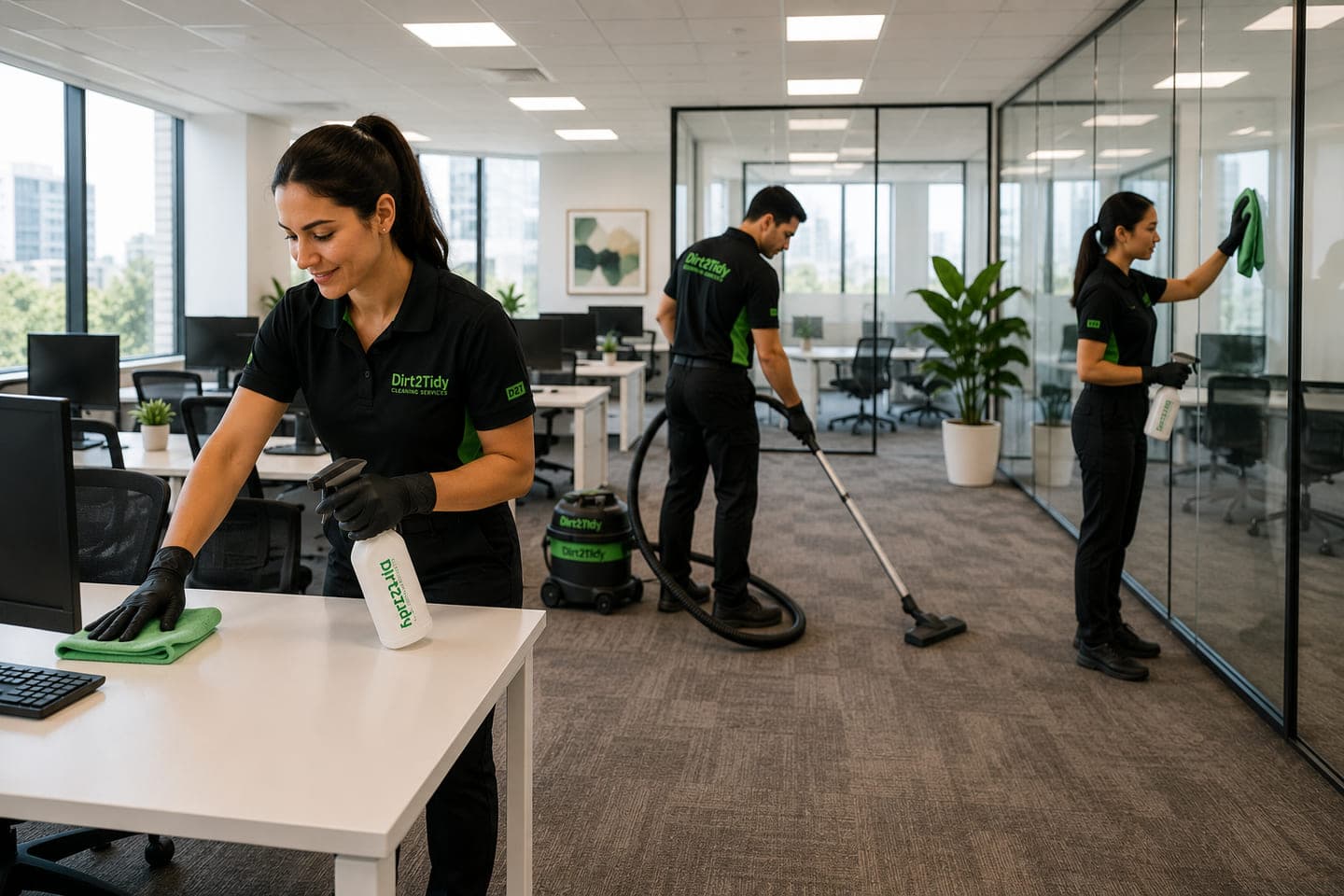
List the rooms, washrooms, kitchens, shared areas, floors and touchpoints that need attention. Separate routine tasks from periodic or specialist work, and note opening hours, occupancy, access, alarms and any areas that need restricted entry. The scope should match the actual premises rather than an assumed weekly schedule.

Compare in-house work with a defined service
An in-house plan needs assigned responsibilities, suitable supplies and cover when staff are absent. A commercial provider may help when tasks need repeat scheduling, equipment or a documented scope. Compare the time, access arrangements, price basis and service terms for your site; a provider does not replace workplace risk controls or trade maintenance.
Check products, surfaces and site procedures
Confirm who supplies products and equipment, how surfaces are protected and which site procedures apply. Product labels, safety information, ventilation requirements and workplace rules should be followed. Do not describe routine cleaning as disinfection unless the product and agreed process support that specific claim.
Agree how performance and concerns are handled
Document the rooms, tasks, timing, exclusions, keys, alarm instructions and contact person. Decide how missed tasks, access issues and maintenance defects will be reported. A clear service agreement helps both parties review the work without promising medical, productivity or customer-retention results.