Identify the upholstery and condition
Record the item, care label, fibre, stains, odours, previous products, fading and loose seams. Share photos with a provider if useful. Antique, delicate, coated or damaged furniture may need specialist assessment before cleaning.
Compare suitable methods
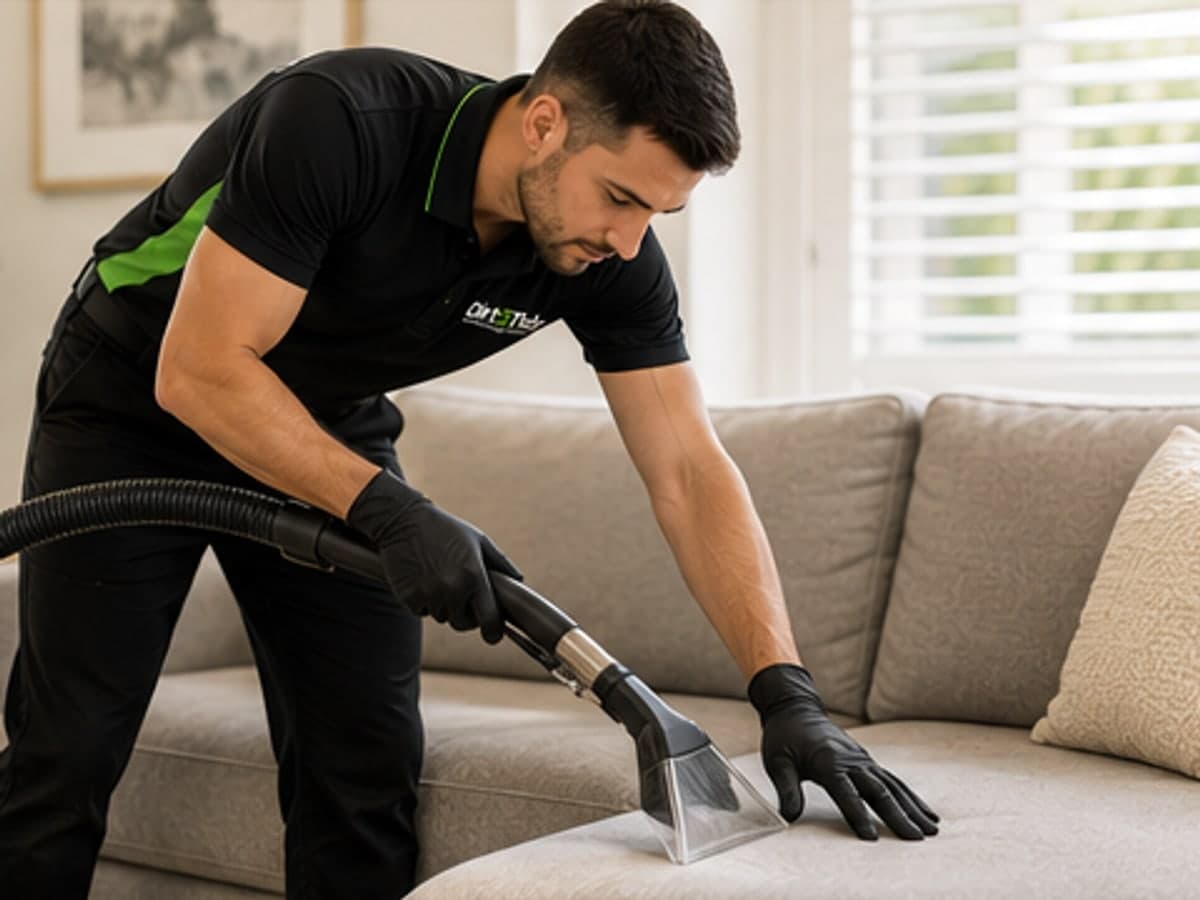
Dry, low-moisture and extraction methods have different uses and limits. No method is right for every material. Ask what the provider proposes and why; steam does not automatically disinfect, restore colour or remove every stain.
Understand service inclusions
Confirm whether cushions, backs, arms, removable covers, stain treatment and deodorising are included or extra. Ask about drying, access, furniture movement, products and pre-existing damage. Cleaning cannot repair worn fibres or broken frames.
Keep expectations realistic
Stain, odour and appearance results depend on material, stain history and previous treatments. No health, allergen, furniture-life or complete-removal outcome should be assumed. Follow the care label and stop DIY treatment if colour or texture changes.