Signs routine vacuuming is not enough
Look for flattened traffic paths, visible soil, persistent odour, pet incidents, spills, sticky residue or a dull appearance that returns after vacuuming. These signs do not identify the correct method by themselves; check the fibre, backing and care instructions first.
Choose a method that suits the carpet
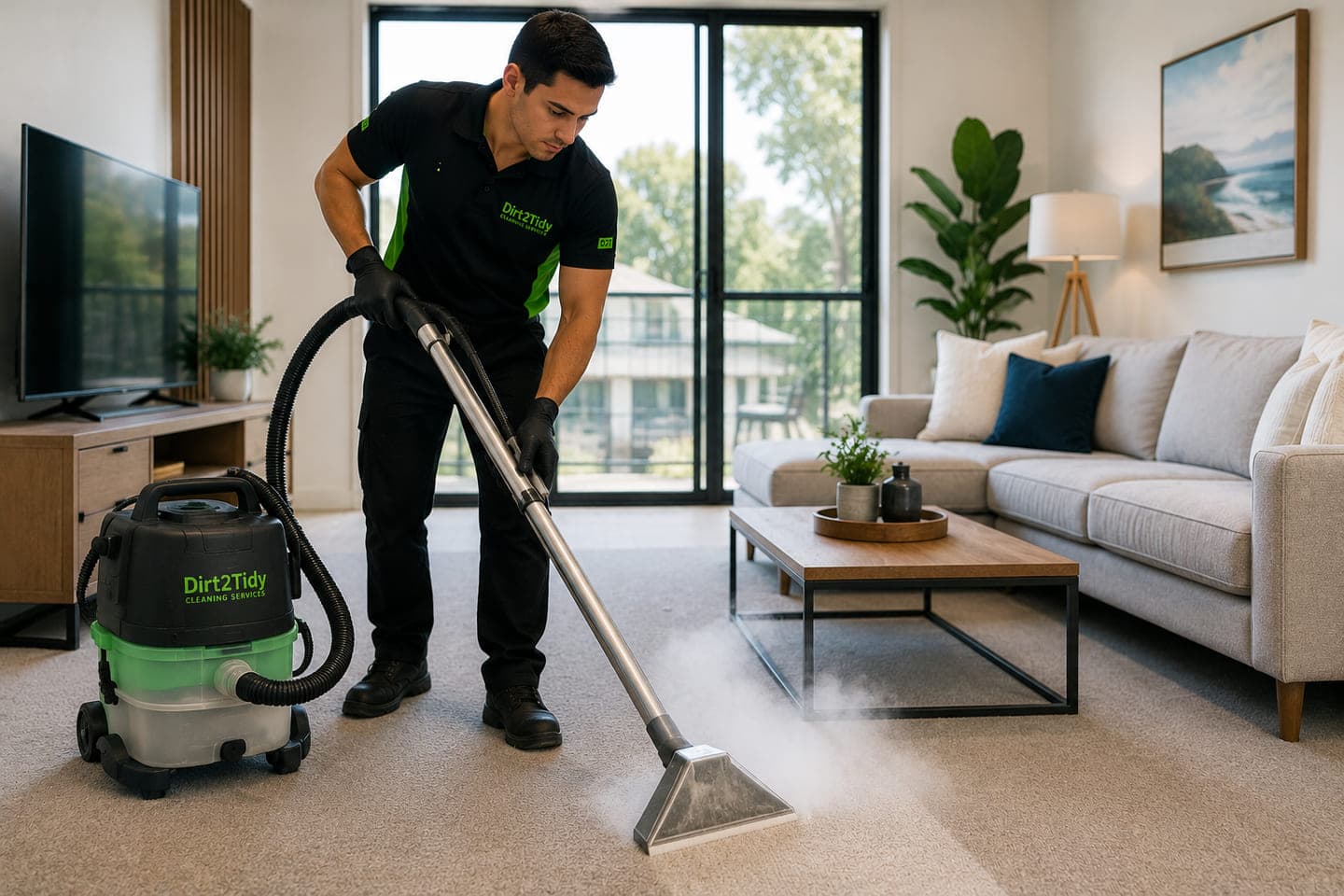
Hot-water extraction, low-moisture cleaning and other methods have different moisture, heat and drying requirements. Test products, avoid over-wetting and never use bleach, acids or abrasive treatments by guesswork. Water damage, mould-like growth and contamination beneath the carpet need specialist assessment.
Plan for drying and access
Remove small items, disclose furniture, pets, stains and previous products, and arrange ventilation and access. Keep people and animals off damp carpet as instructed. Deep cleaning cannot repair burns, tears, worn pile, damaged backing or guarantee a stain will disappear.
Request an honest assessment
Provide carpet type if known, rooms, condition, incident history and desired result. Dirt2Tidy can quote a suitable carpet-cleaning scope and explain what the method can reasonably address before booking.