
Healthcare and aged care: compliance first
Clinics, dental practices, pathology sites, physiotherapy rooms and aged-care facilities contract cleaning because infection control is part of their regulatory and duty-of-care picture, not a nice-to-have.
Their scopes are written around clinical and non-clinical zone separation, colour-coded equipment, sanitising at documented contact times, sharps and waste stream rules, and the audit trail of schedules and sign-off that inspections and accreditation actually read.
Staff cleaning between patients is inconsistent and undocumented, which is the entire commercial argument, so these buyers pay for systems, training evidence and records above shine.

Food businesses: kitchens, cafes, restaurants
Food premises hire cleaners because the code obligations, the health-department expectations and the reality of fat, sugar and opening hours defeat casual effort. Commercial kitchens need degreasing cycles, extraction surfaces, coolroom and drain routines, and late-night work when the line is closed, while cafes add the milk-residue and steam-point rhythm.
A specialist crew handles the periodic layers the daily team cannot, and the contract reflects it: scheduled frequency blocks, product suitability for food areas, and clear lines between kitchen staff duties and contractor duties.
Offices and strata buildings
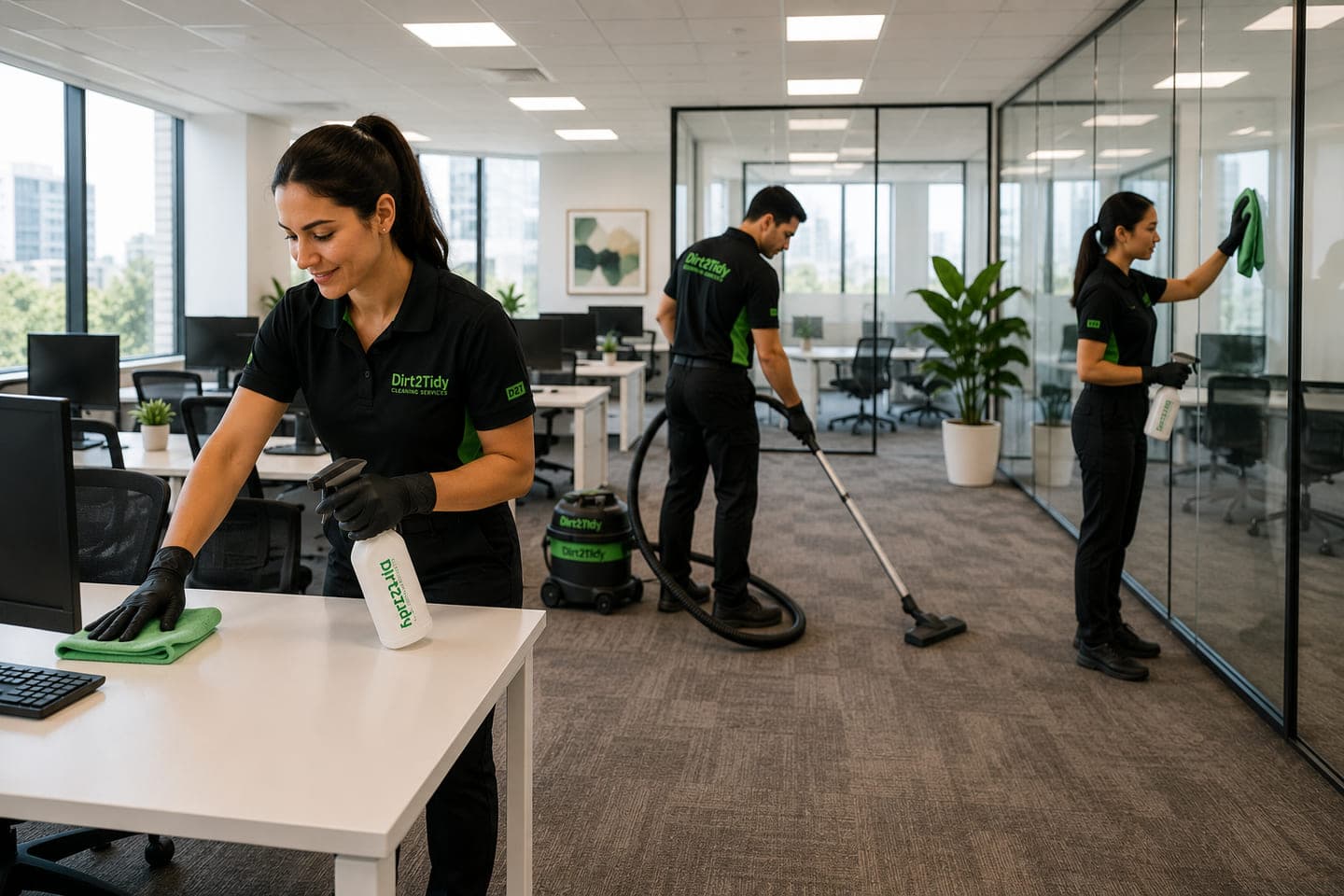
The classic contracts sit here. Small offices buy the daily or several-times-weekly hygiene loop, bins, bathrooms, kitchens, touchpoints and floors, freeing staff time and protecting first impressions.
Larger corporate floors and body corporate schemes add after-hours crews, security and access management, the common-property calendar, and inspection reporting that a building manager can present to a committee. The purchase is consistency more than depth: a building that looks cared for every single morning is the product.
Hospitality rooms and short stays
Hotels and short-stay operators contract cleaning in two layers: the in-house turnover engine keeps rooms sellable every day, while the periodic layer, carpet extraction, fabric care, descaling programs and block deep cleans, runs on the shoulder-season inventory math because those jobs pull rooms out of sale.
Hosts of single properties often invert it, outsourcing turnovers entirely for speed and reliability, because a missed check-in costs more than the clean. The commercial cleaning conversation for these operators is scheduling, drying windows and documented standards.
Retail, gyms, schools, industrial
Retail hires for presentation and fitting-room reality, gyms for a hygiene story their members can smell either way, schools for the volume-and-holiday rhythm where deep work happens on school breaks, and industrial sites because warehouse floors, amenities and welfare rooms on 24-hour operations need crews that fit around production, not around an office calendar.
Trades and construction sites buy their own category, post-build cleans and site amenities, while many offices simply need the scope clarity of a proper office cleaning brief.
The economic driver behind almost all of them
Strip away the compliance language and the common thread is opportunity cost plus risk transfer.
Staff who mop are not serving customers, an inconsistent standard shows up as complaints and review damage long before it shows as a fine, and the equipment, chemicals and insurance to do it properly are a capital and admin burden for a non-core function.
A contracted crew carries the scheduling, the supervised method and the documented evidence, which is why even tiny businesses, a single barber or accountant, convert once they add up their own hours honestly.
How the contracts actually differ
Compliance-driven buyers sign scopes with records, audits and defined escalation, hygiene zones, product lists, SDS packs, and inspection logs, because their regulator or franchisor reads them. Volume-driven buyers sign frequencies and response times. Presentation-driven buyers sign daily visual standards and the detail calendar.
The right document for any of them starts from the same foundation, a zone-and-frequency commercial cleaning scope written in observable terms, and the crew-side standard those contracts rely on is set out in the guide to commercial cleaner duties.