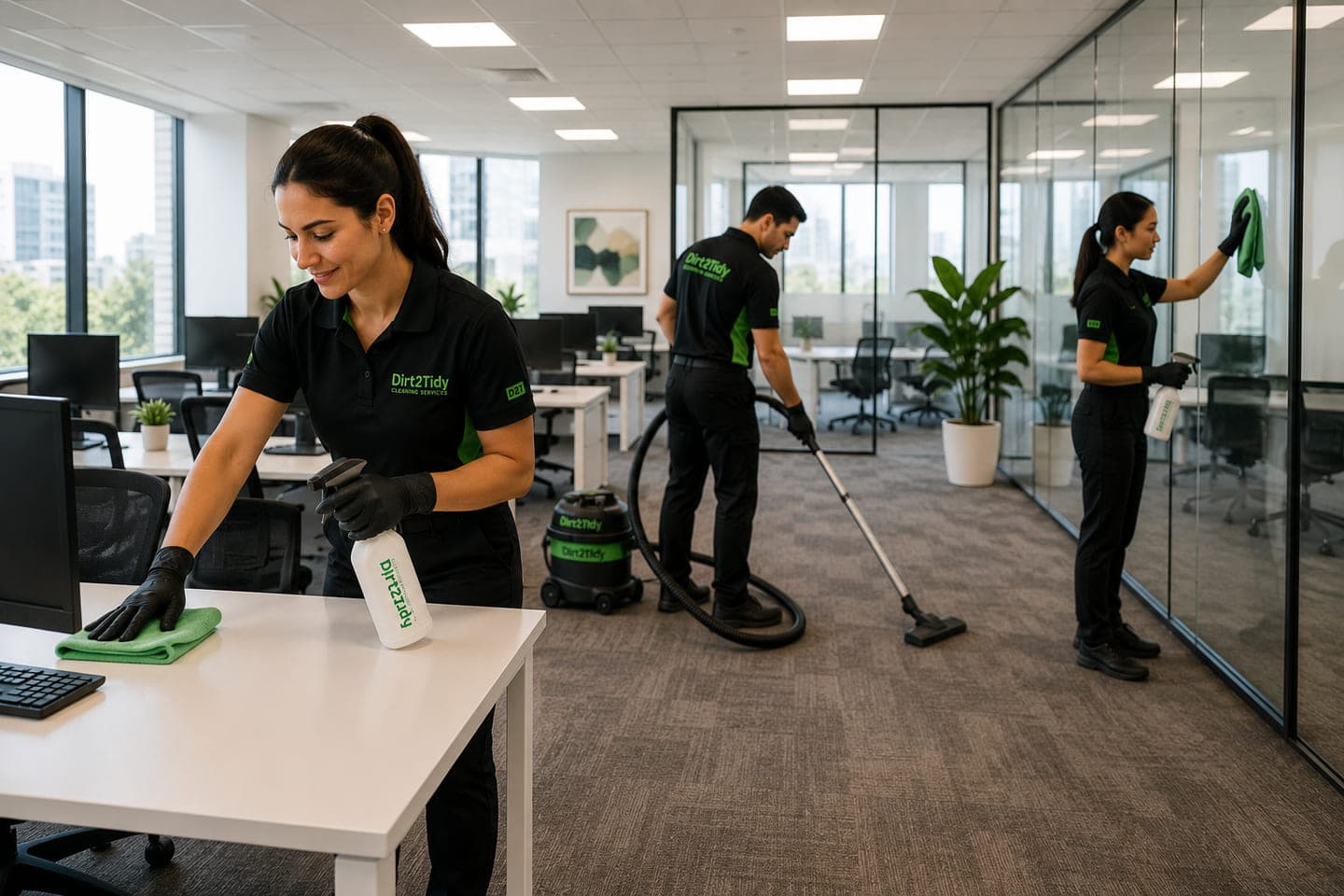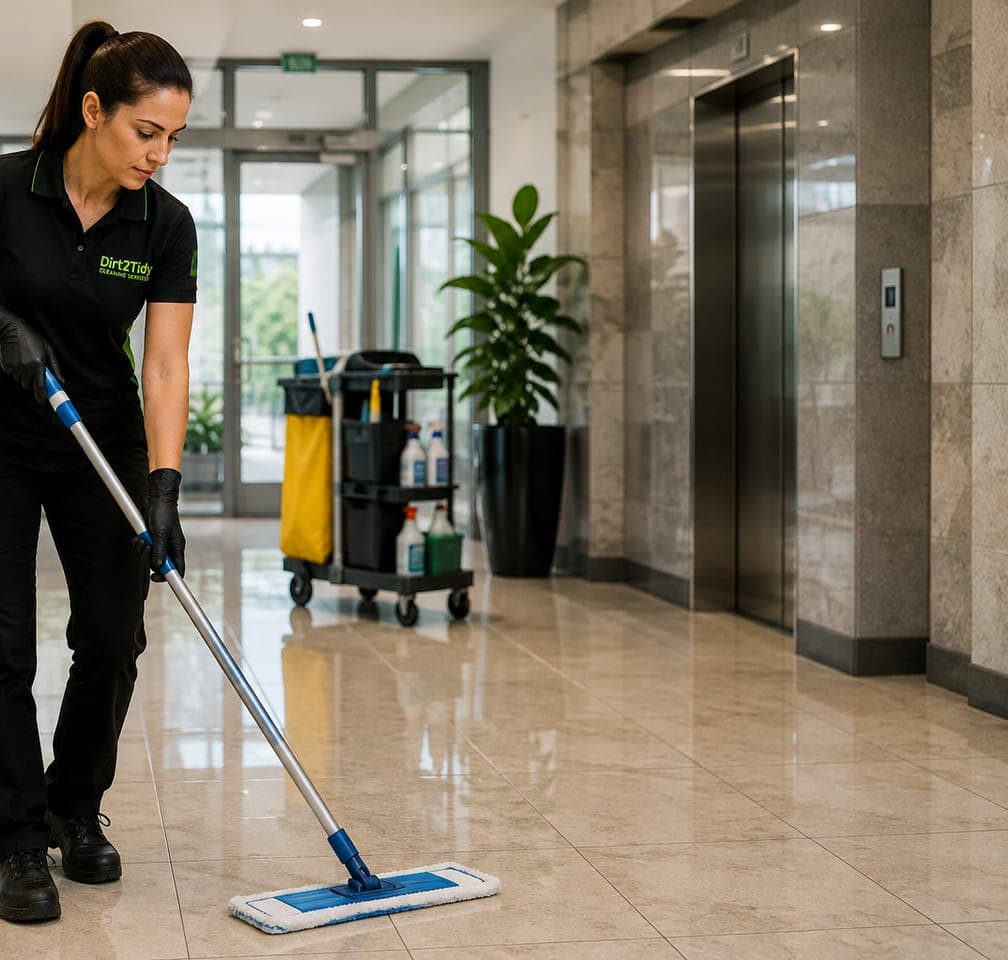

What janitorial work can include
Depending on the site, tasks may cover floors, washrooms, touchpoints, kitchens, bins, entrances, dusting and restocking agreed consumables. Document the rooms, frequencies and exclusions. Specialist work such as hazardous waste, pest treatment, mould remediation, high-risk contamination and repairs needs separate controls or providers.
Support hygiene without overclaiming
Routine cleaning removes suitable soil and residue from agreed surfaces. It does not make a workplace sterile or replace hand hygiene, ventilation, maintenance, food-safety procedures or public-health directions. Use labelled products, respect contact times and never mix chemicals.
Build safe workplace controls
Commercial sites should identify hazards, control wet floors, provide safe access, store products correctly and make safety information available. Staff and contractors need suitable training, supervision and equipment for the work. Do not improvise a chemical process or ask a cleaner to enter an unsafe area.
Review the service
Use a checklist, record access problems and report leaks, broken fixtures or damaged surfaces separately from cleaning. Revisit the scope when occupancy, opening hours or site activities change. Dirt2Tidy can discuss a commercial janitorial-cleaning quote after the premises and priorities are confirmed.