Table of Contents
Remove heavy grease from a BBQ to keep it safe, hygienic, and enjoyable for cooking. A barbecue is meant to bring people together, not smoke them out with burnt grease and old fat. Yet for many households and businesses, BBQ grease buildup quietly becomes a health risk, a serious fire hazard, and a major flavour killer. If you’ve ever opened your grill lid and seen thick black residue dripping from the hood or grates, you already know how stubborn BBQ grease can be.
This guide explains how to clean stubborn grease off a barbecue, what dissolves grill grease effectively, which BBQ degreasers actually work, the most common BBQ cleaning mistakes to avoid, and when a professional BBQ cleaning service is the safest option. Whether you are a home cook, landlord, café owner, or Airbnb host, these methods will help you protect your equipment and cook with confidence.
Why Does BBQ Grease Become so Difficult to Remove?
BBQ grease is not just oil. Over time, it becomes a hardened mix of animal fat, carbon, smoke residue, marinades, and food acids. Each cooking session adds a new layer that bakes onto hot metal surfaces.
Several factors make BBQ grease especially stubborn:
- High cooking temperatures carbonise fats
- Repeated reheating hardens grease into a tar like layer
- Sugars in marinades caramelise and glue grease in place
- Moisture mixes with ash and creates corrosive residue
Once grease reaches this stage, simple wiping is no longer effective. The solution requires either chemical breakdown, heat assisted removal, or mechanical scrubbing, often a combination of all three.
What Dissolves Grill Grease Effectively?
The key to removing heavy grease is understanding what breaks it down. Grease is non-water soluble, so plain water rarely works on its own.
Alkaline Cleaners and Degreasers
Most effective BBQ degreasers are alkaline based. These products break down fat molecules through a process called saponification, turning grease into a soap like substance that can be rinsed away.
Common alkaline options include:
- Commercial BBQ degreasers
- Oven cleaners designed for heavy carbon
- Food safe industrial degreasers
These are highly effective but must be used correctly to avoid surface damage.
You may also like to read about- “Why Dirt2Tidy Is Your One-Stop Domestic Cleaning Solution”
Heat Assisted Grease Removal
Heat softens hardened grease and allows cleaners to penetrate deeper. Warming the grill slightly before cleaning can dramatically improve results.
Important note: the BBQ should be warm, not hot. Spraying chemicals on hot metal can cause fumes and damage finishes.
Natural Acidic Cleaners
Acids do not dissolve grease directly but help loosen carbon and mineral buildup. Vinegar and lemon juice are useful as secondary cleaners after degreasing.
They work best when combined with:
- Baking soda
- Steam
- Hot water rinses
Natural solutions are safer for light to moderate grease but usually insufficient for heavy BBQ buildup.

How to Clean Stubborn Grease Off a Barbecue Step by Step?
Step 1: Remove Loose Debris First
Before applying any cleaner:
- Disconnect gas or power
- Remove grill plates, burners, and drip trays
- Scrape off loose food residue with a grill scraper
This prevents spreading grease during deep cleaning.
Step 2: Apply the Right Degreaser
Choose a BBQ safe degreaser suitable for your grill material.
- Stainless steel needs non corrosive formulas
- Cast iron requires gentler alkaline solutions
- Porcelain coated grills need low abrasion products
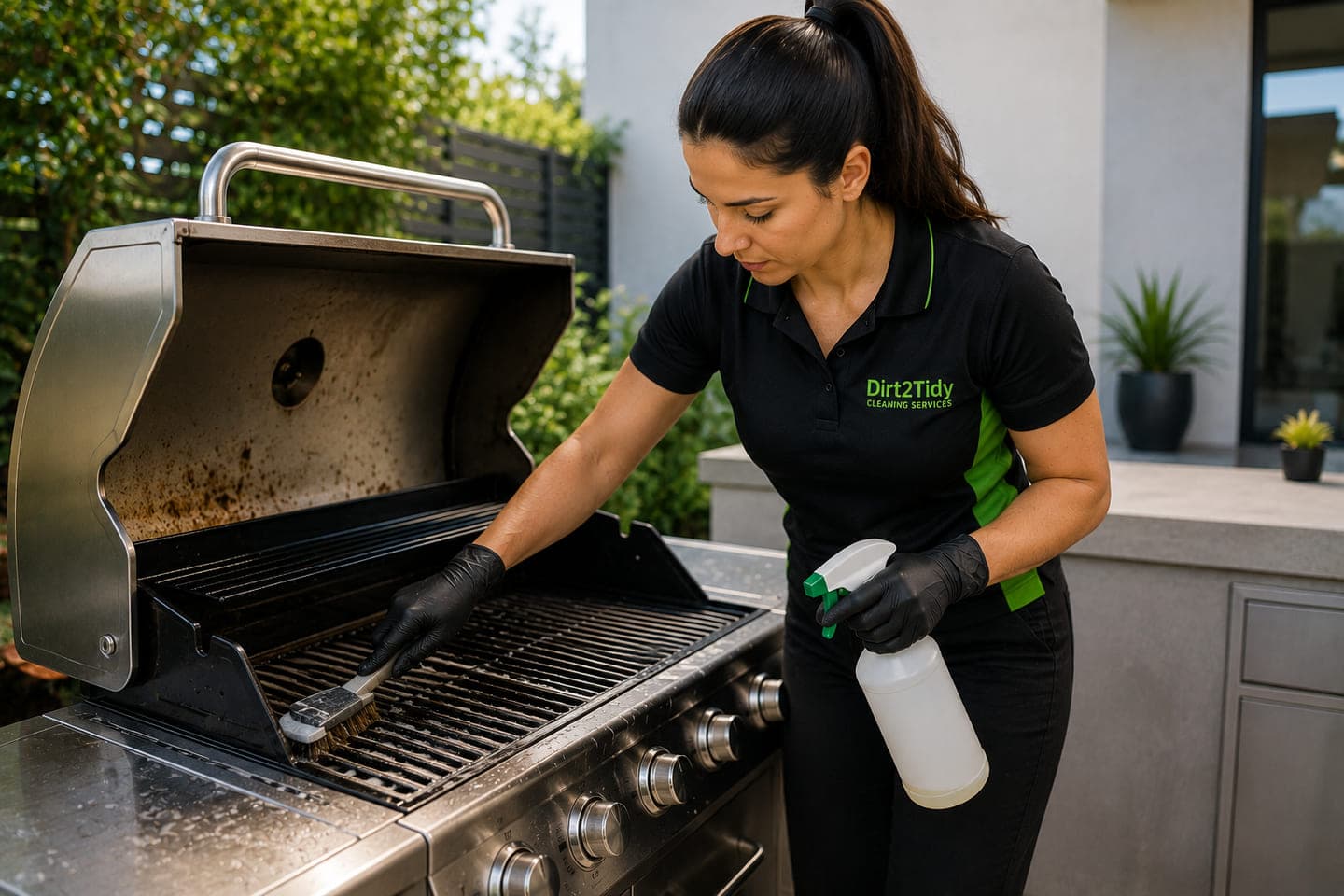
Apply evenly and allow dwell time as per instructions. This step is critical. Rushing reduces effectiveness.
Step 3: Scrub with Proper Tools
Use the right scrubbing tool for each surface:
- Nylon brushes for delicate coatings
- Stainless steel brushes for heavy duty grates
- Non scratch pads for lids and side panels
Scrub in controlled circular motions rather than aggressive scraping.
Step 4: Rinse Thoroughly
Grease residue mixed with cleaner must be fully removed. Incomplete rinsing can cause:
- Chemical taste in food
- Corrosion
- Discolouration
Use warm water and wipe dry immediately.
Step 5: Season and Protect Surfaces
After cleaning cast iron or steel components:
- Lightly coat with cooking oil
- Heat briefly to seal the surface
This prevents rust and slows future grease buildup.
Which BBQ Degreasers Work Best for Heavy Grease?
Not all degreasers are equal. Choosing the wrong one can damage your BBQ or leave toxic residue.
Commercial BBQ Degreasers
These are designed specifically for grills and food equipment. Look for:
- Food safe certification
- Low odour formulas
- Non caustic alkaline bases
They offer the best balance between power and safety.
Oven Cleaners for Extreme Buildup
Oven cleaners are very powerful and should only be used:
- On removable metal parts
- With gloves and ventilation
- Never on aluminium or painted surfaces
They are effective but high risk if misused.
Natural Degreaser Alternatives
For lighter grease or maintenance cleans:
- Baking soda paste
- White vinegar spray
- Lemon and salt scrubs
These are eco friendly but require more effort and time.
What Are the Most Common BBQ Cleaning Mistakes to Avoid?
Using Wire Brushes Incorrectly
Loose wire bristles can break off and stick to grates. These can end up in food and cause serious injury.
Safer alternatives include:
- Coil style grill brushes
- Pumice stones
- Wooden scrapers
Cleaning While the BBQ Is Too Hot
Spraying chemicals on hot metal can:
- Release toxic fumes
- Damage protective coatings
- Cause chemical burns
Always allow the BBQ to cool to a warm temperature.
Ignoring the Hood and Drip Trays
Many people clean only the grates. Grease in the hood and drip trays:
- Increases fire risk
- Causes smoke flare ups
- Drips onto food
A full BBQ clean includes all internal surfaces.
Mixing Cleaning Chemicals
Combining vinegar with alkaline cleaners or bleach can create harmful gases. Always rinse between products and never mix solutions.
You may also like to read about- “Surefire Move In Cleaning Hacks”

How Often Should a BBQ Be Deep Cleaned?
The frequency depends on usage.
- Light home use: every 3 to 6 months
- Weekly family cooking: every 2 to 3 months
- Commercial or Airbnb BBQs: monthly or more
Regular maintenance prevents heavy grease buildup and reduces cleaning time.
Is DIY BBQ Cleaning Always Safe?
DIY cleaning works for light to moderate grease. However, it becomes risky when grease is thick, carbonised, or inside gas components.
Potential risks include:
- Gas blockages
- Burner corrosion
- Fire hazards
- Chemical residue exposure
This is where professional BBQ cleaning becomes the safer choice.
When Is Professional BBQ Cleaning the Safest Option?
If you notice any of the following, professional help is recommended:
- Flames flaring unpredictably
- Thick black grease inside the hood
- Smoke even at low heat
- Grease dripping from the BBQ
Professional cleaners use specialised tools, food safe degreasers, and controlled methods that restore your BBQ without damage.
Dirt2Tidy offers specialised BBQ cleaning services designed for safety, hygiene, and long term performance. Their technicians handle heavy grease buildup efficiently while protecting grill surfaces and components.
Homeowners and businesses searching for bbq cleaning service sydney or bbq cleaning service sutherland shire often choose professional services to save time and avoid costly repairs. Similarly, high humidity areas benefit from expert care, making bbq cleaning service sunshine coast and bbq cleaning service brisbane essential for preventing corrosion and grease related fires.
Can Professional BBQ Cleaning Improve Food Taste?
Yes. Old grease and carbon residue affect heat distribution and release burnt flavours into food. According to food safety and cleaning guidelines, cooking equipment must be kept free from grease and carbon buildup to reduce contamination risks and ensure safe food preparation.
A professionally cleaned BBQ delivers noticeable improvements:
- Heats more evenly across the cooking surface
- Produces less smoke caused by burning residue
- Improves flavour clarity without burnt aftertaste
- Reduces flare ups and unexpected grease fires
Many customers notice an immediate difference after a deep professional clean, not only in food taste but also in overall BBQ performance and safety.
What makes BBQ cleaning different in coastal areas?
Coastal environments introduce extra challenges:
- Salt accelerates corrosion
- Humidity traps grease moisture
- Outdoor BBQs degrade faster
This is why regular maintenance and professional cleaning are particularly important in coastal regions like Sydney, the Sunshine Coast, and Brisbane.
How Long Does a Professional BBQ Clean Take?
A standard professional BBQ clean usually takes:
- 60 to 90 minutes for residential units
- Longer for commercial or heavily neglected grills
The result is a BBQ that looks cleaner, cooks better, and lasts longer.
Is BBQ Cleaning Environmentally Safe?
Professional services use food safe and biodegradable degreasers wherever possible, helping reduce environmental impact while maintaining high cleaning standards. By following best practices for preventing BBQ grease fires, Dirt2Tidy prioritises environmentally responsible cleaning without compromising effectiveness, making it a practical and safe choice for households and businesses alike.
You may also like to read about- “Say Goodbye to Dust and Clutter with Dirt2Tidy”
A Smarter Way to Enjoy Your BBQ Year Round
A clean BBQ is not just about appearance. It is about safety, flavour, and longevity. Understanding what dissolves grill grease, avoiding common cleaning mistakes, and knowing when to call professionals can make all the difference.
For households and businesses across Australia, Dirt2Tidy provides reliable BBQ cleaning solutions that restore grills to safe, hygienic conditions. Whether you are maintaining a family BBQ or managing multiple properties, professional support ensures your BBQ stays ready for every cookout without the stress of heavy grease buildup.
Frequently asked questions about BBQ grease removal
What is the fastest way to remove heavy grease from a BBQ?
Using a commercial BBQ degreaser with proper dwell time and heat assisted scrubbing is the fastest method. For extreme buildup, professional cleaning is safest.
Can vinegar remove BBQ grease?
Vinegar helps loosen carbon and residue but does not dissolve heavy grease on its own. It works best after degreasing.
Is pressure washing safe for BBQs?
Pressure washing can force water into burners and gas lines. It is generally unsafe unless performed by professionals with proper disassembly.
How do I prevent grease buildup in the future?
- Clean grates after each use
- Empty drip trays regularly
- Perform light monthly cleans
- Schedule professional deep cleaning periodically
Are professional BBQ cleaning services worth it?
Yes, especially for heavily used or neglected BBQs. Professional services extend equipment life, improve safety, and save time.
Your comfort begins with cleanliness! Book your appointment now and come home to the sparkle you’ve been missing.