
Three pricing models, one underlying maths
Hourly billing suits small sites, irregular work and scopes that will change — you pay for time on site. Per-square-metre pricing suits stable, open-plan floor areas where the scope rarely shifts; the rate scales with area.
Fixed monthly contracts consolidate frequency, tasks and consumables into one predictable invoice, and usually come in slightly below the sum of equivalent hourly visits because the provider can plan the labour. Underneath all three, the same build-up applies: minutes per task, multiplied by visits, plus on-costs.
A per-m² number hides the labour maths, so ask any provider for the assumed hours behind their monthly figure — it exposes whether a low price means efficiency or thin service.
What the baseline scope includes
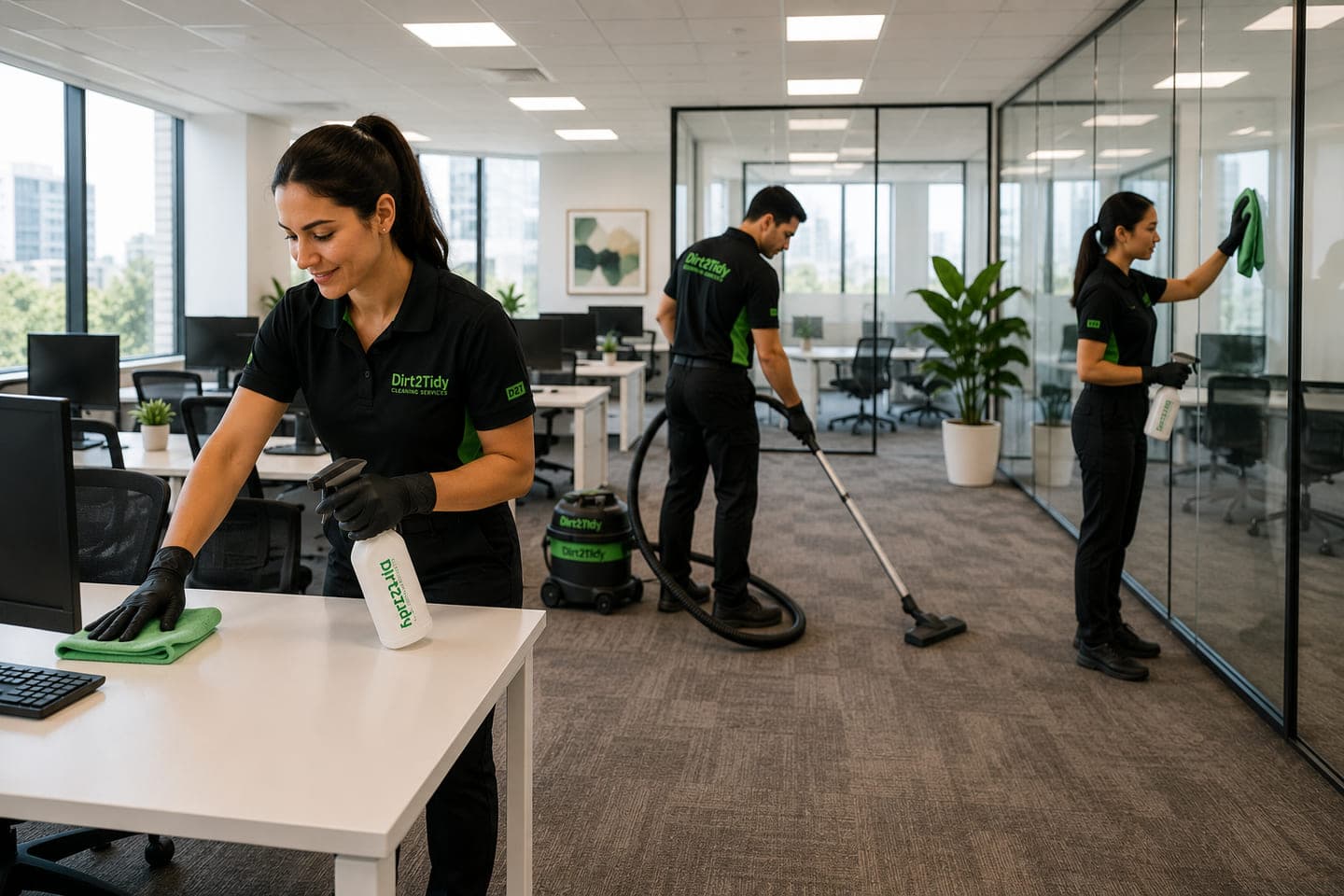
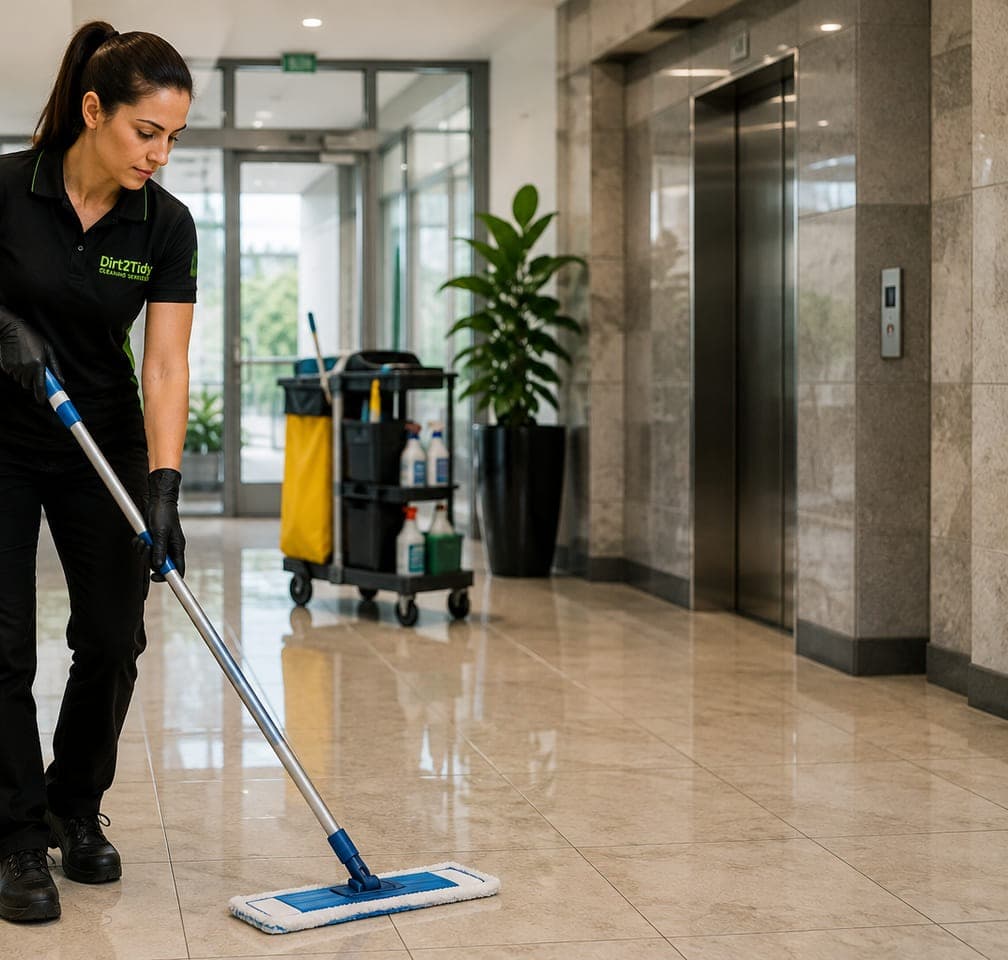
A standard office contract typically covers: vacuuming carpet and traffic lanes, damp-mopping hard floors, emptying bins and replacing liners, wiping desks and suitable surfaces, sanitising high-touch points, cleaning kitchens (sinks, benches, exterior appliance faces) and bathrooms (sanitaryware, taps, mirrors, floors), and restocking soap, paper and sanitiser where supplied.
If a quote omits any of these from the written list, it is not included at any price. Everything deeper — carpet extraction, internal glass, strip-and-seal, ovens, high dusting, blinds — is periodic work priced separately; a monthly contract should say which of those sit inside the fee and which arrive as scheduled extras.

The levers that move the number
Frequency is the largest: daily visits cost most per month but least per visit, because each clean only maintains rather than restores. Additions to the base scope raise the price less than re-quoting from scratch.
Site features drive labour time more than floor area does: bathrooms, kitchens and shower facilities consume far more minutes per visit than open desks. After-hours, weekend and public-holiday work carries award penalty loadings — evening and overnight cleans cost noticeably more per hour than weekday ones.
Location matters through labour markets and travel: metro CBD sites, especially where building access, security and loading docks add overhead, sit above regional rates. Compliance-grade environments such as medical, aged care and childcare attract a premium for documented procedures and training.
How consumables and incidentals change invoices
Ask whether toilet paper, hand soap, paper towels, sanitiser, bin liners and bathroom chemicals are inside the quoted rate or billed as supplied consumables, because a low rate plus a monthly consumables line routinely beats a higher all-inclusive one.
Same story for extras: one-off requests, event cleans, flu-season disinfection, external window cleaning, and waste beyond standard bins. GST treatment should be explicit — commercial quotes are commonly presented excluding GST, so add ten per cent mentally before comparing against any figure quoted inclusive.
And clarify who pays for damaged or replaced items and how that claim works.
Why suspiciously cheap quotes go thin
Cleaning is labour; award safety-net wages, superannuation, insurance and supervision set a floor below which an honest quote cannot sit.
A monthly number implying only minutes per visit does not buy a checklist's worth of work, so it is bought back somewhere: rota churn of untrained casuals, skipped periodic items, sub-insured crews, or silent scope erosion that surfaces as add-on charges.
Verify instead of hoping: request insurance certificates, ask how staff are screened and trained, get the checklist that will be audited, and require that deviations and extras are quoted in writing.
The Fair Work Commission's Cleaning Services Award is the wage baseline most Australian contracts price above — a rate below a plausible labour cost is not a bargain, it is a risk transfer.
Brief providers so quotes compare line for line
Send every bidder the same three things: floor area (measured, not guessed) with a simple layout or photos, a task list grouped by area and required frequency, and your access realities — hours, alarms, strata rules, bins, security. Request pricing split into recurring labour, periodic items and consumables, with assumed visit-hours stated.
Two quotes become comparable; three make your decision obvious. For a worked comparison approach, see our guide to understanding cleaning service costs, and how operators price the trade in pricing cleaning services.
Where Dirt2Tidy sits
Dirt2Tidy arranges commercial and workplace cleaning across Australian cities, with the standard and periodic tasks written into the booking scope so the recurring and one-off lines are visible before work starts.
Compare options for your site on the office cleaning service and commercial cleaning pages — and if the workplace is a leased tenancy preparing to hand back, the exit reset is a different job again: end-of-lease cleaning covers the inspection-grade version.