
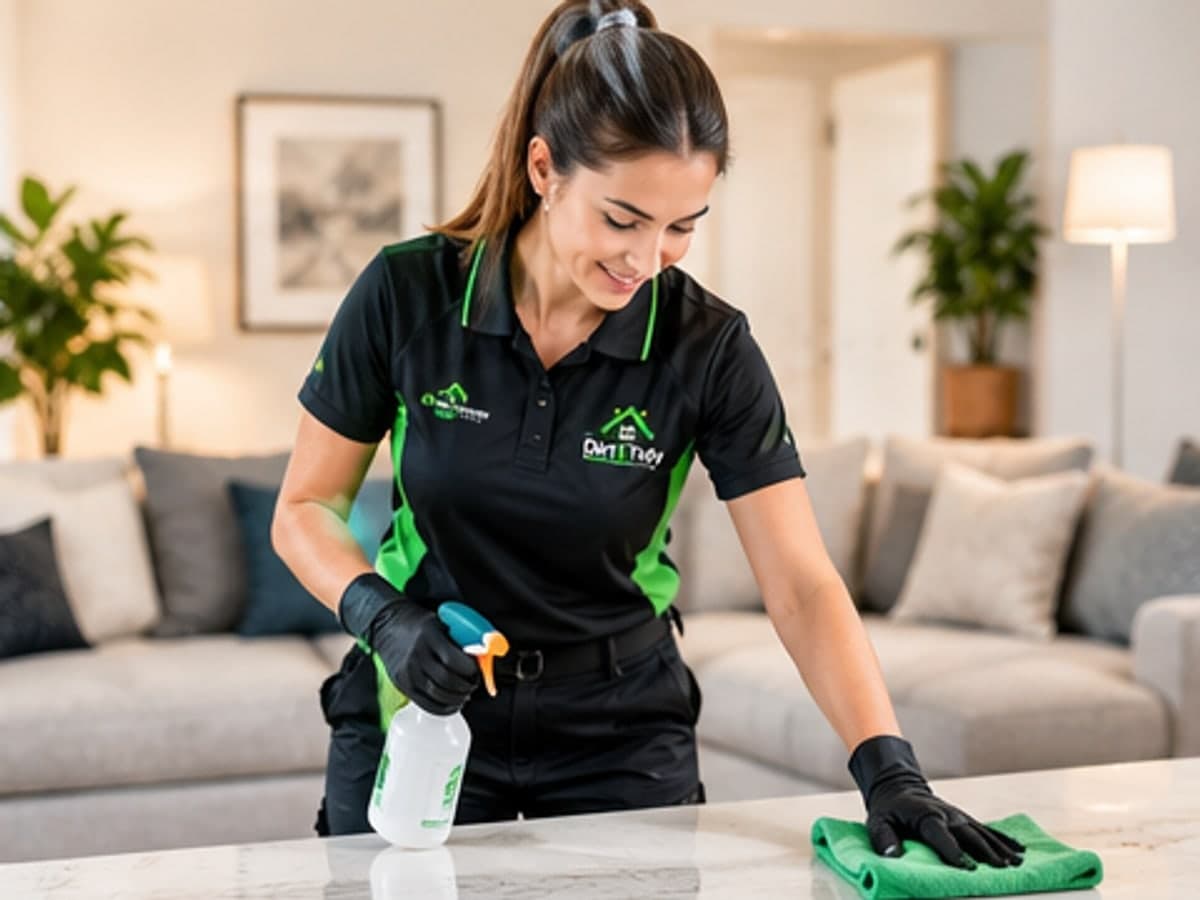
1. Pick a small priority list
Choose the rooms and tasks that matter most today, such as dishes, rubbish, bathroom surfaces or a clear entry path. A short list is easier to finish than trying to deep-clean every room at once.
2. Clear loose items and gather suitable supplies
Put belongings where they belong, then collect the tools and products needed for the listed tasks. Keep products in their original containers, read labels and never mix cleaners.
3. Work from higher surfaces down
Dust reachable shelves and fittings before wiping surfaces and cleaning floors. Keep liquids away from electronics, sockets and delicate finishes, and follow care instructions for each material.
4. Match the method to the surface
Use a compatible cloth, brush or vacuum attachment and avoid abrasive tools unless the surface maker permits them. Test unfamiliar products only as directed and stop if a finish changes.
5. Reset high-use areas
Wipe kitchen benches, remove food waste, refresh the bathroom and keep walkways clear. If several people share a home, agree who handles common tasks and where supplies are stored.
6. Leave specialist tasks for a suitable provider
Carpet extraction, oven interiors, exterior windows, repairs, pests and hazardous materials may need separate scope or a qualified provider. For a domestic-cleaning quote, list the rooms, condition, access and optional tasks.


