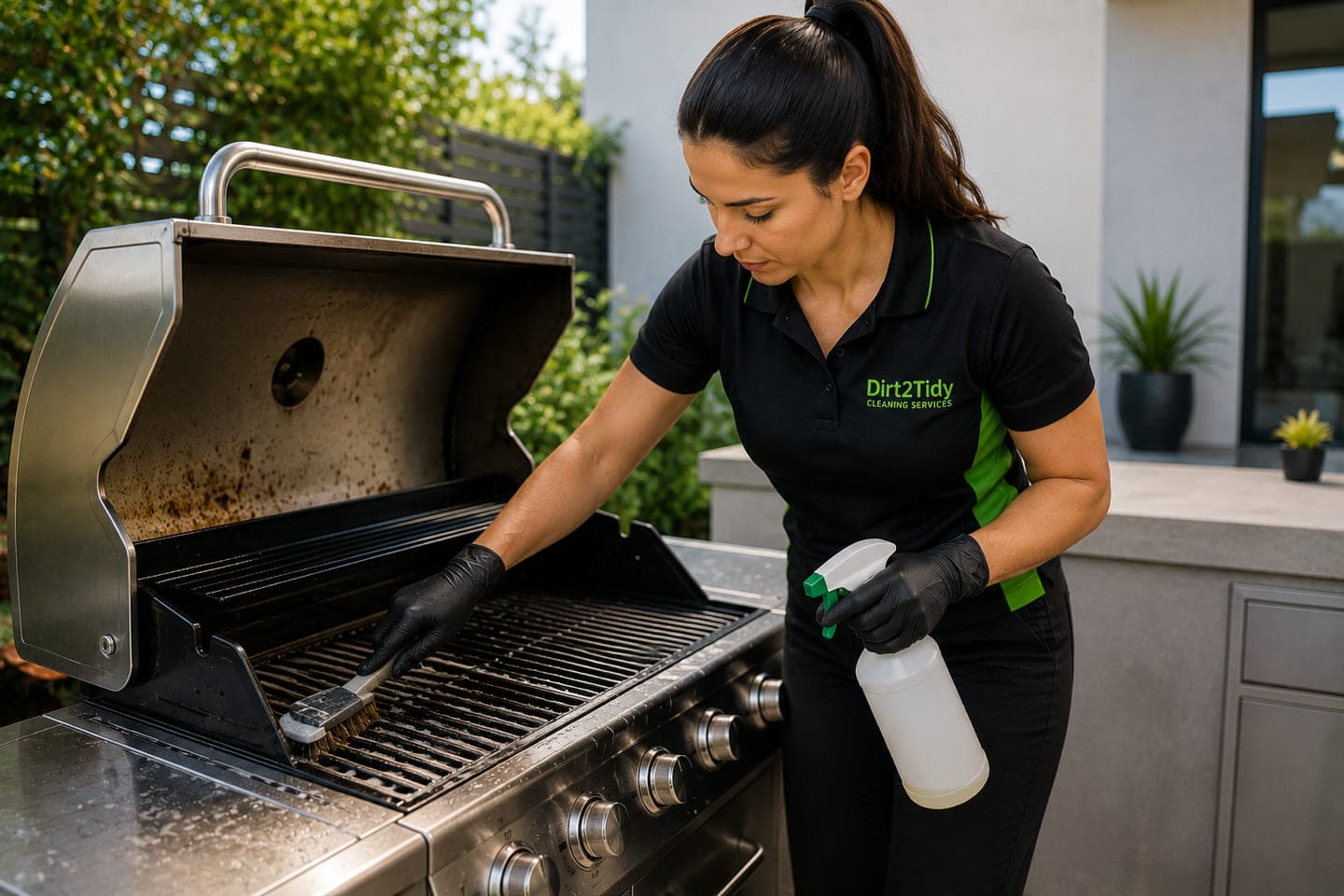
List the rooms and surfaces that need attention
Start with the kitchen, bathrooms, living areas, bedrooms and high-touch surfaces relevant to your household. Note visible soil, access, pets, fragile items and any product restrictions. A cleaning checklist records requested work; it is not a health inspection.
Check each surface and product instruction
Use the surface or appliance maker’s care information and the exact cleaning-product label. Directions may differ for food-contact surfaces, electronics, stone, timber, fabrics and painted finishes. Never mix cleaning products or transfer them into unlabelled containers.
Keep cleaning separate from disinfection
Routine cleaning and disinfection are different tasks. A product name or clean appearance does not establish that a surface has been disinfected or that a health risk has been removed. Use a disinfectant only for the exact labelled purpose and follow its current directions.
Agree a realistic service scope
When arranging help, list the rooms, accessible surfaces, frequency, access and any tasks requiring separate approval. Confirm inclusions, exclusions, product restrictions and price in writing. Repairs, pest treatment, mould remediation and hazardous-material work are separate specialist scopes.
Seek health advice from the right source
Cleaning providers do not diagnose symptoms, prescribe treatment or certify a home as healthy. For illness, infection or individual health concerns, contact a qualified health professional or the relevant public-health authority. For product exposure, follow the label and contact the appropriate poison-information or emergency service.