
Read the object before the recipe
Three documents outrank any tip thread: the care label or law tag naming the fill, the warranty card, and whether the cover unzips. A washable cover is not a washable mattress; strip and launder the cover at its own tag temperature and treat the core as its own, far more moisture-anxious object.
Memory foam and latex want the least water of anything in the bedroom, spot treatment at barely-damp and the longest drying allowance, manufacturers like TEMPUR go as far as telling owners not to wet-clean their foam at all.
Springs tolerate a touch more but hate being soaked from the sides where rust and mould both take up residence.
And check the warranty before touching a stain, Sealy's terms exclude fabric stains and let it decline service on a stained mattress, which is the same document that justifies a protector purchase better than any advertisement. When the label is missing or unreadable, the safe default is the gentlest foam protocol.
The dry backbone: vacuum, seams, base
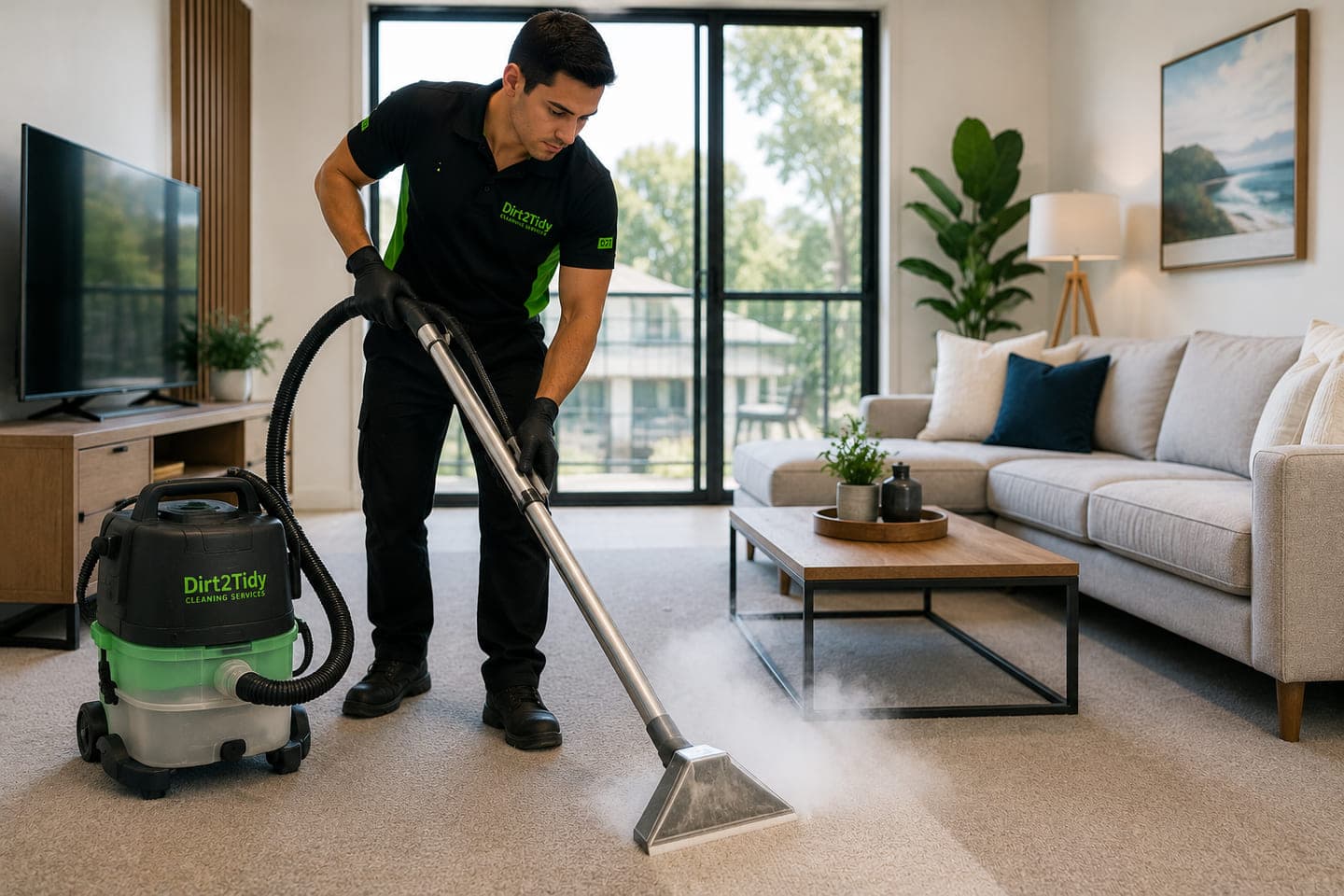
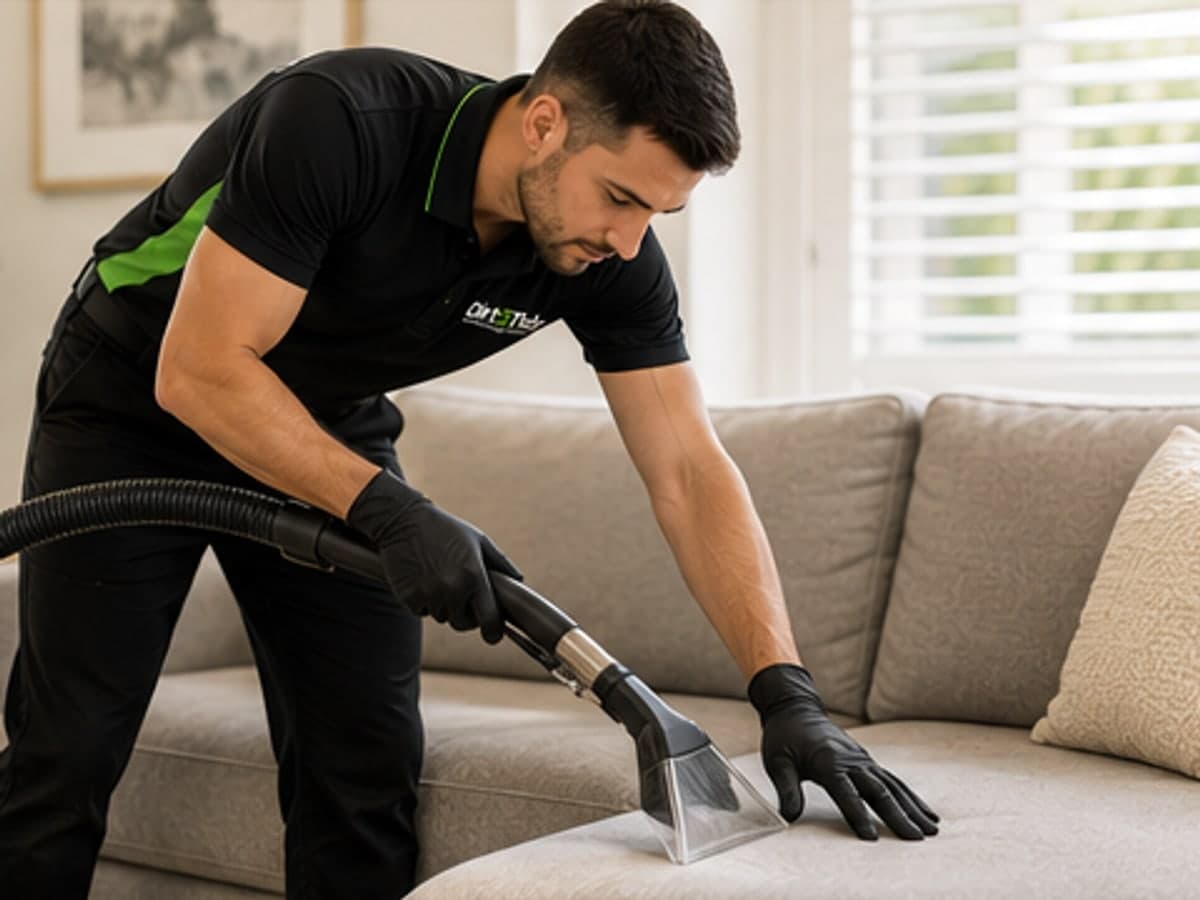
The step with the biggest measured payoff is also the one everyone skips: a slow, overlapping vacuum pass with the upholstery attachment across the top and sides, the crevice tool along seams, piping and pillow-top grooves where the dust and the allergens actually live, then the underside tilted against a wall, then the base or slats while the mattress is up.
CHOICE's two-yearly clean guidance and Dyson's own mattress-tool instructions agree on this much: suction, not chemistry, does the soil removal; a turbo carpet head can be too aggressive on fabric panels, and a small number of mattress materials tell you outright not to vacuum, in which case a soft brush takes the pass.
The monthly version of this routine, five minutes, is most of what keeping a mattress clean actually means, and the same dry-first, fabric-code discipline governs soft furniture, laid out in the upholstery cleaning guide.
Stains: the blot ladder, and the one that needs caution
Fresh first.
Scoop up any excess without rubbing, then blot from the outside of the mark inward with a barely damp white cloth and a drop of mild detergent, rinsing the cloth and repeating; move through the household ladder that Australian guides converge on, plain water first, then dilute detergent, then for protein fluids like urine, vomit and blood, blot, gentle detergent blot, then bicarb paste rested thirty minutes and wiped off, drying between rounds because moisture itself is the enemy of foam.
Diluted white vinegar or an enzyme cleaner come next for stubborn organic marks, spot-tested, kept damp-not-wet, and peroxide only where you accept its bleaching risk on fabric, three-percent strength, brief contact, blot, dry.
Never pour, never scrub into the weave, never steam a mattress on assumption; the drying problem you create is worse than the stain you are chasing.
If a mark refuses two gentle rounds, it has likely set, and the realistic next answer is either a professional assessment or living with a line in the sale listing.
Odour, dehumidifying and the bicarb pass
Smell in a mattress is trapped moisture carrying old skin and salt chemistry, and the response is air plus absorbent rather than fragrance.
The Australian standard works: an even bicarbonate-soda layer rested for several hours, CHOICE suggests a full day for a thorough reset, then vacuumed off in slow straight lines until no powder remains; sunlight for a few hours on a dry breezy day genuinely helps and is worth the lift, window glass filtering far less than people assume; a fan and open ventilation finish what the sun started.
Rotate the mattress head-to-foot while it is bare, and if a must smell returns within days of a dry reset, the moisture source is the room or the base, not the surface, and the fix is airflow or a new foundation rather than more powder; the companion routine for what sits on top, the pillows themselves, is covered in the guide to cleaning your pillows.
When the honest answer is a protector or a specialist
A washable waterproof protector is the highest-leverage object in the bed, the reason warranties like Sealy's exclude stains is that once fluid crosses the cover line, cleaning stops being maintenance and becomes restoration; if you sleep without one, the next spill is the last chance to start.
Beyond that threshold, professional extraction exists for spring-and-fabric builds where equipment can rinse and recover water properly, and foam or latex past a soaked event usually wants manufacturer advice rather than rescue attempts, since trapped moisture in sealed cores is how mould stories begin.
And some objects are at the end of their service: a deeply sagged, stained, years-un-vacuumed mattress fails comfort and hygiene together, and replacement beats another weekend of chemistry.
For households where allergen load is the reason the mattress matters, the periodic whole-home deep clean rhythm, or a booked deep cleaning service for the extraction layer, is what keeps this routine sustainable.