Why foil is not a universal grill cleaner
Grates may have porcelain, enamel, cast-iron or other coatings that respond differently to abrasion. Foil can mark or damage some finishes, and fragments should not be left on a cooking surface. Do not assume a high heat cycle will make an unsuitable tool safe.
Choose a tool that matches the surface
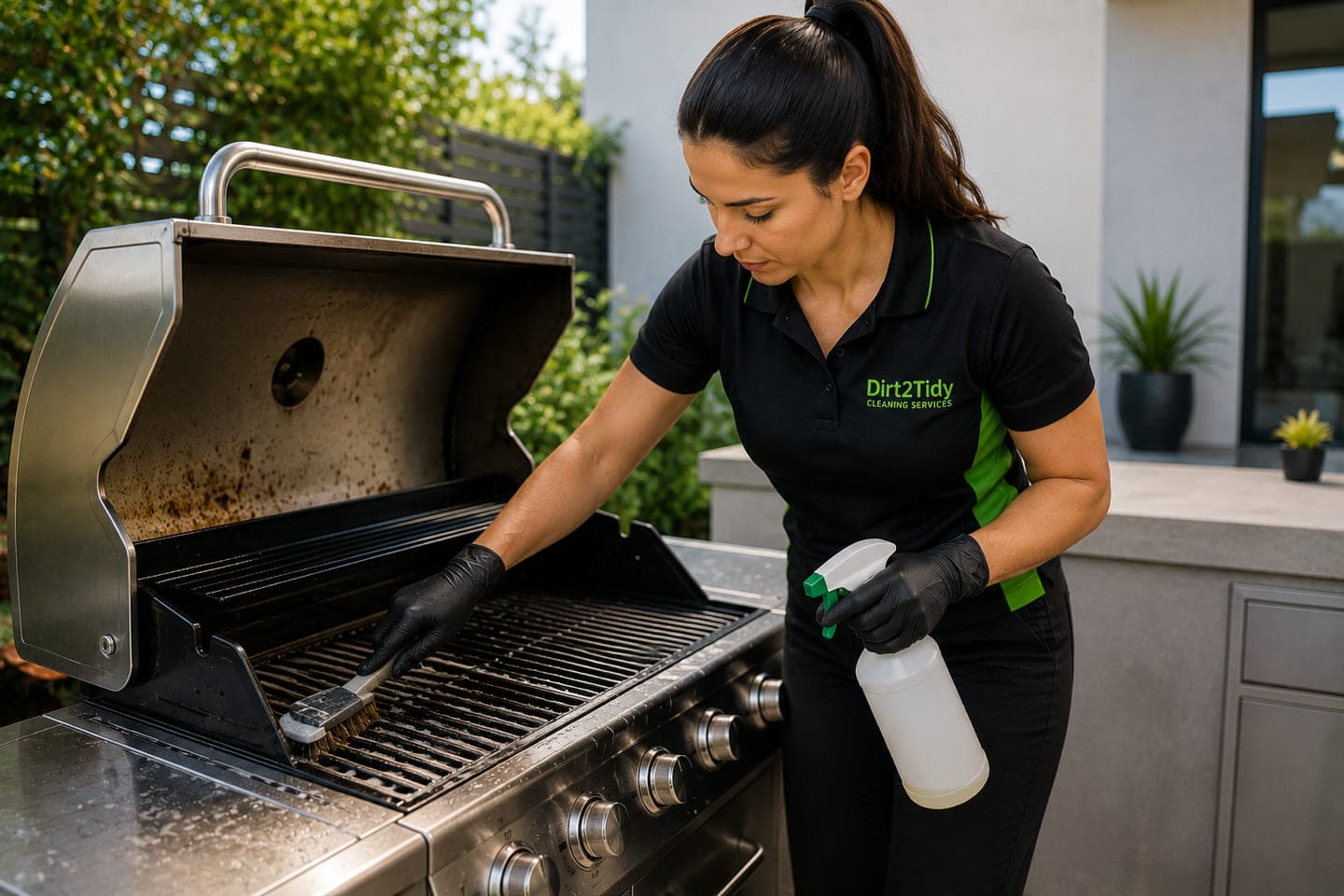
Turn the barbecue off and let it cool. Check the manual for an approved brush, scraper or cloth and use it only on the parts for which it is intended. Avoid improvised metal tools, abrasive pads and products not approved for the surface. Inspect the cooking area for loose debris before using the appliance again.
Clean other BBQ parts separately
Drip trays, burners, hood, controls and exterior panels may have different care instructions. Do not scrape burners, dismantle gas parts or direct liquid into controls. For grease disposal, appliance care and reassembly, follow the model-specific manual.
Stop if the surface or appliance is damaged
If a coating is flaking, a grate is corroded or an appliance component appears loose or blocked, stop and seek manufacturer or qualified-service advice. Cleaning cannot repair a damaged surface or certify the appliance safe to operate.