Describe the workplace and cleaning scope
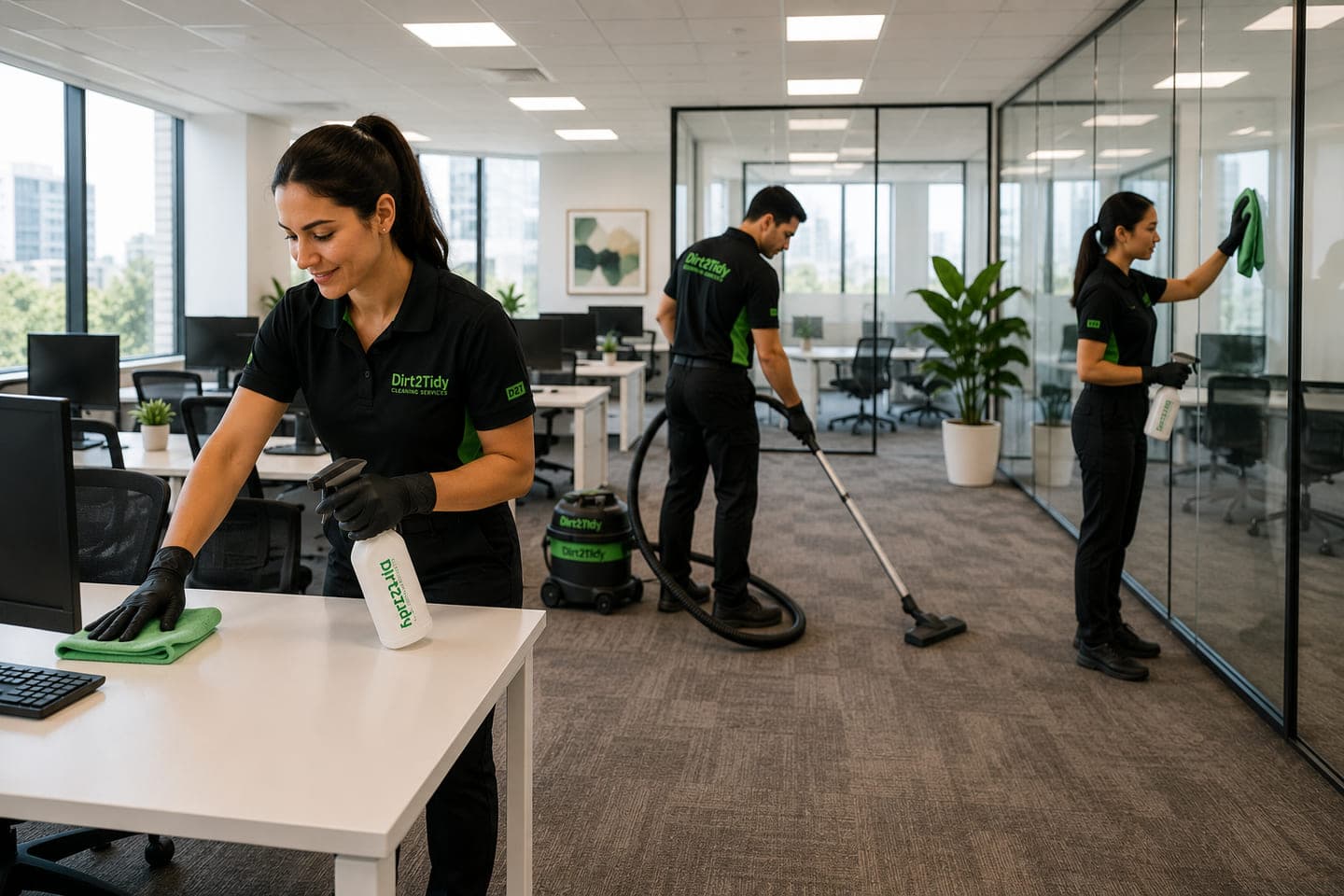
List offices, meeting rooms, reception, kitchens, washrooms, floors, shared areas and high-touch points that need cleaning. Note occupancy, foot traffic, floor materials, waste and any restricted zones. A site walk-through or plan can help both parties discuss the same work areas.
Agree timing, access and security
Set cleaning times around staff and visitors, and specify keys, alarms, building access, parking, loading and rooms that must remain locked. Clarify who is the site contact and how schedule changes or missed access are handled. Do not assume a provider can guarantee replacement staffing or immediate attendance unless the agreement says so.
Compare supplies, reporting and price
Confirm who supplies products and equipment, which surfaces or specialist tasks cost extra, how waste is handled and how quality concerns are recorded. Compare itemized quotes on the same scope and frequency. Insurance, screening, sustainability claims and staff terms should be verified with the provider rather than inferred from marketing language.
Keep specialist and regulated work separate
Routine office cleaning does not automatically include hazardous waste, infection-control work, pest treatment, repairs, high-level access or regulated decontamination. Identify those requirements before selecting a provider and arrange a suitably qualified service where needed.