1. Does the provider need the model and fuel type?
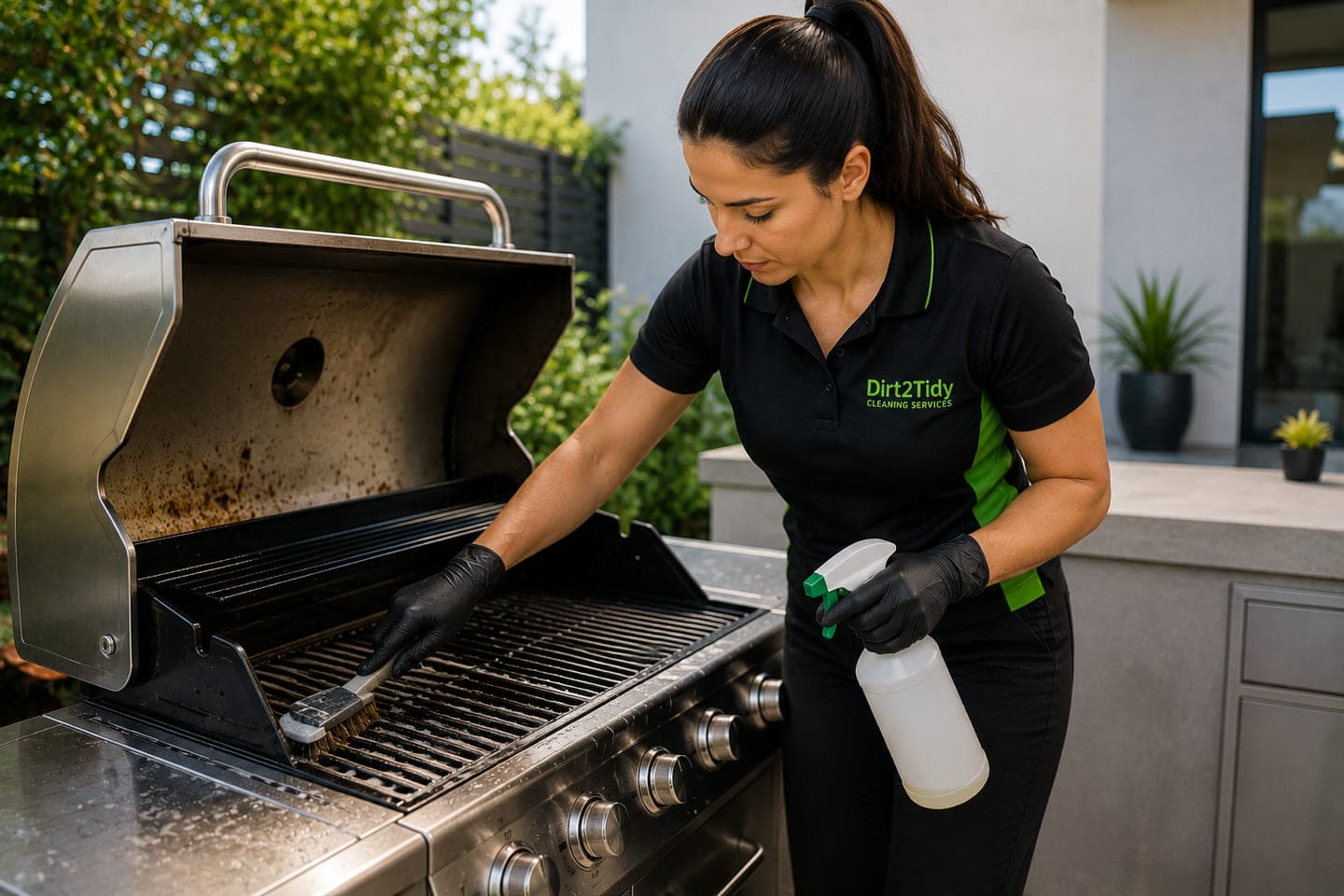
Share the manufacturer, model, fuel type, visible condition and any manual or care label. Ask whether the provider can assess that exact appliance and what information is still needed before quoting.
2. Which components are included?
Ask whether the quote covers only accessible exterior and cooking surfaces or also specified removable components, trays or accessories. Do not assume burner removal, gas-line access, ignition service, repair or replacement is included.
3. How will surface and coating compatibility be checked?
Ask the provider to compare the proposed tool and product with the appliance maker’s care instructions. If a coating, material or part is unknown or damaged, get manufacturer or technician advice before treatment.
4. Which products and label precautions apply?
Request product names and check the exact labels for approved BBQ use, surface compatibility, ventilation, protective measures, rinsing and drying. Never combine products or use an unlabelled mixture.
5. What does the provider require before arrival?
Confirm that the BBQ must be off and cool, whether it needs to be accessible and what items should be removed. Follow the exact appliance manual and provider instructions; do not disconnect fixed fuel or electrical components yourself.
6. What faults or conditions are excluded?
Ask how the provider handles gas odour, damaged hoses or wiring, faulty ignition, corrosion, heavy deposits or parts needing repair. These may require a qualified appliance technician rather than a cleaner.
7. What are the written price and limits?
Confirm model, components, access, products, exclusions, price basis and aftercare in writing. A cleaning service does not guarantee a food-safety result, prevent a fire, restore appliance performance or extend appliance life.