Treat the design as trade and designer territory
Layout, waterproofing, plumbing, electrical and tiling decisions are for qualified designers and licensed trades — nothing here replaces them.
What you can bring to that process is a maintenance lens: a beautiful recessed niche that quietly collects mould, tapware that's a nightmare to descale, or an awkward floor-to-wall junction where grout blackens are the things that look stunning on day one and punish you for years.
Raising your cleaning worries early lets the design account for them rather than creating a pretty room that's miserable to keep.
Finishes that stay clean in Australian conditions
Australia's mix of hard water, coastal salt and humid or cold-climate damp makes bathroom upkeep particular.
Large-format tiles with fewer grout lines, a well-sealed and properly sloped shower, matte or brushed tapware that hides water spots, ventilation that actually clears moisture, and smooth, reachable surfaces all stay cleaner than busy mosaic with deep grooves in a wet room.
Choosing low-retention finishes isn't a style compromise — it's simply how the room still looks properly maintained a decade down the track.
Where grime and mould like to hide
The pain points are predictable: silicone and grout lines, the underside and rear of the basin, the base of a tap and around the drain, recessed niches, the far side of a bathtub, shower-door tracks, and any junction that's poorly sealed or sloped.
In damp Australian bathrooms these creep black and pink, and in hard-water areas they scale up fast. A layout that makes each of them reachable and quick to wipe — rather than tight and fiddly — is the single biggest contributor to a bathroom that's genuinely easy to maintain.
The builders' clean at the end of the job
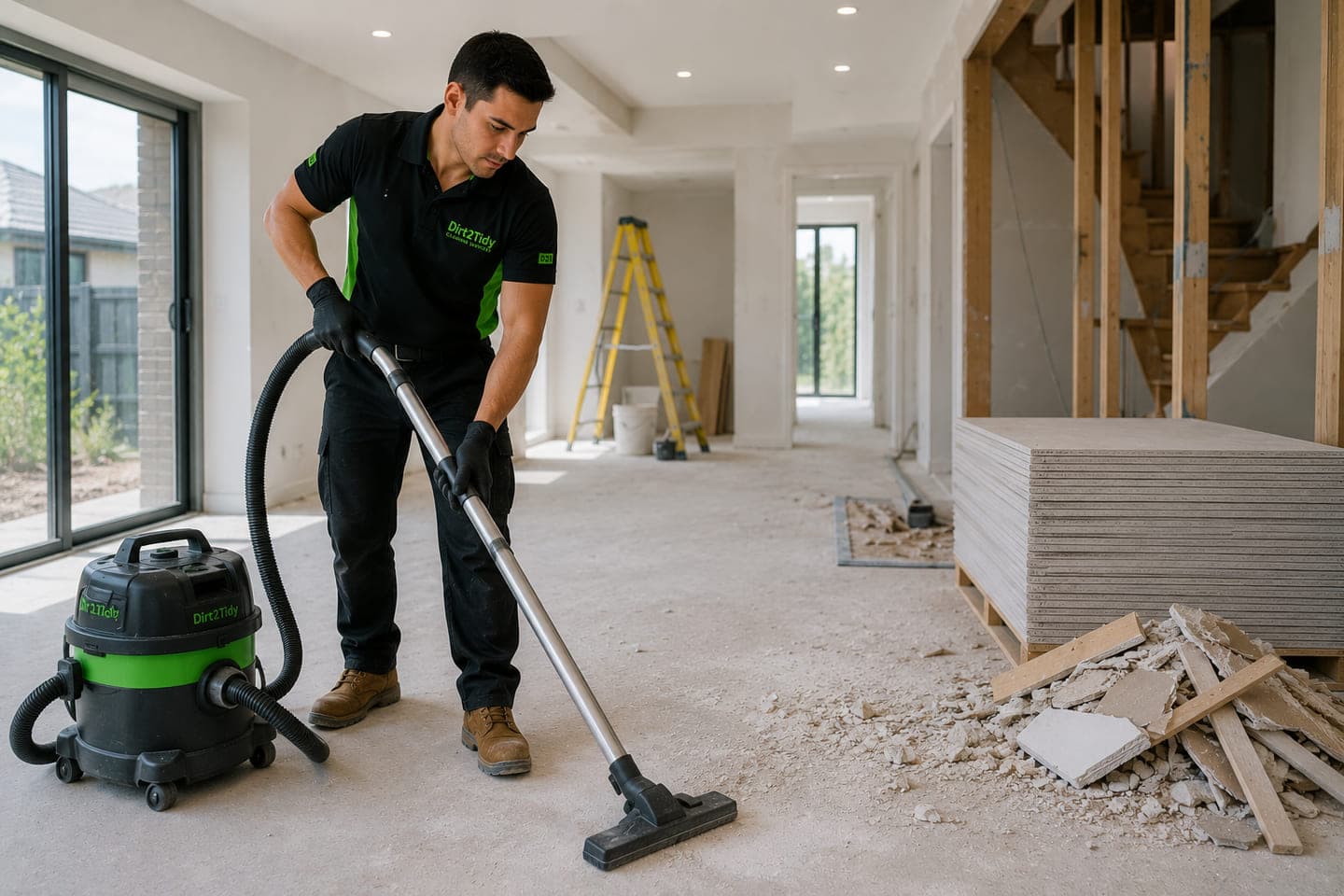
Once the trades finally finish, a new bathroom needs a proper post-construction clean before use — fine dust and grout residue, silica haze across tiles and glass, adhesive and paint marks, and a careful first clean of every surface, junction and fitting so the room is hygienic and shows correctly.
That reset also reveals anything to raise with the trades before handover. It's a distinct job from routine upkeep, and worth booking as its own scope the moment the last trade has genuinely gone.
Planning around the real cost of upkeep
A renovation is an investment, so build in what the finished bathroom will actually take to maintain, not just what it costs to install. A design that needs constant scrubbing, harsh products or frequent specialist resealing adds quiet ongoing cost, while one that wipes down in a few minutes saves it.
Talk your trades and designer through your maintenance priorities, book the builders' clean at the end, and set a simple routine for the damp-prone areas so the renovation keeps looking as good as it did when handed over.