Start with the exact work, not the job title
Write down the project, tasks, materials, location, expected stages and who will coordinate subcontractors. Ask each provider to identify what they will do, what they will exclude and which tasks require another trade or approval. Do not assume a general contractor performs regulated work personally.
Check qualifications and licence scope for the location
Licensing rules vary by state, trade and contract value. In NSW, Building Commission NSW directs homeowners to check a builder or tradesperson licence and provides a guide to preparing for a build or renovation, including choosing a tradesperson or builder and checking qualifications.
Use the regulator for the state where the work occurs and verify the licence covers the actual task.
Compare written quotes and contracts
Ask for itemised work, materials, price basis, timing, insurance details, variation process, warranties, payment stages and dispute contacts. NSW Government explains home-building contract requirements in NSW; that information does not apply automatically in other jurisdictions. Have a lawyer or qualified building adviser review a consequential contract.
Confirm who is accountable on site
Ask who obtains approvals, coordinates trades, controls site access, handles waste and signs off work. Clarify how changes, delays, defects and complaints are recorded. Obtain current insurance evidence from the relevant party rather than relying on a generic marketing claim.
Separate post-build cleaning from construction work
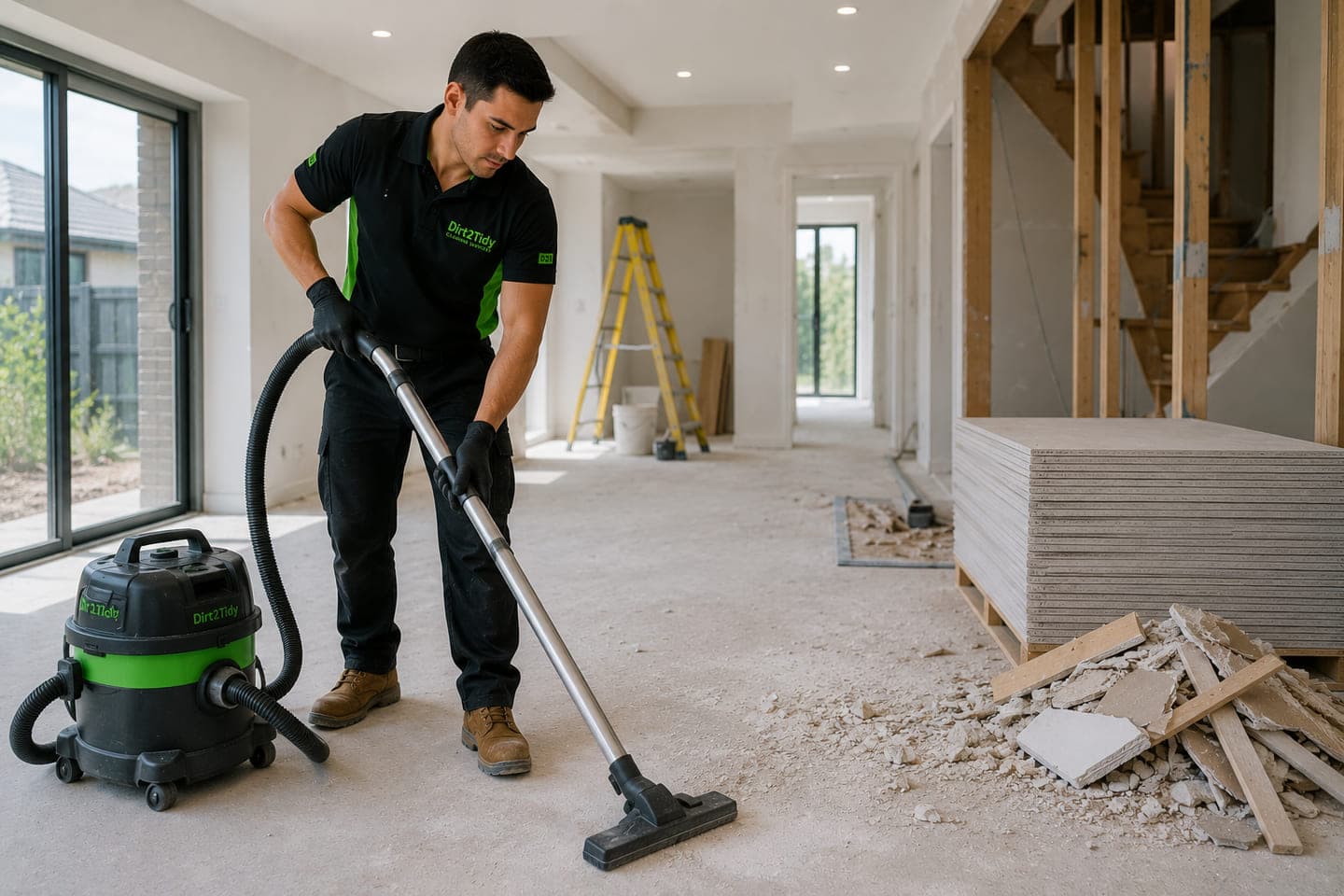
Cleaning after a contractor’s work is a separate scope from building, repair, defect inspection or certification. Confirm the site is released, ordinary debris responsibility, surfaces and access before requesting cleaning. Dirt2Tidy does not claim to be a builder, licensed trade contractor or building certifier.