

Turn off and cool the BBQ
Switch the appliance off and let it cool fully before touching grates, trays or the exterior. Isolate gas or electricity only as the manual directs, and do not clean a damaged or faulty unit.
Match tools to the grate
Cast iron, porcelain-coated, enamel and stainless surfaces need different care. Use a brush or scraper only if the manufacturer permits it, and inspect the cooking surface for loose bristles or fragments before use.
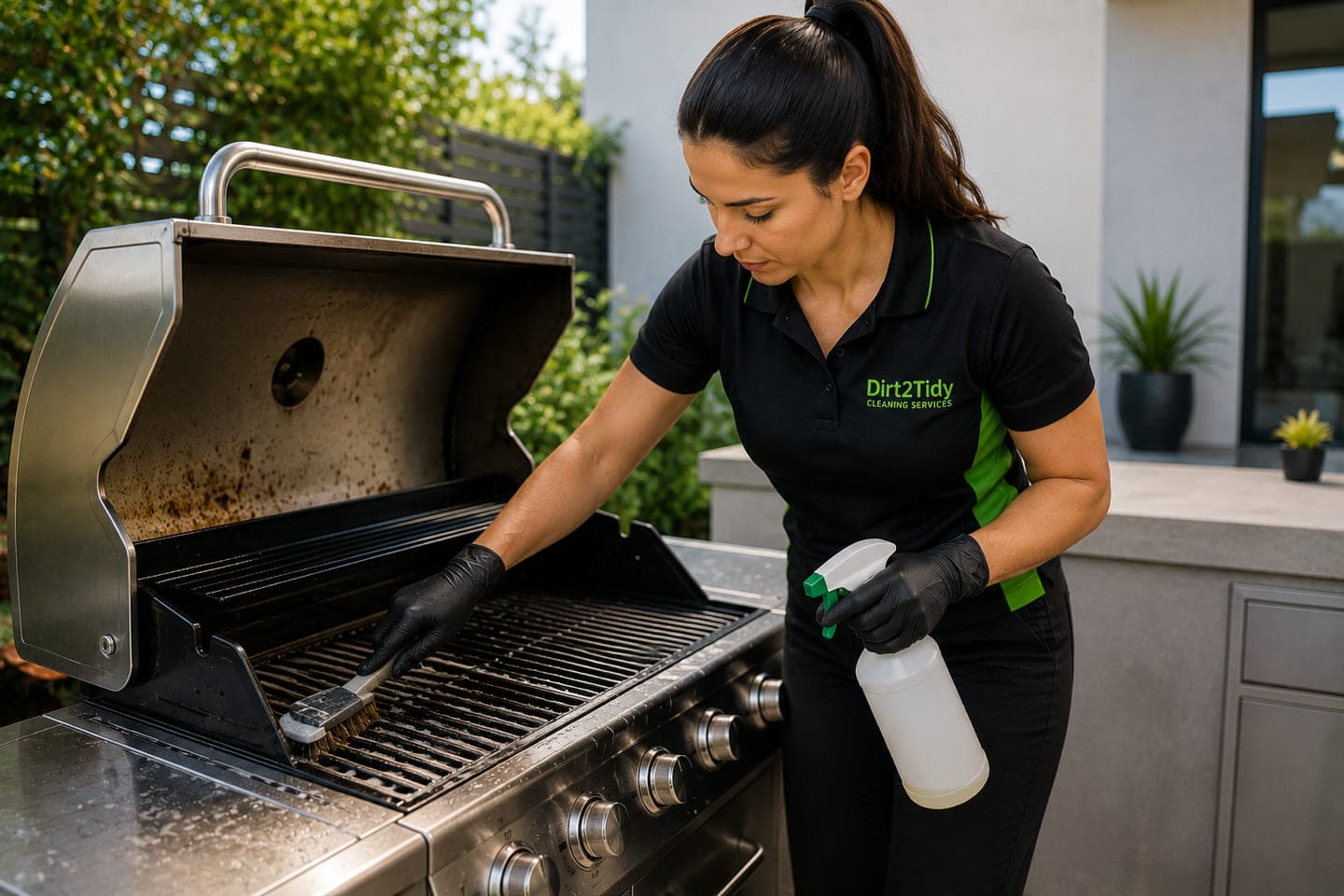
Clean grease and removable parts separately
Empty a drip tray when cool and follow the manual for removable plates and racks. Keep liquid away from burners, controls and electrical fittings. Do not use a cleaner on a food-contact surface unless its label allows that use and specifies any rinse.
Avoid unapproved chemical or heat methods
Do not mix vinegar, baking soda, bleach, degreaser or oven cleaner. Avoid burning off heavy grease or dismantling burners unless the appliance maker and a qualified technician direct the work.

Know when a BBQ needs a technician
Gas odour, damaged hoses, faulty ignition, corrosion or blocked burners are repair issues. Stop using the BBQ and arrange appropriate service; cleaning cannot certify safe operation or prevent every flare-up.

