
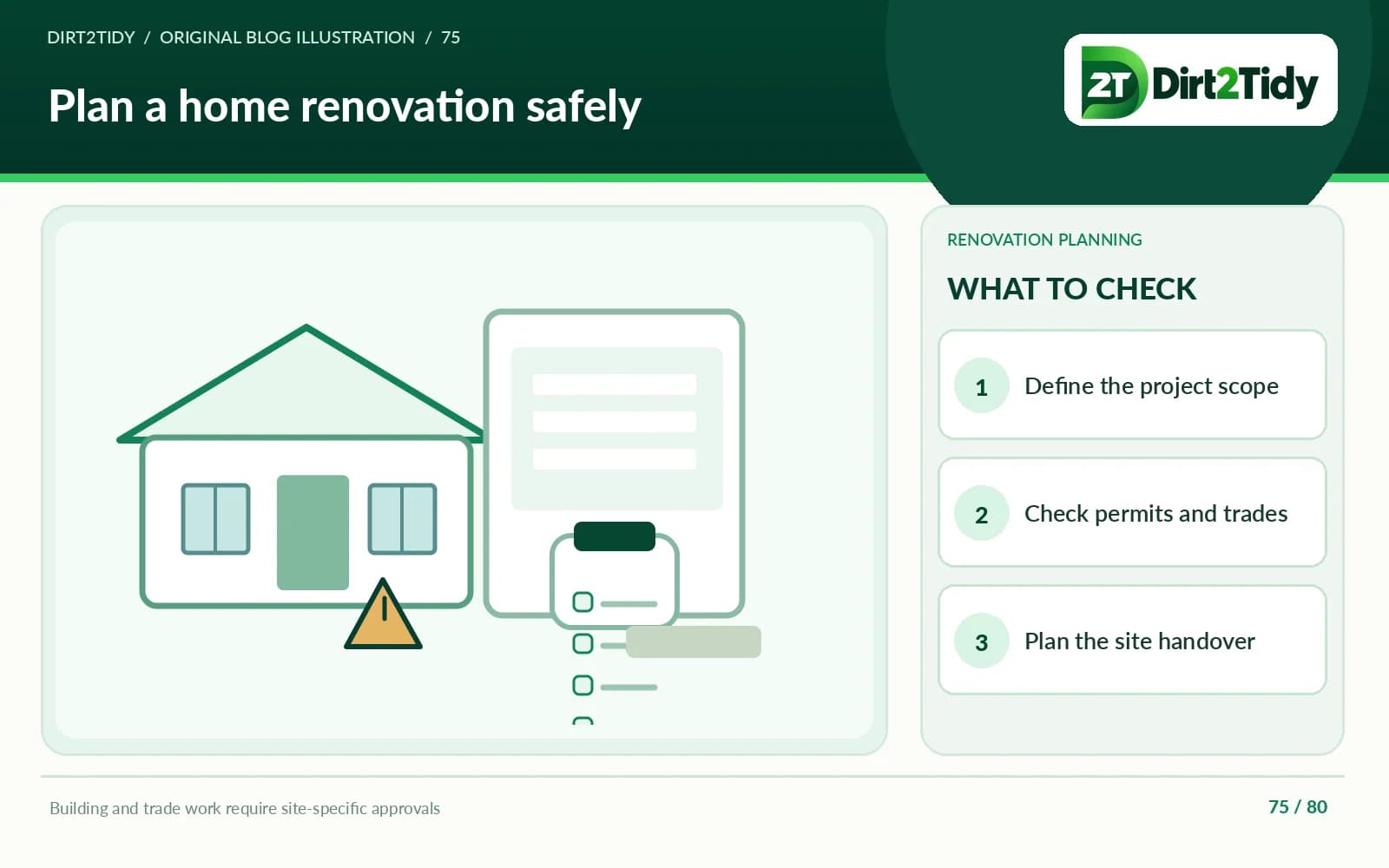
Define the work and constraints
Describe the rooms, changes, materials, appliances, access and desired outcome. Identify whether the property is in a strata or owners-corporation scheme, is heritage-listed, shares services or has limits on working hours and waste. Keep the brief separate from assumptions about cost, time or whether approval is required.
Check approvals and local rules
Before engaging work, ask the local council or building authority whether planning, building, strata or other approvals apply. For NSW, Building Commission NSW provides a building and renovation information hub, including approvals and contractor guidance. Other states and territories have different authorities and requirements.
Verify the people and written scope
Ask who will manage the project, which trades will perform each task and what licence or registration is required for the actual work. NSW homeowners can use the government’s contractor qualification and licence-check guidance. Request a written scope, quote, contract, insurance evidence and variation process; obtain legal advice before signing unclear terms.

Identify hazardous materials and site safety needs
Older buildings or unknown materials may require qualified assessment before disturbance. If asbestos is suspected, do not cut, sand, drill, sweep or vacuum it; use the relevant state asbestos authority and licensed assessor/removalist. Do not enter an active work area without site authorisation and controls.
Plan handover and separate cleaning
Agree who clears ordinary construction waste, confirms trade completion, releases the work area and protects finished surfaces. Construction cleaning is a separate service after site release; it does not repair defects, remove hazardous materials or certify compliance. Confirm tasks and access once the builder or site manager approves entry.



