
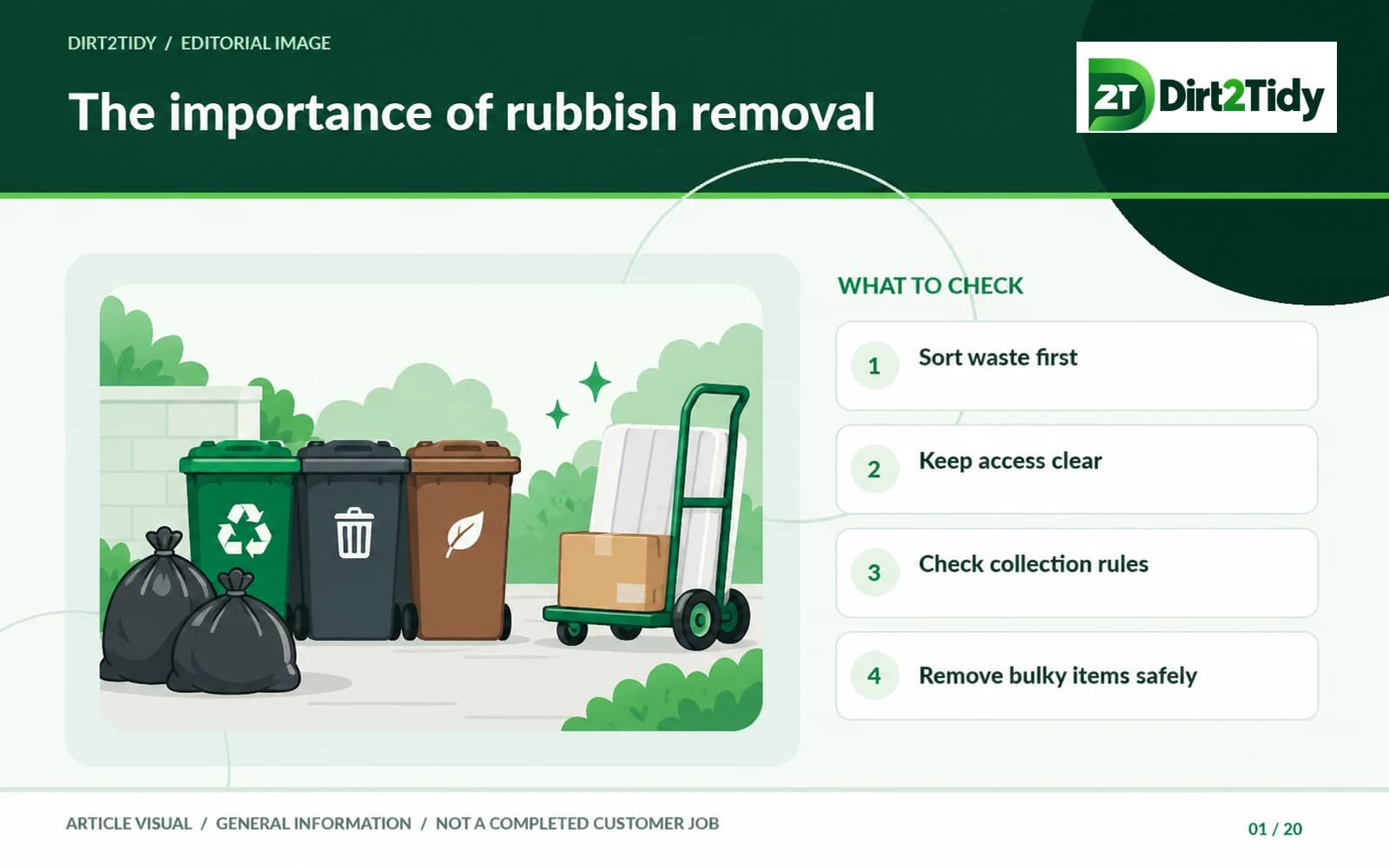
Decide what is staying and what is leaving
Work through one area at a time and identify items to keep, items to pass on and items for disposal. Separate uncertain or unusual materials rather than putting them into a general pile. This is a planning step, not a claim that a donation group, collector or facility will accept a particular item.
Confirm a route for each disposal item
Check the current instructions from the local authority or relevant facility for the actual address and material. If using a private collection provider, ask about each item's acceptance, exclusions, access arrangements and written terms. Do not rely on a general online list for hazardous, bulky or regulated materials.
Plan access and responsibility
Before a collection, confirm where items are located, who can access the property, who will move them and how timing is arranged. Do not assume a provider will enter a home, lift bulky objects or transport every item unless that is confirmed in its current terms.
Keep removal and cleaning as separate tasks
Removing belongings and cleaning a property are different jobs. Confirm the waste or collection arrangement with the responsible provider, then separately define any cleaning work, access and items that will remain. Ordinary cleaning does not establish waste transport or disposal capability.



