Identify the flooring and care limits
Check whether the floor is timber, laminate, vinyl, tile, stone, sealed concrete or carpet. Read manufacturer guidance for water, detergent, steam, attachments and drying. Do not use a generic floor cleaner on an unknown finish.
Remove grit before damp cleaning
Sweep or vacuum using an attachment suitable for the surface so grit is not dragged across the floor. Move only light items that can be lifted safely; do not pull heavy furniture or appliances.
Use a compatible product and moisture level
If the floor permits wet cleaning, use a labelled product at its recommended dilution and a well-wrung mop. Avoid pooling water at seams, edges and unsealed areas. Never mix cleaners or add a solvent or acid by guesswork.
Dry the floor and manage access
Follow product directions for rinsing and drying, and keep people away from wet areas to reduce slip risk. If a floor is cracked, lifting, persistently wet or discoloured, contact the property manager or flooring professional rather than scrubbing harder.
Use specialist care for carpet and damage
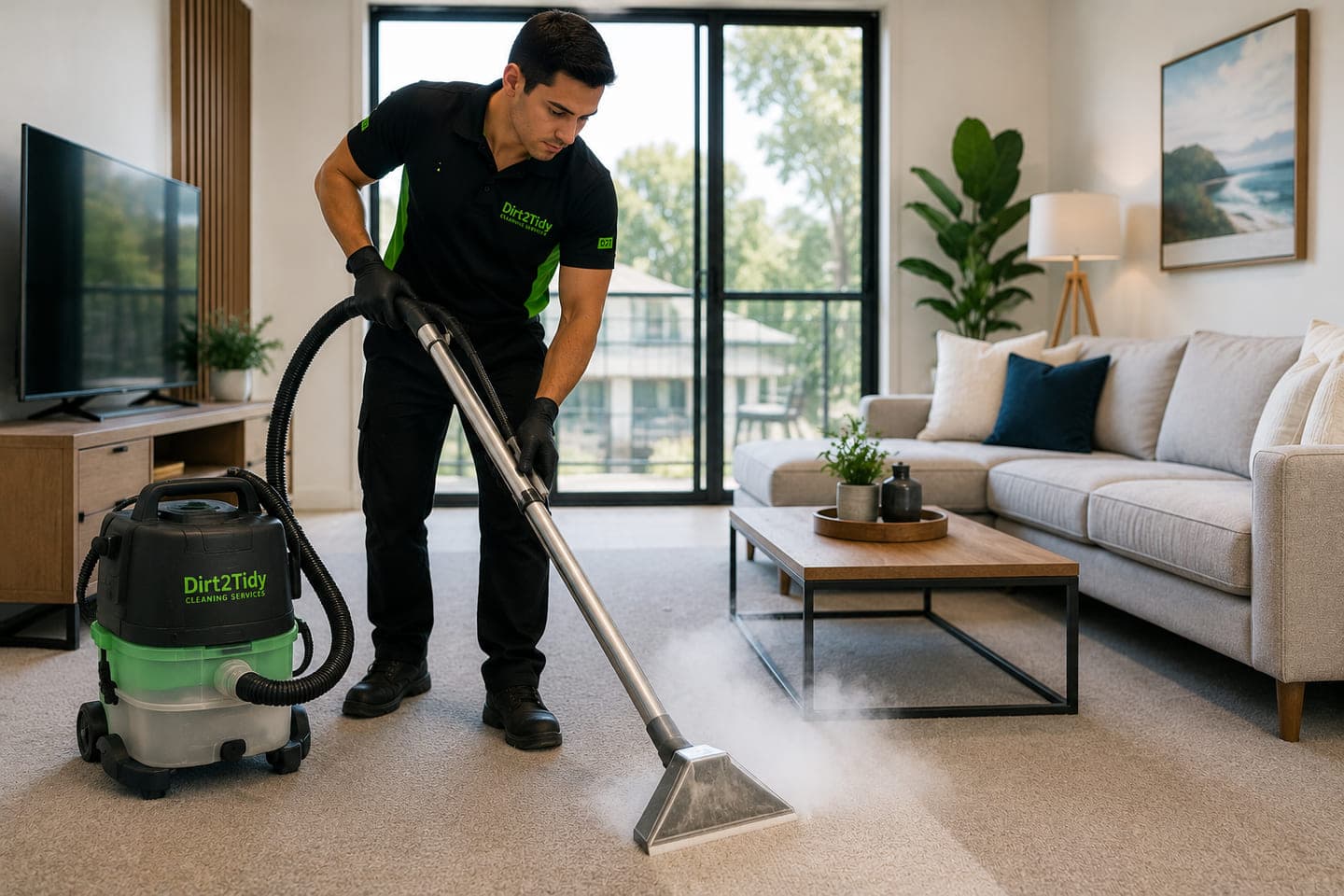
Vacuuming, spot treatment and carpet extraction are different tasks. Stains, loose seams, permanent finish changes and water damage may need suitable specialist assessment.