Keep away from unsafe water and damaged structures
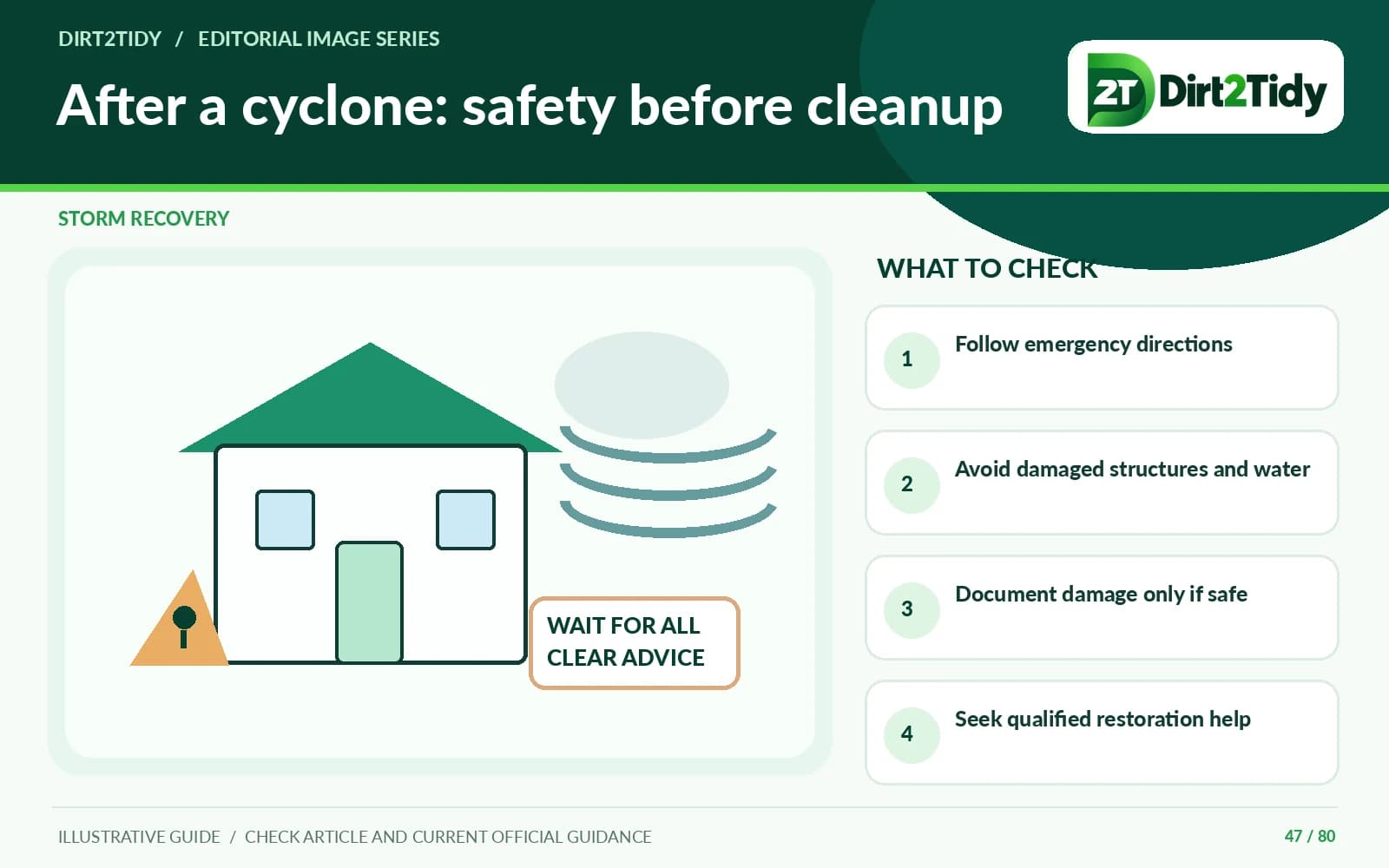
Do not enter water near electrical equipment, damaged wiring, unstable structures, sewage or unknown chemicals. Do not use household vacuums, pumps or powered cleaning equipment in an unsafe area. Keep people away and contact the appropriate utility, emergency service or qualified trade for the hazard.
Document damage only where it is safe and permitted
When authorities allow access, record the address, affected rooms, visible damage and event timing. Photograph only if safe and consistent with insurer or property-owner instructions. Keep reports, correspondence, approvals and invoices together; do not disturb suspected hazardous material.
Verify a restoration provider’s actual capability
Ask whether the provider handles this exact event, water source, contamination and building type, and which work is subcontracted. Verify qualifications, insurance and accepted scope for the actual site. Request a written assessment, access limits, proposed sequence, occupant precautions, waste handling, exclusions, price basis and progress records.
Keep routine cleaning separate from restoration
Cyclone restoration, structural repair, electrical work, hazardous-material response, insurance assessment and ordinary cleaning are distinct scopes. Do not book a general clean as a substitute for a specialist inspection. Dirt2Tidy makes no cyclone cleanup, water restoration, roof or structural repair capability claim here.