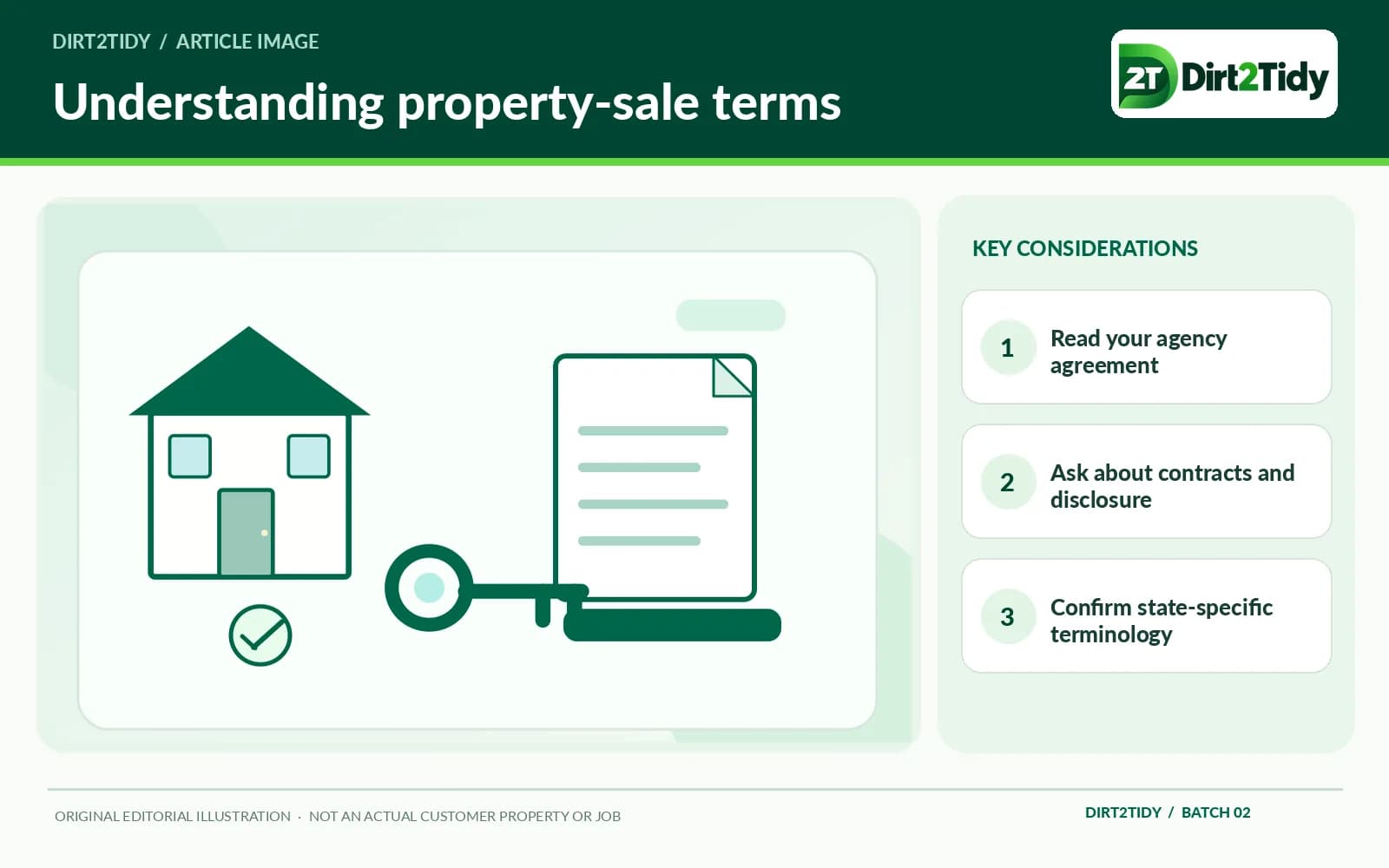
Agent and agency agreement
A real estate agent may market or negotiate a sale under a written agreement. Check the services, authority, fees, duration, termination and estimate details in the actual agreement. Requirements and terminology differ by state.
NSW sellers can consult the NSW Government’s Selling property in NSW guidance; Victorian sellers can use Consumer Affairs Victoria selling-property information.
Contract, conveyancer and disclosure
A contract records sale terms; a conveyancer or lawyer can explain its legal effect and handle conveyancing tasks. Disclosure documents and required searches depend on local law and the property. Ask a qualified professional which documents apply before advertising, accepting an offer or signing.
Offer, auction and reserve
An offer is a proposed price and terms; an auction is a sale process with rules that may vary locally. A reserve is a seller’s minimum price instruction where the process uses one. Confirm auction conditions, authority to negotiate and any cooling-off or withdrawal rules from current official information and the written documents.
Deposit and settlement
The deposit is an amount dealt with under the sale contract; settlement is the completion process when agreed legal and financial steps occur. Amounts, handling, dates and consequences depend on the contract and jurisdiction. Have an independent lawyer or licensed conveyancer explain them before signing.
Verify local meaning before relying on a term
NSW and Victoria publish different seller processes, and other states and territories have their own rules. Use the official property regulator and obtain independent legal advice about terms in your own contract. Dirt2Tidy does not provide real-estate, valuation, financial or legal services; property cleaning is a separate service.