Assess debris, surfaces and site readiness
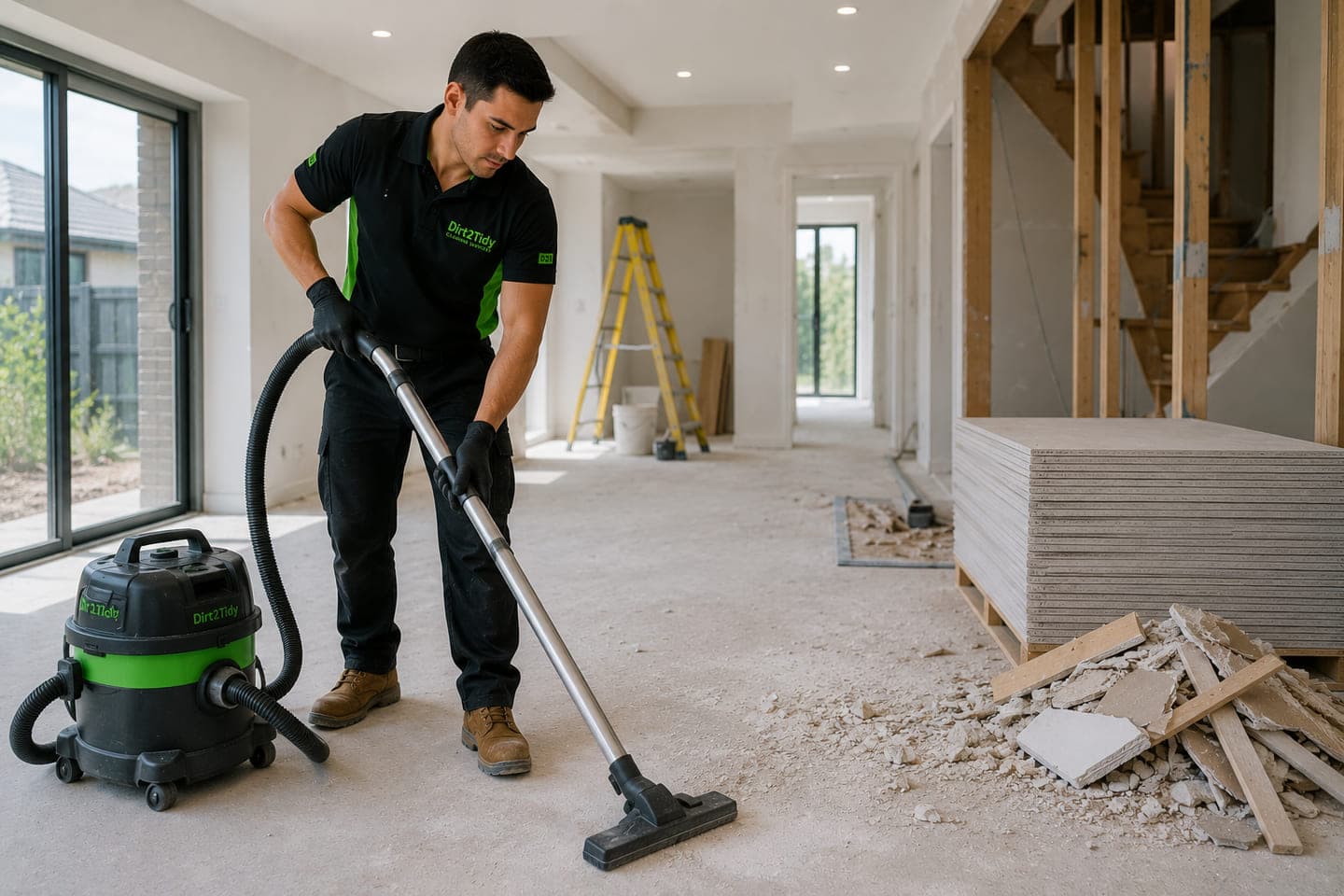
The builder or principal contractor should confirm dusty work is complete and the area is ready for cleaning. Identify loose debris, ordinary dust, new finishes, glass, floors, fixtures and remaining trades. Suspected asbestos, silica dust, chemical residue or other hazardous material needs specialist assessment and handling.
Match equipment to the cleaning task
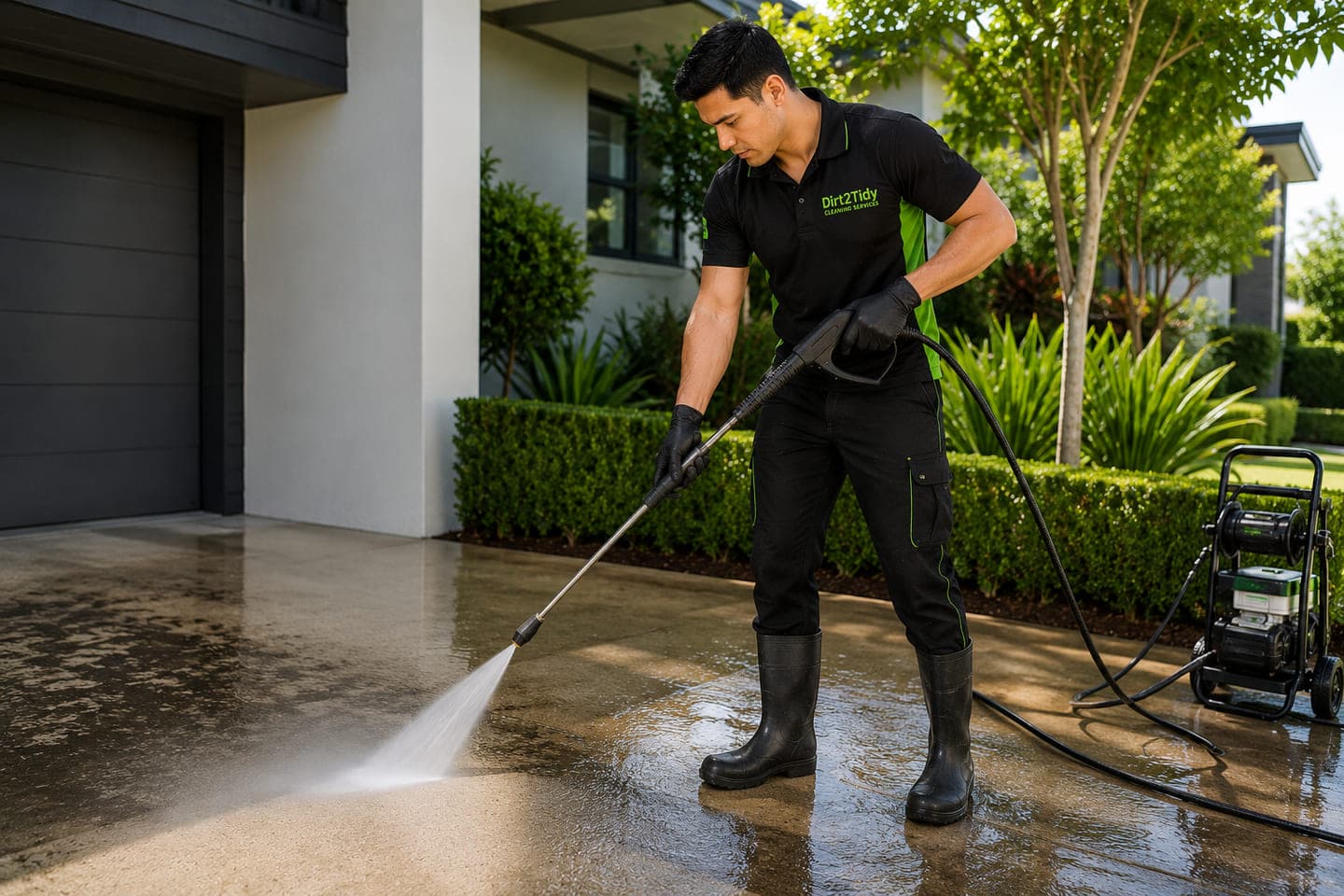
Use tools and vacuum filtration suitable for the material and dust, and protect delicate or uncured finishes. Powered scrubbers, steam, pressure washing, robots and water-fed systems are appropriate only when site conditions and manufacturer instructions allow. Do not use wet methods on unknown or moisture-sensitive residue.
Plan elevated and automated work
Drones, robots and access equipment require task-specific operators, safe systems, equipment checks, permissions and public protection. They may not suit every facade or confined site. Do not enter restricted areas or use equipment near workers, services or unfinished building systems without authorisation.
Coordinate controls and handover
Agree access, induction, PPE, equipment, waste, wastewater, timing and exclusions with the responsible site contact. Cleaning cannot certify air quality, construction quality, occupancy readiness or regulatory compliance. Record damage and unfinished work separately from cleaning tasks.