
How to Clean a Kitchen Without Risky Shortcuts

A practical kitchen routine focuses on food-contact surfaces, spills, sinks, bins and floors using products suitable for each material. Follow product labels and appliance instructions; homemade mixtures and shortcuts are not automatically safe or effective.

Deep oven cleaning with professional equipment in an Australian kitchen

Clear and clean food-contact surfaces

Remove food and loose debris, then use a product labelled for the surface and intended food-contact use. Follow directions for rinsing where required, and keep food, utensils, children and pets away while cleaning.

Choose products for the surface

Benchtops, stainless steel, stone, glass, painted cabinetry and sinks may need different care. Check manufacturer instructions before using vinegar, acids, oils, abrasives or solvents. Never mix cleaning products, and do not use tea, vodka or other unlabelled household ingredients as a cleaning method.

Clean appliances according to their manuals

Switch appliances off and let hot surfaces cool before cleaning. Check the model manual for oven, refrigerator, dishwasher and cooktop directions. Do not use a hairdryer, pour liquids into appliances, heat citrus or water in an oven, block vents or dismantle equipment.
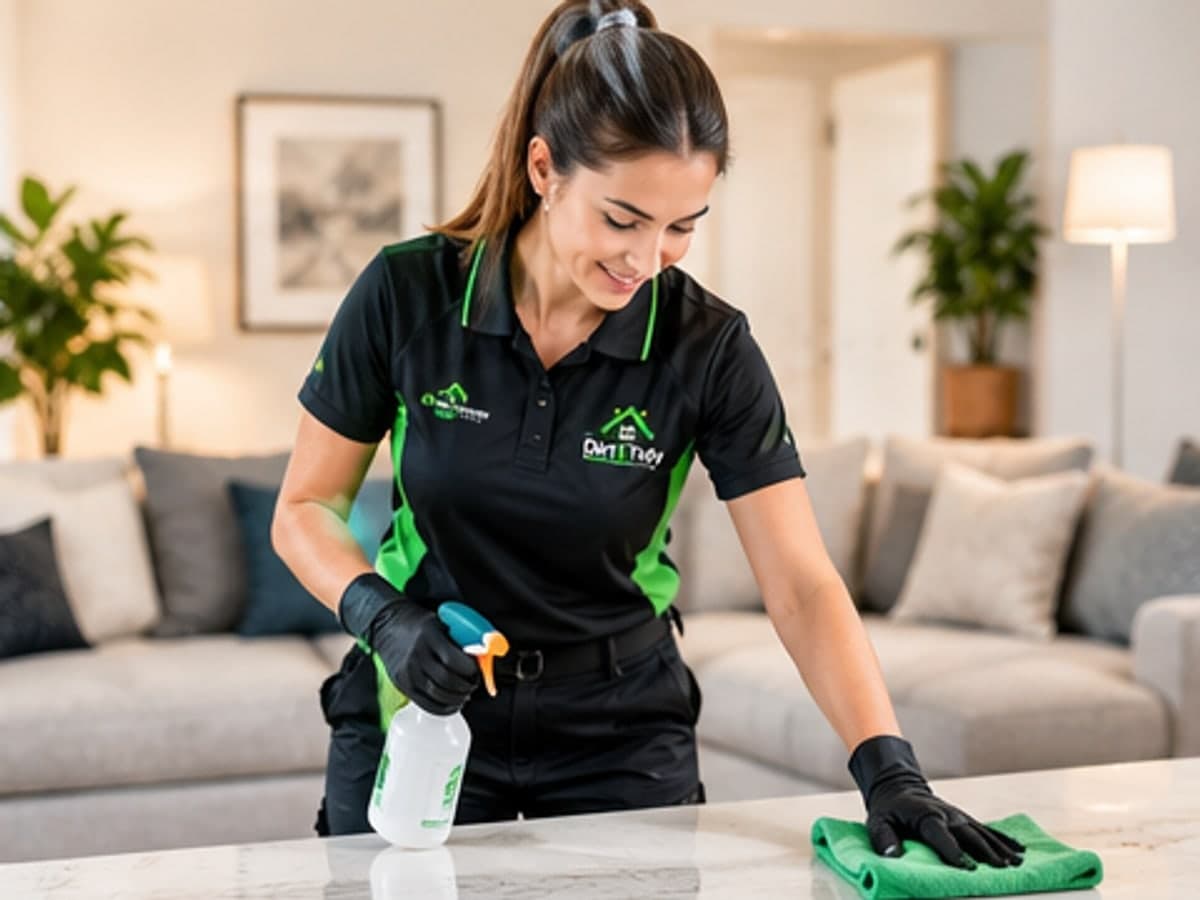
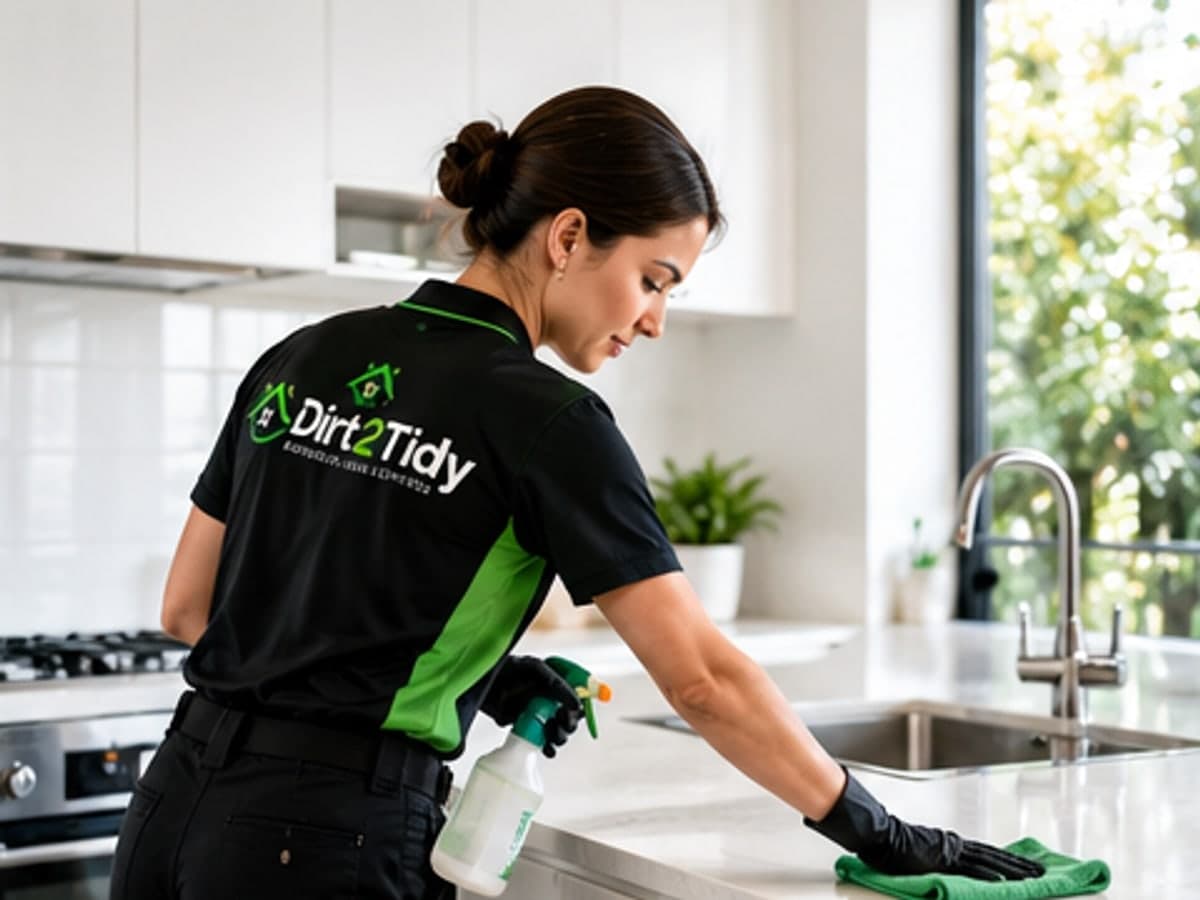
Finish floors and shared areas safely

Pick up loose debris, use a compatible floor product and leave wet areas to dry before walking on them. Store cleaning products securely and dispose of rubbish and chemicals according to local guidance. Repairs, pest treatment and hazardous materials are separate tasks.

Keep cleaning moving

Related Cleaning Services

More from Dirt2Tidy

Related Cleaning Guides

FAQ

FAQs

Everything about bookings, coverage and what to expect.

No. Acid may damage stone, finishes and some metals; check the surface maker's instructions.

No. Never mix cleaning products or use an unlabelled homemade mixture.

Switch it off and let it cool, then follow the exact appliance manual.