Check the fabric before touching the stain
Look for W, S, WS or X upholstery care guidance and read the furniture maker’s instructions. Identify the fibre, backing, colour and finish. If the label is missing, use only a conservative dry-vacuum method and seek advice before applying moisture or solvent.
Blot and test carefully
Remove loose material and blot fresh ink without rubbing it deeper into the fabric. Test a compatible labelled product in a hidden area using a small amount. Do not use rubbing alcohol, vinegar, bleach, acetone or a household mixture unless the manufacturer or a qualified cleaner confirms it is suitable.
Control moisture and ventilation
Use minimal product, keep the area ventilated as directed and prevent liquid from reaching foam, timber, electrical parts or seams. Stop if colour transfers, the nap changes or a watermark appears. Do not apply heat to set or spread the ink.
Escalate difficult upholstery
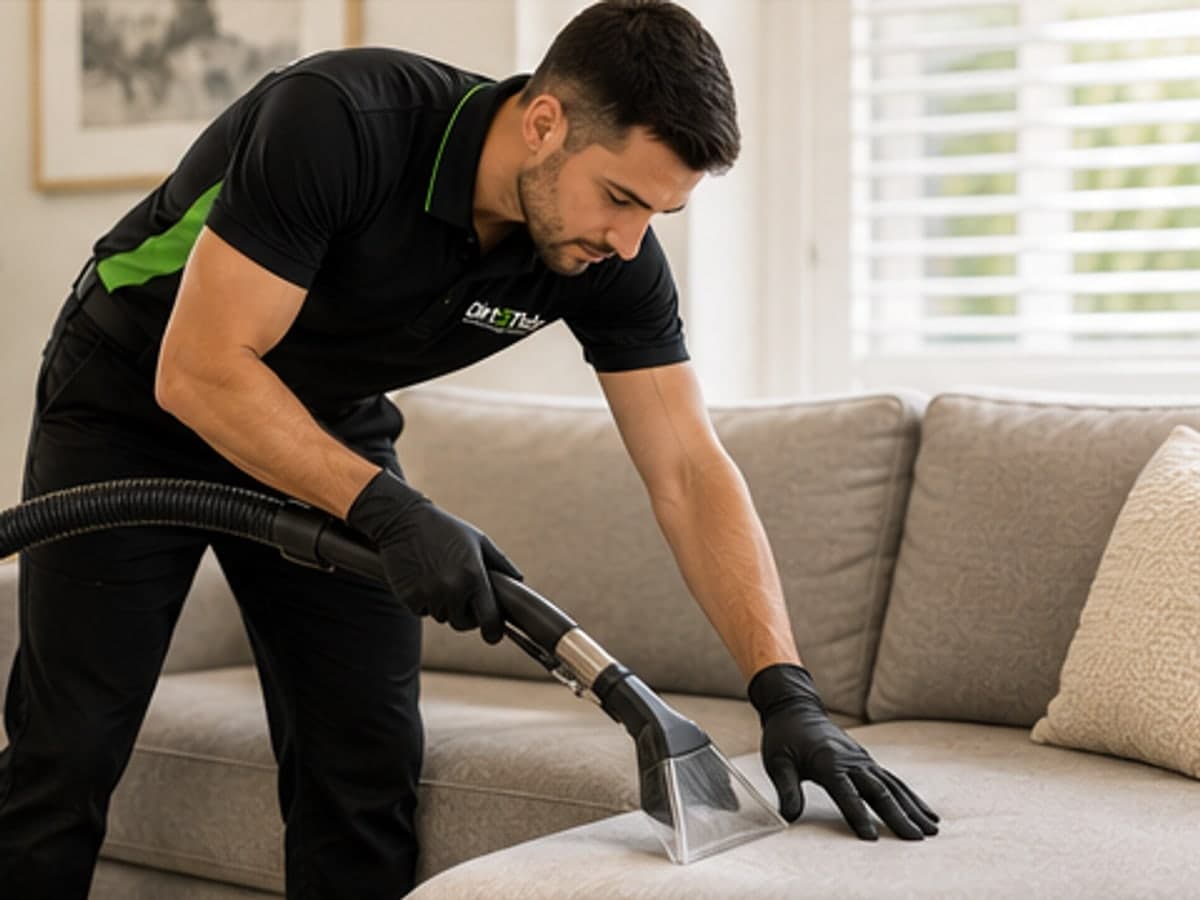
Old ink, large marks, delicate fabric, dye transfer and previous treatment may need professional assessment. Tell the cleaner the ink type, age, fabric code and products used. Dirt2Tidy can quote suitable upholstery cleaning, but no service guarantees complete removal.