
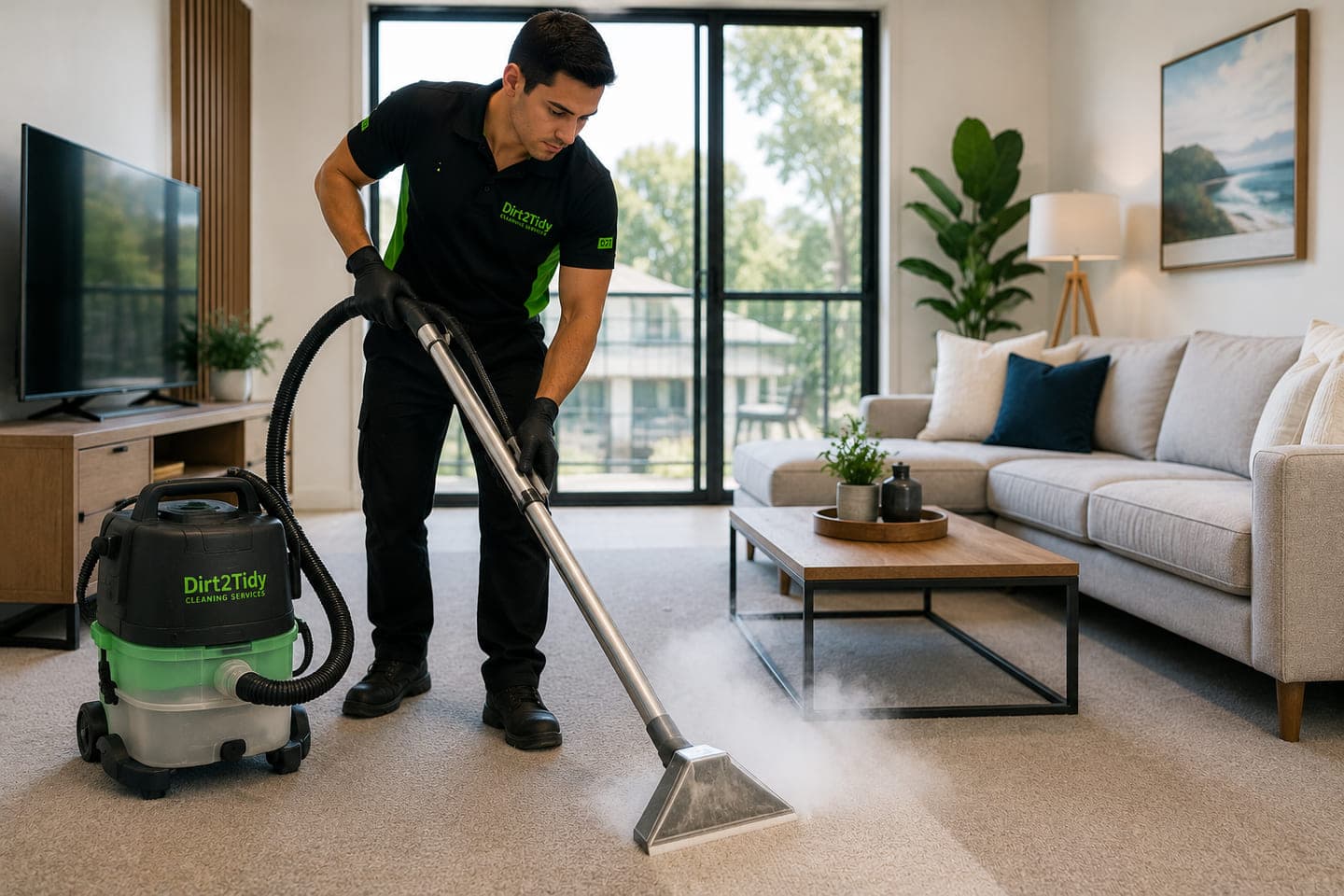
Check the carpet care information first
Identify the carpet type and review its care label or manufacturer guidance. Delicate, looped or long-pile carpet may snag or distort with a stiff brush. If the fibre or construction is unknown, test nothing on a visible area; ask the carpet maker or a qualified carpet-care provider.
For loose surface debris, use a gentle approved tool
If the carpet instructions permit it, use a clean, soft-bristled carpet brush or broom with light strokes to gather loose crumbs or hair. Work without grinding debris into the pile, and remove the gathered material by hand. Stop if the carpet fuzzes, pulls or changes texture.
Do not use packaging tape or an adhesive roller as a substitute for carpet care instructions.
Treat spills as a separate problem
A wet spill needs a different response from dry debris. Follow the carpet and product directions for the specific liquid and material; do not scrub, soak or add a household mixture without checking compatibility. If the spill reaches backing or underlay, or the source is unknown, seek an appropriate carpet or water-restoration assessment.
Know what a no-vacuum method cannot do
Manual brushing only addresses material that can be safely lifted from the surface. It does not remove embedded soil or establish hygiene, allergen removal or a deep clean. For a larger area or ingrained debris, use a suitable machine according to its manual or contact a qualified carpet-cleaning provider.


