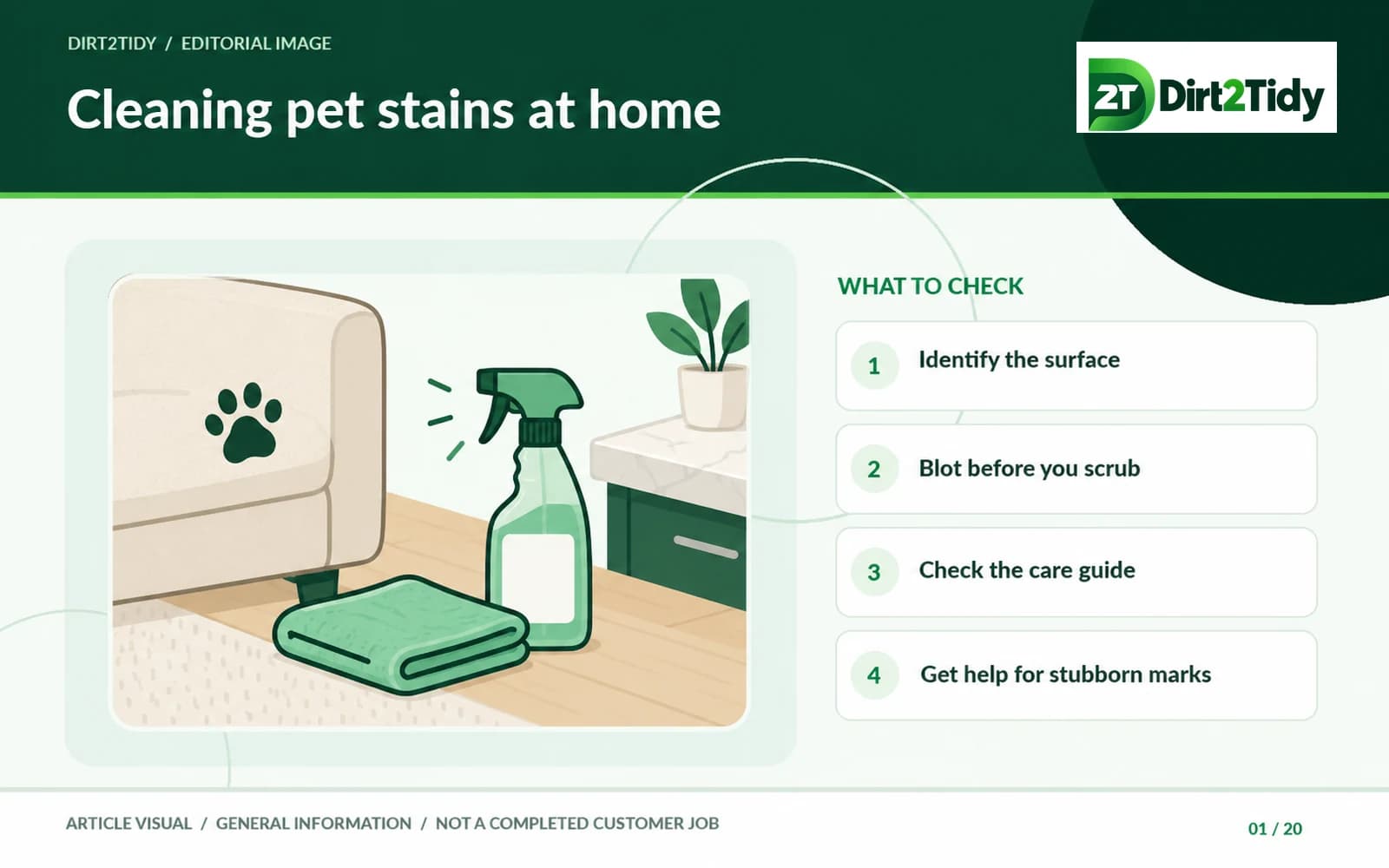
Identify the affected surface
Name the material and location: fitted carpet, rug, upholstery, sealed or unsealed wood, tile, grout or another finish. Check the maker’s care information and record the stain, approximate age and previous products. Do not treat similar-looking surfaces as interchangeable.
Keep each product within its label and surface instructions
Use a product only if its exact label permits the target substance and surface and the surface maker’s instructions allow it. Do not mix products, use an unlabelled household recipe or apply a carpet product to wood, grout or furniture by assumption.
NSW Poisons Information Centre advises users not to mix cleaning products; see its cleaning-product safety information.
Separate ordinary marks from extensive or uncertain contamination
If the area is extensive, has reached an absorbent backing, involves unknown material or has been treated with several chemicals, pause and ask a qualified cleaning or restoration provider about scope. Keep children and pets away from any product as its label directs. Contact a veterinarian for an animal-health concern.
Get a quote that names the exact item and limit
Share surface labels, photographs, stain details, dimensions and previous treatments. Ask what areas and products are included, what is excluded, whether an assessment is needed and what outcomes cannot be guaranteed. Cleaning is not a veterinary service, medical assessment or verified disinfection protocol.
Do not promise a universal stain result
Some marks may remain or reveal earlier surface damage after cleaning. No stain, odour, colour-restoration, sanitation or pet-behaviour result is guaranteed. For delicate or valuable materials, ask the maker or a qualified material specialist before treatment.