Make a separate record for each item
List the item type, maker or product label, fibre if known, age, visible condition, previous treatments and the issue you want addressed. Keep a rug’s care information separate from fitted carpet and upholstered furniture. Do not rely on appearance alone to identify a fibre or coating.

Find the maker’s care instructions
Check the installed carpet documents, rug label and furniture manufacturer’s instructions. Ask the supplier if a label is missing or the material is uncertain. Confirm whether the item permits a proposed product, moisture level, machine or professional process before proceeding.
Avoid transferring one method across surfaces
A process suitable for one carpet may not suit a rug backing, upholstery fabric, filling or trim. Do not apply a household recipe, solvent, steam or cleaning machine to another item by assumption. If the exact instructions conflict or are unavailable, pause and obtain qualified carpet or upholstery advice.
Compare provider scopes item by item
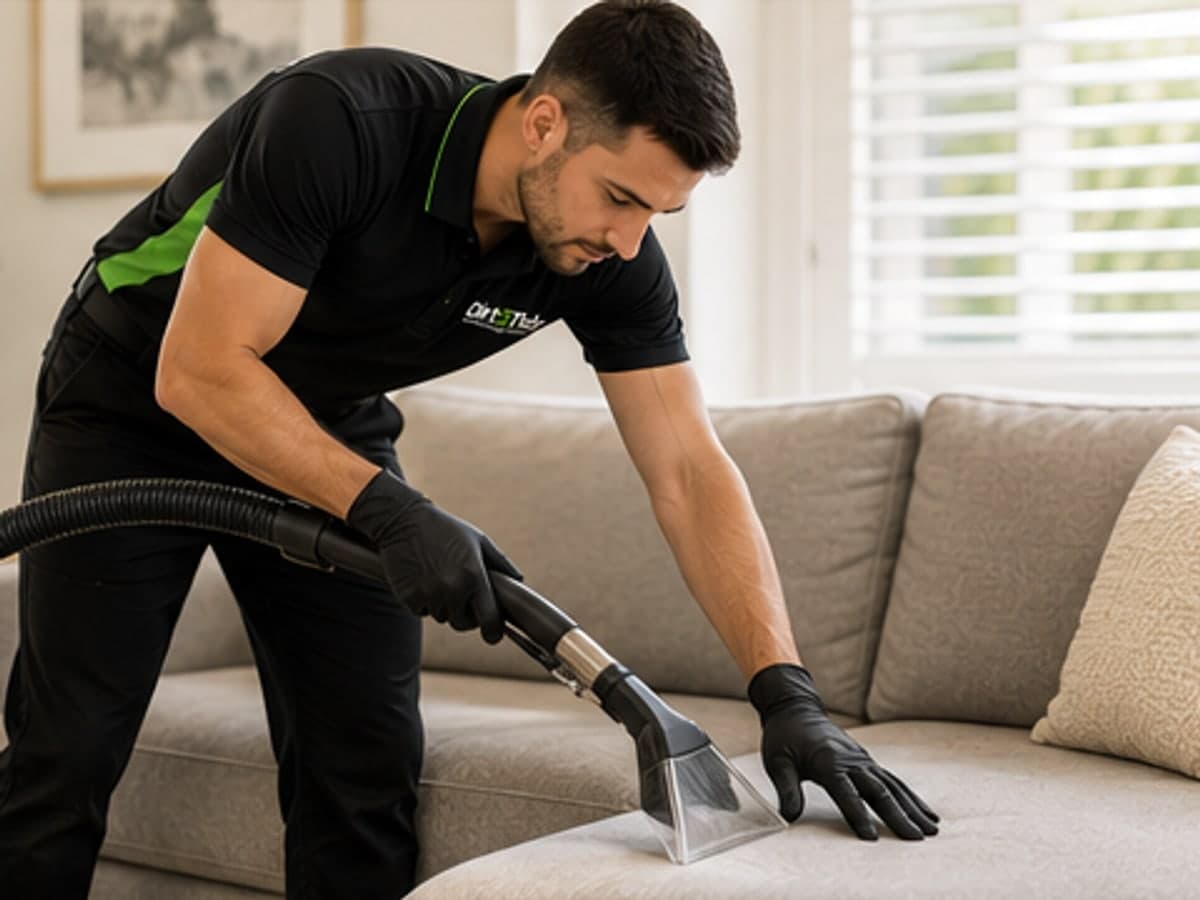
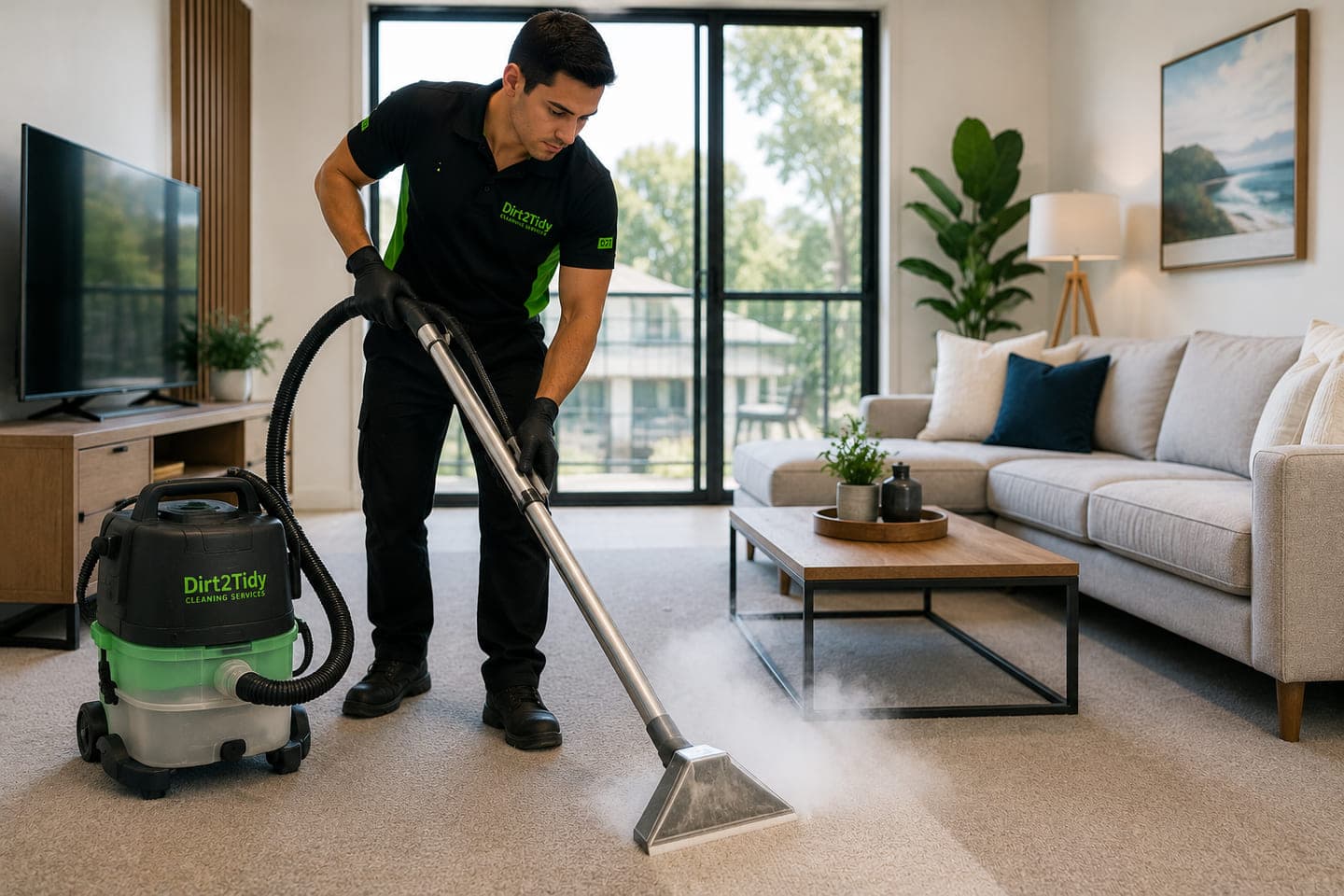
Tell a provider which rooms, rugs and upholstered pieces are involved and share care labels, dimensions, stains, odours and previous products. Ask what items are included, what methods are proposed, what is excluded, whether a test or assessment is needed, and how price and aftercare are handled.
A quote for carpet does not automatically include rugs or sofas.
Keep specialist issues separate
Water damage, pests, suspected mould, hazardous contamination, delicate antiques and structural floor concerns may need another specialist. Routine cleaning does not certify an item as sanitary, restore damaged backing or guarantee stain or odour removal.