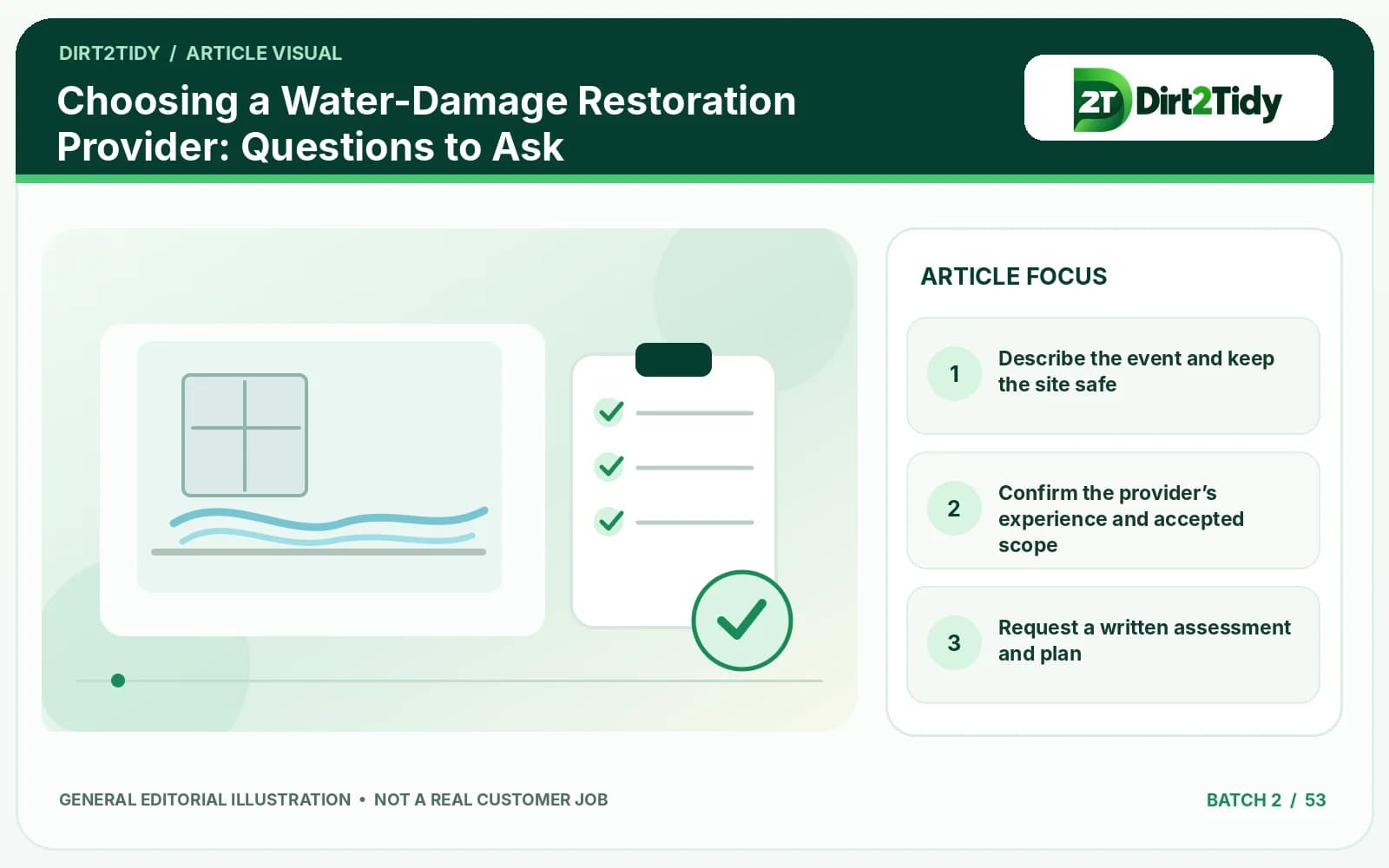
Describe the event and keep the site safe
Record when water appeared, the known or suspected source, areas affected, materials, and whether electrical, structural, sewage or chemical hazards may be present. Do not enter unsafe water or use powered equipment around standing water. Contact emergency services, the utility, insurer, property manager or relevant qualified trade where the situation requires it.
Confirm the provider’s experience and accepted scope
Ask whether the provider handles this exact water source, property type and affected material, and what work they do not perform. Verify any licence, registration, training or insurance that applies to the work with the relevant local regulator or issuer; requirements vary by jurisdiction and task.
Do not infer capability from a company name, vehicle or list of machines.
Request a written assessment and plan
Ask what areas and materials were inspected, what could not be accessed, what further assessment is needed, and how moisture or progress will be documented. Confirm the proposed sequence, equipment or treatments, occupant precautions, waste handling, expected updates, exclusions, price basis and variation process in writing.
Get separate qualified advice for electrical, structural, plumbing, hazardous-material or health concerns.

Check insurance and contractual responsibilities
Contact your insurer or property owner about notification, authorisation and records before agreeing to work. Do not assume a policy covers a particular event or that a provider’s report determines an insurance claim. Keep photographs, correspondence, reports, invoices and approvals.
Keep routine cleaning distinct
Ordinary house or carpet cleaning does not locate a leak, assess concealed moisture, remediate contaminated water, repair a building or certify a structure. Arrange routine cleaning only after the site is released and the affected materials and agreed surface scope are clear.