Identify the vehicle and finish
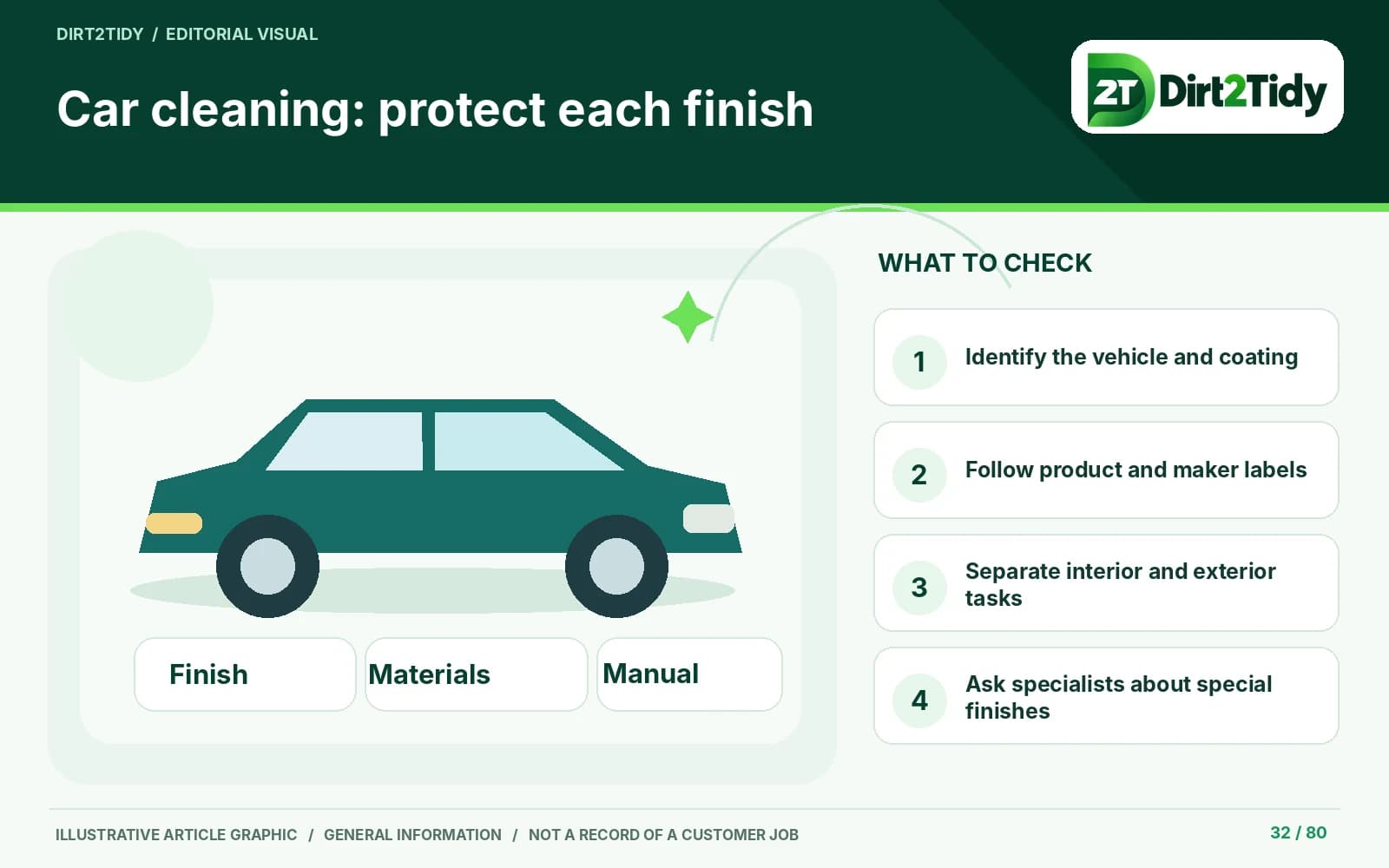
Note the vehicle make, model and year and whether it has paint protection film, a wrap, ceramic coating, aftermarket parts or a special finish. Check the vehicle maker’s current care guidance and any product or installer documents for those surfaces.
Do not assume a product approved for ordinary paint is suitable for every treatment or trim.
Match every product to its labelled surface
Read the exact product label and follow its intended use, precautions and removal directions. Keep products separate and never mix cleaners. Do not infer safety from terms such as gentle, natural, professional or pH-balanced; verify that the label and vehicle-maker instructions cover the actual surface.
Plan different surfaces separately
Glass, wheels, tyres, exterior trim, paint, fabrics, leather, screens and controls may need different instructions. Keep interior liquids away from electronics and confirm compatibility before treating an unknown surface. Avoid using one cloth, brush or product across multiple areas unless the relevant manufacturers permit it.
Check local washing restrictions
Water-use rules, runoff controls and permitted wash locations vary by council and current conditions. Check local authority guidance before washing where water may flow into a stormwater drain or public area. This article gives no universal disposal instruction or local water-use exemption.
Compare professional service quotes
Give a provider the vehicle details, finish or protection information, affected areas and desired tasks. Ask which surfaces and products are included, what is excluded, how the provider handles delicate finishes, and what limitations apply. Confirm actual qualifications, scope, price and terms; no cleaning result or paint condition is guaranteed here.