Start with a safe first response
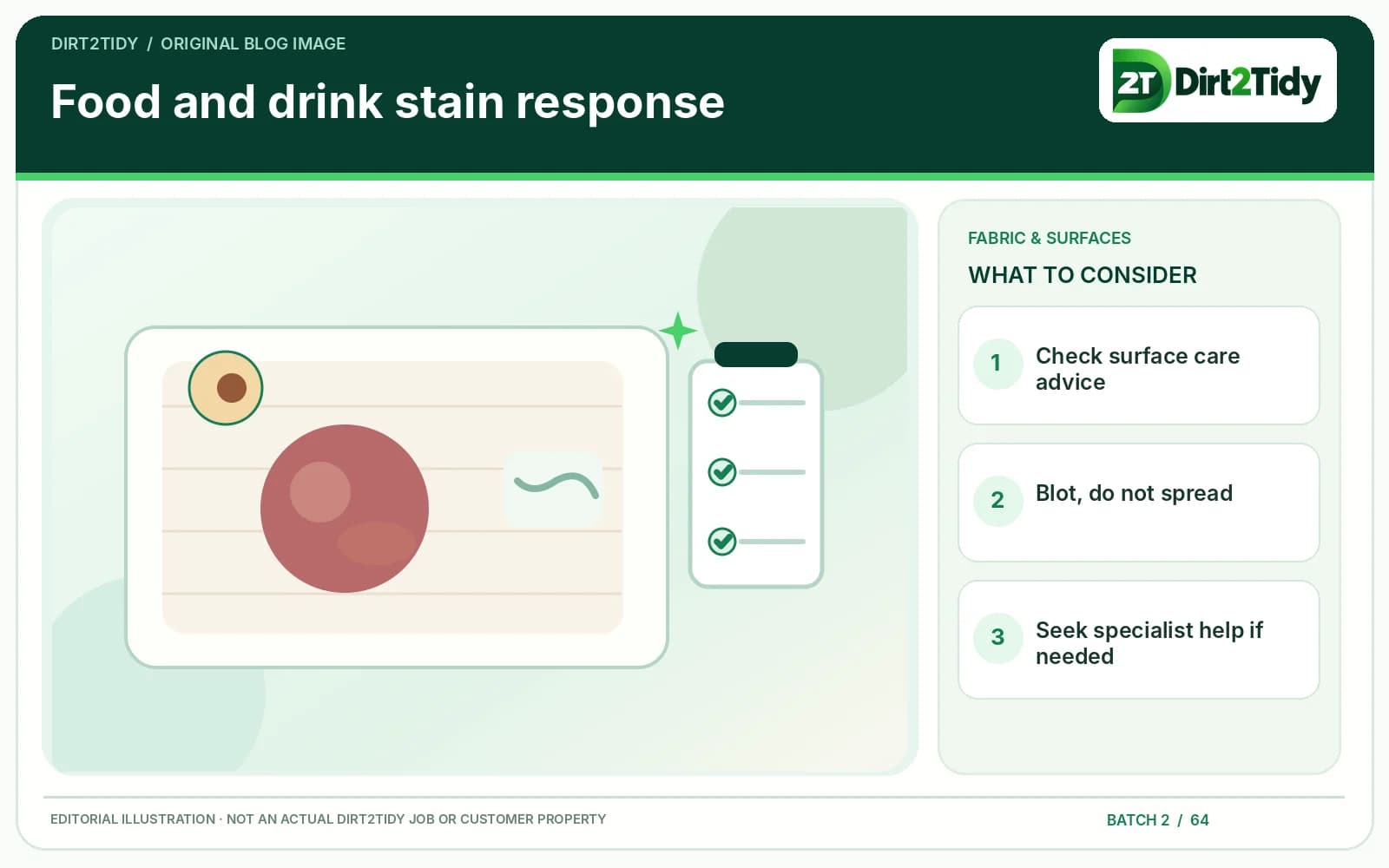
Remove excess solids gently with a suitable blunt edge, then blot liquid with a clean absorbent cloth. Work from the outside inward without rubbing. Check the item's care label before adding water or a product, and test only as its maker directs.
Chocolate, sauce and greasy food
Lift loose material without spreading it and avoid scraping delicate fibres. Do not apply heat or a household degreaser unless the surface maker permits it. Grease and food residue may need different methods; stop if the colour or texture changes.
Wine, juice and food dye
Blot promptly, use only a compatible product and avoid pouring multiple cleaners onto the area. Some dyes may permanently alter fabric or carpet colour. Do not promise complete removal, particularly after prior treatments or when the fibre is unknown.
When to get specialist help
For a large spill, delicate fabric, persistent stain, unknown chemical or valuable furnishing, ask a carpet or upholstery specialist before experimenting. Share the fibre, spill, age and any products already used. Cleaning cannot guarantee stain removal or reverse colour loss.