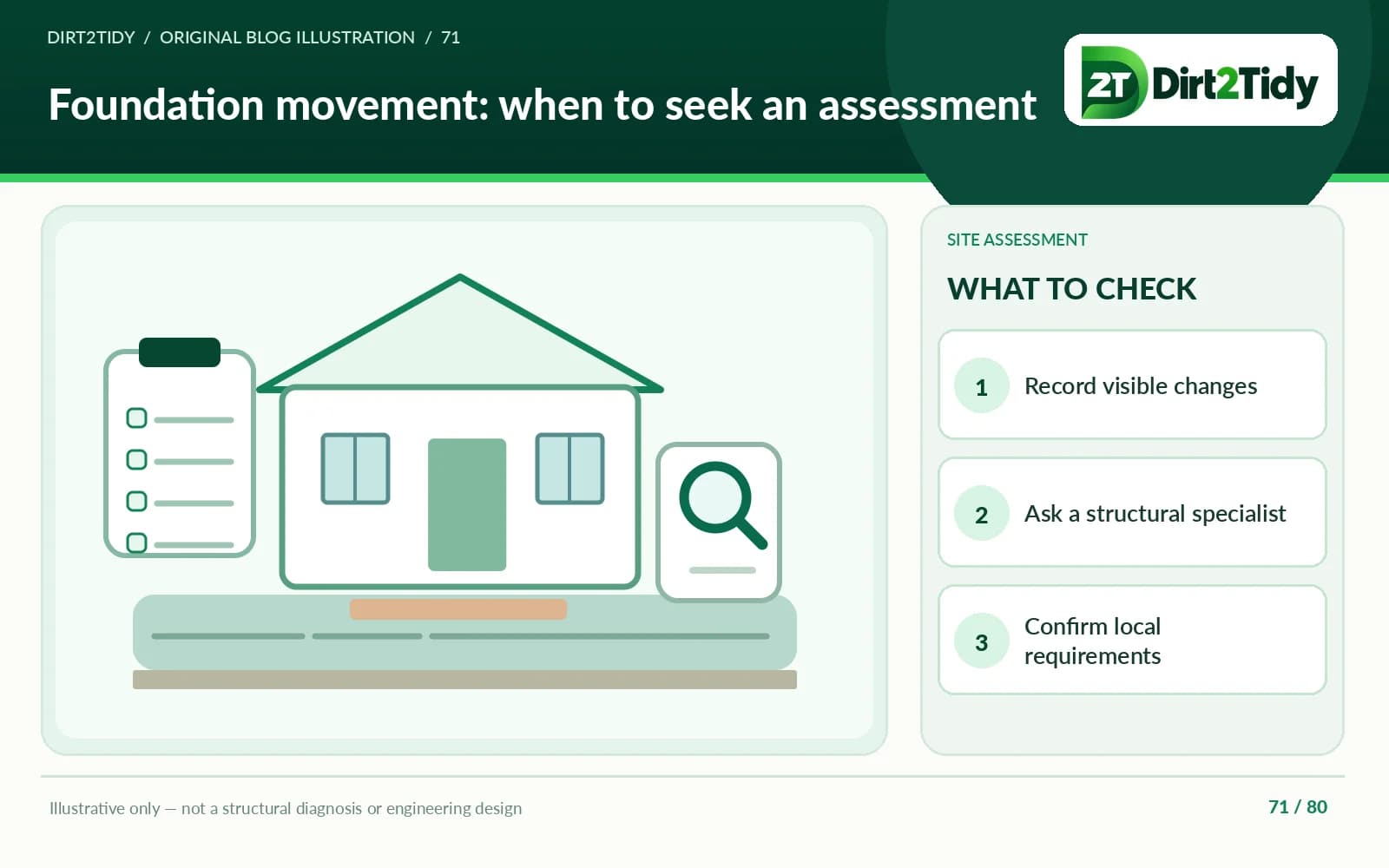
Record observations without diagnosing the cause
Note when cracks, movement, sticking doors, uneven floors or other changes appeared, where they are and whether they are changing. Take dated photographs from a safe location and retain previous inspection or repair records. These signs can have different causes and do not prove that underpinning is needed.
Ask for structural and ground-condition assessment
Engage a suitably qualified structural engineer and, where needed, a geotechnical professional to investigate the actual building and ground. Ask what evidence supports the diagnosis, which alternatives were considered, what monitoring is needed and what conditions would require further review. Do not excavate, inject, jack or modify foundations without an engineered design and proper authorisation.

Check approvals, neighbours and contractor credentials
Foundation work may affect services, boundaries, neighbouring structures, drainage and planning or building approvals. Confirm requirements with the local council and building authority, and have a qualified professional coordinate the design and suitable contractor. NSW homeowners can start with Building Commission NSW building and renovation resources; other jurisdictions have their own regulators.
Review the written engineering and construction scope
Before authorising work, request the engineer’s report and design, contractor licence details, contract scope, sequence, monitoring, insurance, variation process and completion documents. Seek independent legal or building advice about a significant project or disputed recommendation.
Keep post-work cleaning and certification separate
Cleaning after construction is a separate task once the site is released. A cleaner cannot assess settlement, verify structural repair, certify foundations or remove hazardous materials. Confirm the builder’s handover and surface readiness before requesting ordinary cleaning.