Confirm address, window and access first
Every turnover starts with logistics, not cleaning. Pin down the exact property, the check-out-to-check-in window, and how access actually works — a lockbox or smart-lock code, a handover, a strata lift or fob, and who to call if entry fails.
A late check-out against an afternoon arrival in a locked tower is exactly where poor access ruins a flip. Getting the address, the window and the access method confirmed before the team arrives is the difference between a controlled reset and a frantic scramble outside a door that won't open on time.

List the rooms and touch points
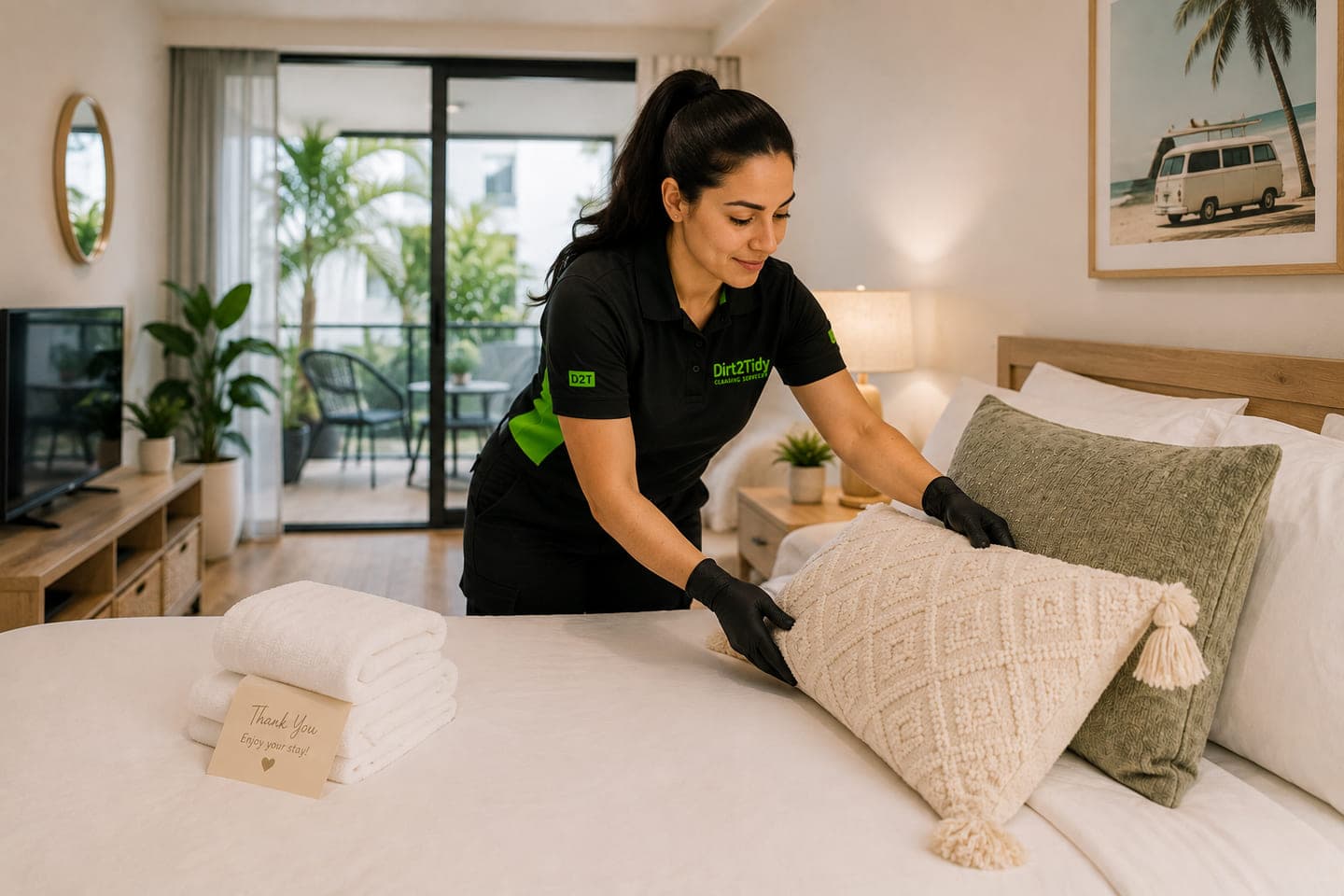
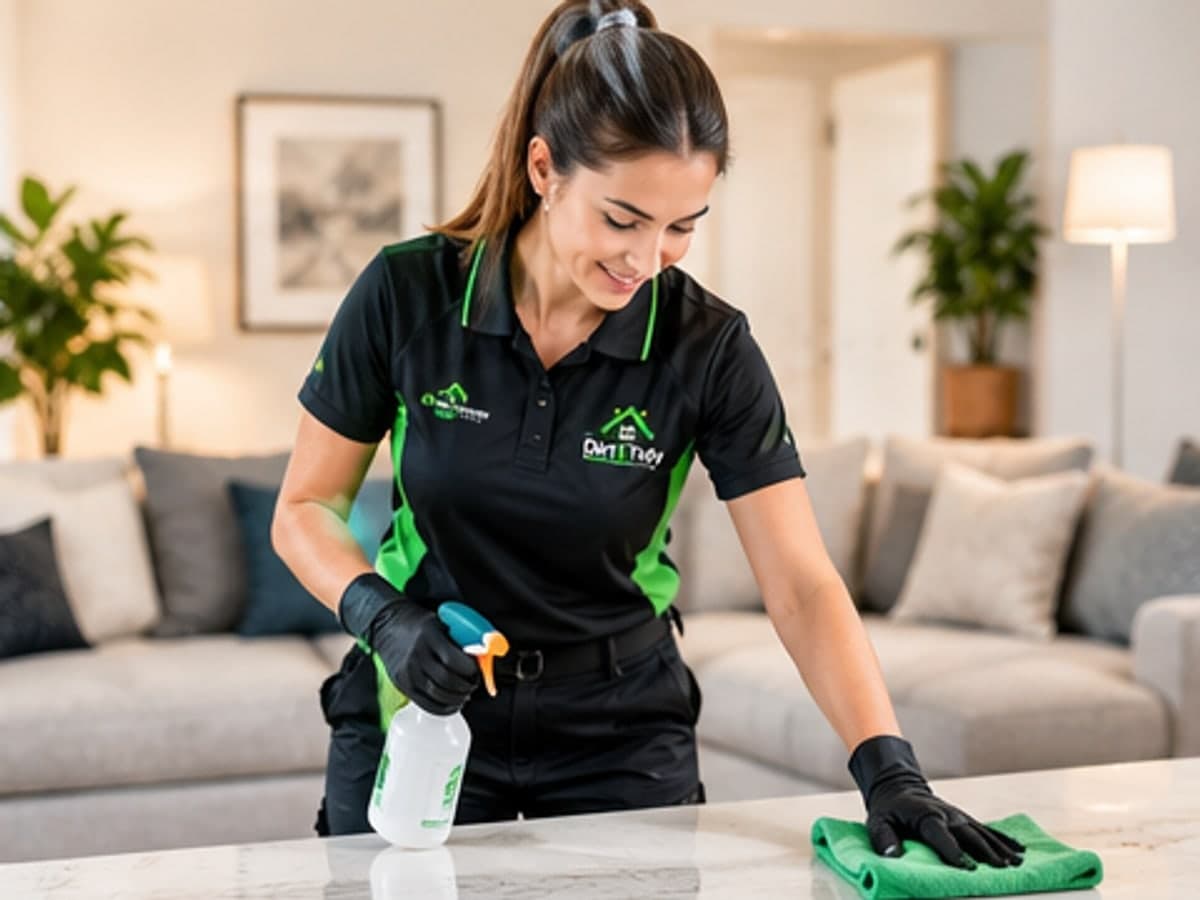
Work the turnover as a fixed list so nothing varies booking to booking: strip and remake beds, sanitize and dry bathrooms (a real concern in a cold, condensation-prone winter, or a humid coastal summer), wipe the kitchen and clear any food, hit every touch point — handles, switches, remotes, benches — vacuum and mop floors, empty bins, and air out any stuffy rooms.
On a coastal or harbour-facing property, wipe the salt film off sliders and glass. That defined checklist is what keeps the guest's first impression consistent, rather than leaving it to whoever's turn it is.
Separate linen and restock from cleaning
The clean covers surfaces and rooms; linen, towels and guest consumables are their own line. Decide, in writing, whether the team launders and remakes or just strips and bags, who supplies fresh sets, and what counts as restocked — coffee, toilet paper, soap, a spare towel.
Those boundaries drive whether a same-day flip fits the window, so treating them as part of 'the clean' is exactly how hosts discover a missing towel set while a guest is waiting. Keep them as a separate, agreed part of every turnover brief.
Log host maintenance separately from cleaning
A turnover reset isn't a property inspection, but it should capture what the host needs to know. Keep a short follow-up line for things beyond cleaning — a tap dripping, a musty room that keeps returning (poor ventilation or damp), a broken fitting, low consumables, damage a guest caused, or a strata maintenance item.
Logging these against the booking, rather than expecting the clean to 'sort' them, protects your rating and puts genuine maintenance with the right owner — you, the landlord, the agent or a licensed tradesperson — instead of silently masking it with a wipe-down.
Write the scope for the exact address
The checklist is only as good as it matches the specific property. Record the apartment or house type and its stairs or lift, the bedrooms and bathrooms, the linen and restock policy, the access method, whether a balcony or exterior glass is in scope, and the standard you want.
Put that written scope behind every booking and every provider so quotes are comparable and the standard holds. A turnover brief tailored to your exact address is what keeps a season of back-to-back guests consistent rather than variable.