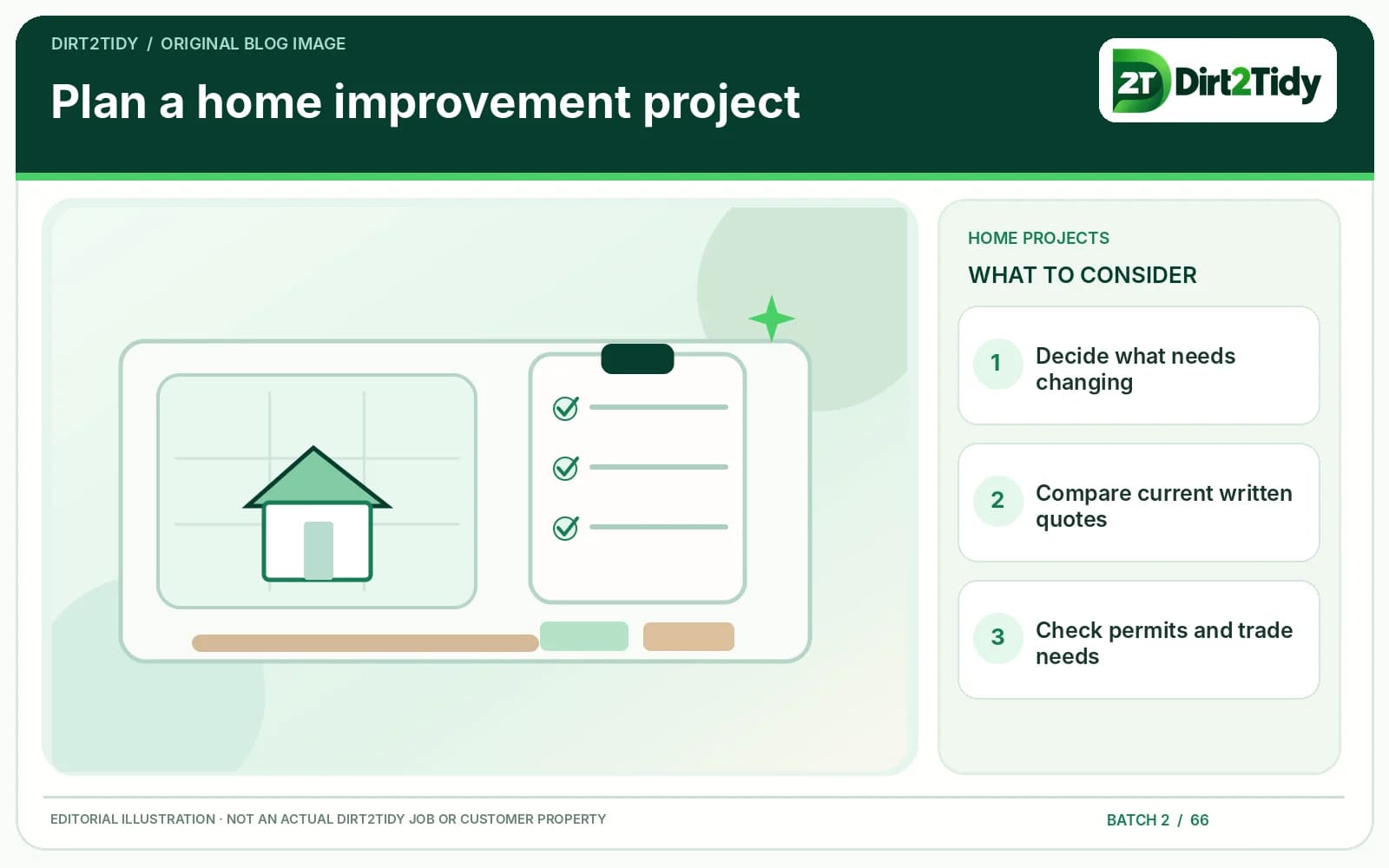
Clarify the reason for the work
Write down whether the goal is to repair a defect, improve day-to-day use, prepare a property for sale or change its layout. Separate essential maintenance from optional upgrades and styling. Ask a qualified builder, designer or relevant trade to assess technical work rather than relying on an online list of “value-adding” projects.
Set a budget from current, comparable quotes
Request written scopes from appropriately qualified providers and compare materials, labour, exclusions, timing, insurance and variation terms. Include approval, design, disposal and temporary accommodation costs where relevant. Do not rely on old price averages, fixed percentage returns or claims that a particular feature always adds value.

Check approvals and professional requirements
Planning, building, strata and licensing requirements vary by property and jurisdiction. NSW homeowners can begin with Building Commission NSW renovation guidance. For sales-process questions, consult the official regulator where the property is located; NSW sellers can use NSW Government selling-property information. Seek independent planning, legal, building or valuation advice as needed.
Prioritise repairs, safety and project coordination
Identify water ingress, electrical faults, structural concerns, hazardous materials and other specialist issues before cosmetic work. Confirm who coordinates trades, site access, approvals, waste and handover. Use a licensed or qualified professional where required; do not undertake hazardous work from general online instructions.
Plan cleaning as a separate handover task
Cleaning can prepare accessible surfaces after work is complete and the site is released. It does not repair defects, certify construction, influence a buyer’s valuation or guarantee a sale outcome. Confirm the cleaning scope after the builder or site manager identifies remaining trades and surface restrictions.