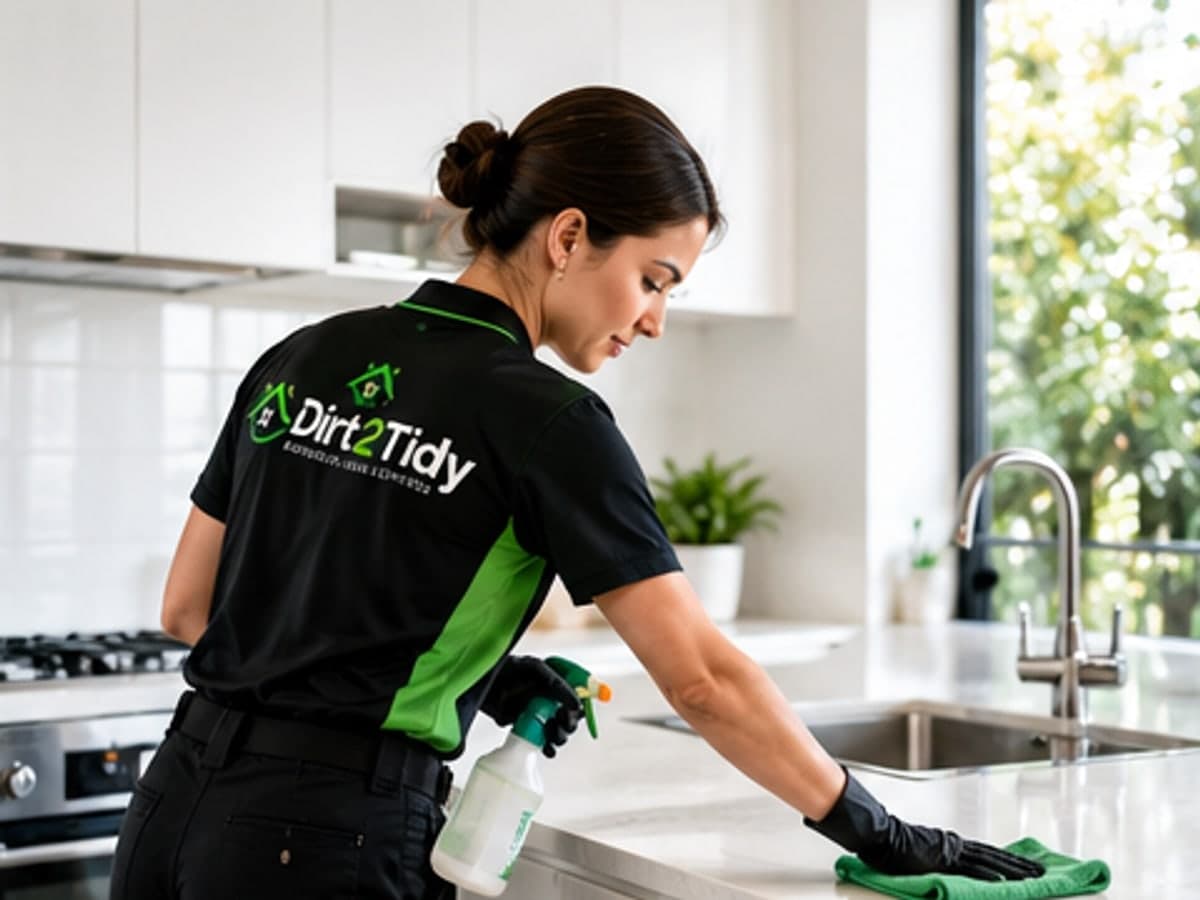
Clean food-preparation surfaces
Clear benches, remove crumbs and use a cleaner labelled for the counter material. Follow rinsing directions for food-contact surfaces and use clean cloths. Do not assume vinegar, lemon, salt or abrasive powders are safe for stone, coatings or every finish.
Care for sinks and fixtures
Remove loose debris and clean basin, taps and handles with compatible products. Hard-water deposits and scale may need a product approved for the fixture material. Avoid pouring boiling water or chemicals into plumbing, and report leaks or blocked drains to the appropriate provider.
Clean appliances using manuals
Switch off and cool appliances as directed. Check manuals before cleaning refrigerators, ovens, stovetops, rangehood filters or dishwashers. Keep liquids away from electrical controls, never mix chemicals and avoid dismantling components unless the manufacturer directs it.
Maintain floors and cabinets
Sweep or vacuum before mopping and choose a floor-safe product. Use a soft cloth on cabinet finishes and test any permitted cleaner in an inconspicuous area. Repairs, pests, extensive mould and commercial kitchen procedures require separate assessment.