Keep the area separate until the scope is clear
Keep children and pets away from affected carpet and avoid touching or spreading the material. If the spill is large, repeated, of unknown source, in a healthcare or care setting, or has reached underlay or subfloor, contact a qualified hygiene or biohazard-remediation professional rather than treating it as routine carpet cleaning.
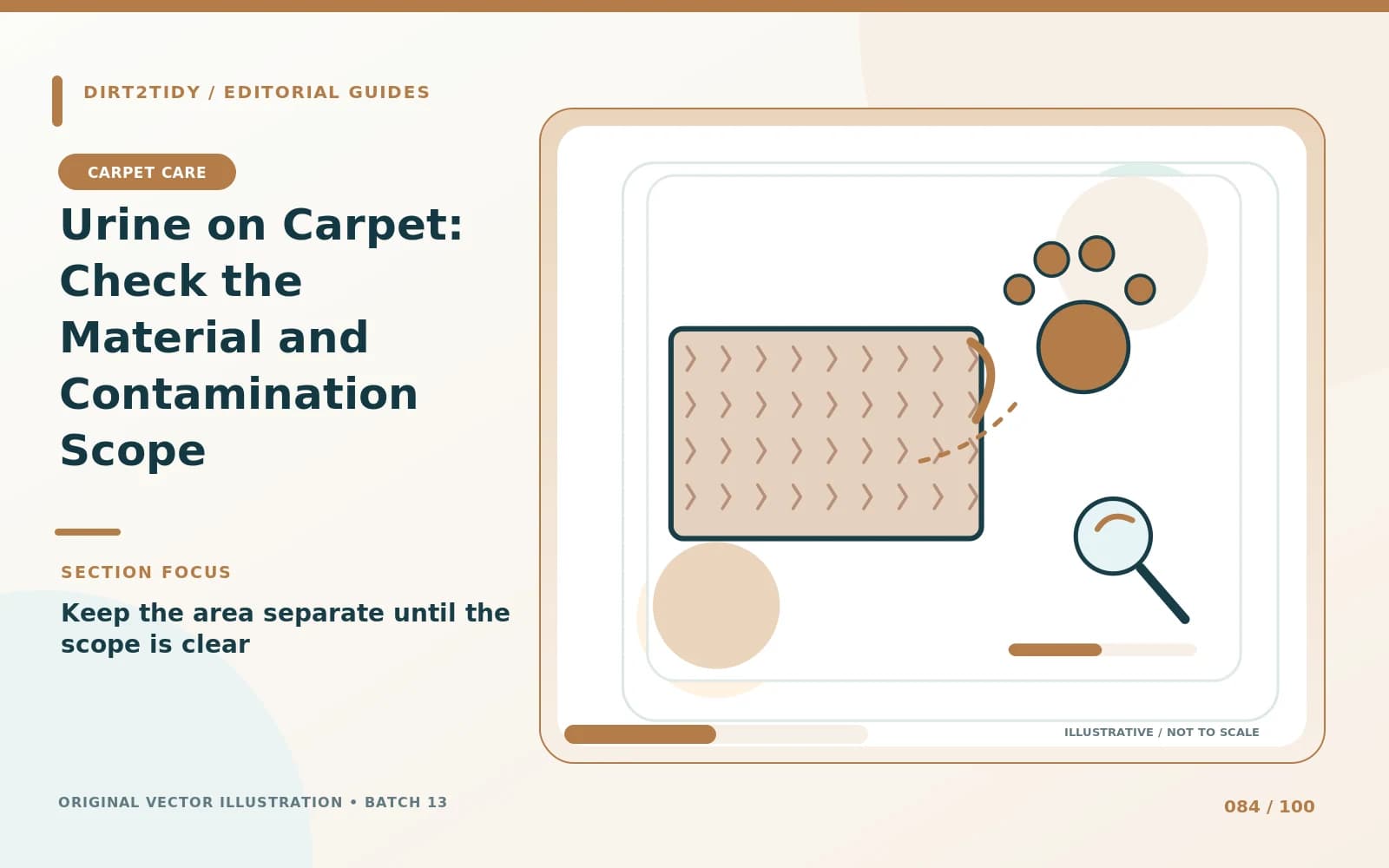
Identify the carpet and any prior treatment
Check the carpet maker’s care information for fibre, backing, dyes and permitted cleaning products. Note the affected area, timing, amount if known and any products already applied. Do not use UV lights to diagnose contamination or infer hygiene from what a light shows.
Use only compatible labelled products
If an appropriate professional or the carpet maker confirms routine surface cleaning is suitable, follow the exact product label and carpet-care instructions. NSW Poisons Information Centre warns that cleaning products can be harmful when inhaled, touched or swallowed and advises users not to mix chemicals; see its cleaning-product safety information.
Do not combine bleach, ammonia, acids or other cleaners.
Know when ordinary carpet cleaning is not enough
A routine clean may not address liquid in backing, underlay or subfloor, repeated contamination, strong persistent odour or specialised hygiene requirements. Ask a qualified remediation or carpet professional to explain scope, products, protective measures, waste handling and limitations. No disinfection, infection-prevention, allergen or complete odour-removal claim is made.
Request a quote with clear limits
Describe the material, area, circumstances, prior products and any access restrictions. Confirm whether the provider accepts the job, whether specialist remediation is needed, what surfaces are included and what remains excluded. Dirt2Tidy does not claim biohazard-remediation capability or guarantee a result.