The chemistry of why water alone stops halfway
Water cleans because it is a good solvent and a mild abrasive, which covers surprising amounts of household soil, and it fails on oils because of surface tension, the same force that beads rain on a window.
Greasing an effective clean means defeating that tension so water can enter the fibre bundle and reach the soil-fibre interface, and that is the entire job of a surfactant: a molecule with a water-loving head and an oil-loving tail that wedges between fibre and grease, lifts it into suspension, and carries it out with the extraction stream.
A plain-water pass mechanically flushes what is already loose and hydrates some bonded grit enough to release it, so the tank comes back grey and the result is not nothing, it is the water-soluble fraction plus luck. The oily fraction, which is exactly what makes traffic lanes look grey, stays where it is.
Where plain water genuinely belongs
Three honest lanes exist. Fresh spills: official carpet care guidance tells you to blot spills with plain water and a clean cloth first, because speed matters more than chemistry while the soil is still sitting on top of the fibre, and most spills in the first minutes are water-wettable.
Maintenance flushes on lightly used synthetic carpet, where the recent load is mostly tracked-in grit and dust rather than grease, a hot-water extraction pass plus serious dry passes can visibly freshen.
And rinse passes after detergent: a machine run with nothing but clean water after a pre-spray is how a technically careful job removes surfactant left behind, which is the same logic as the final clear-water passes in a proper hot water extraction sequence.
Notice what none of these lanes is: a full clean of an oily, footed-in carpet.
What the water-only version of the job looks like
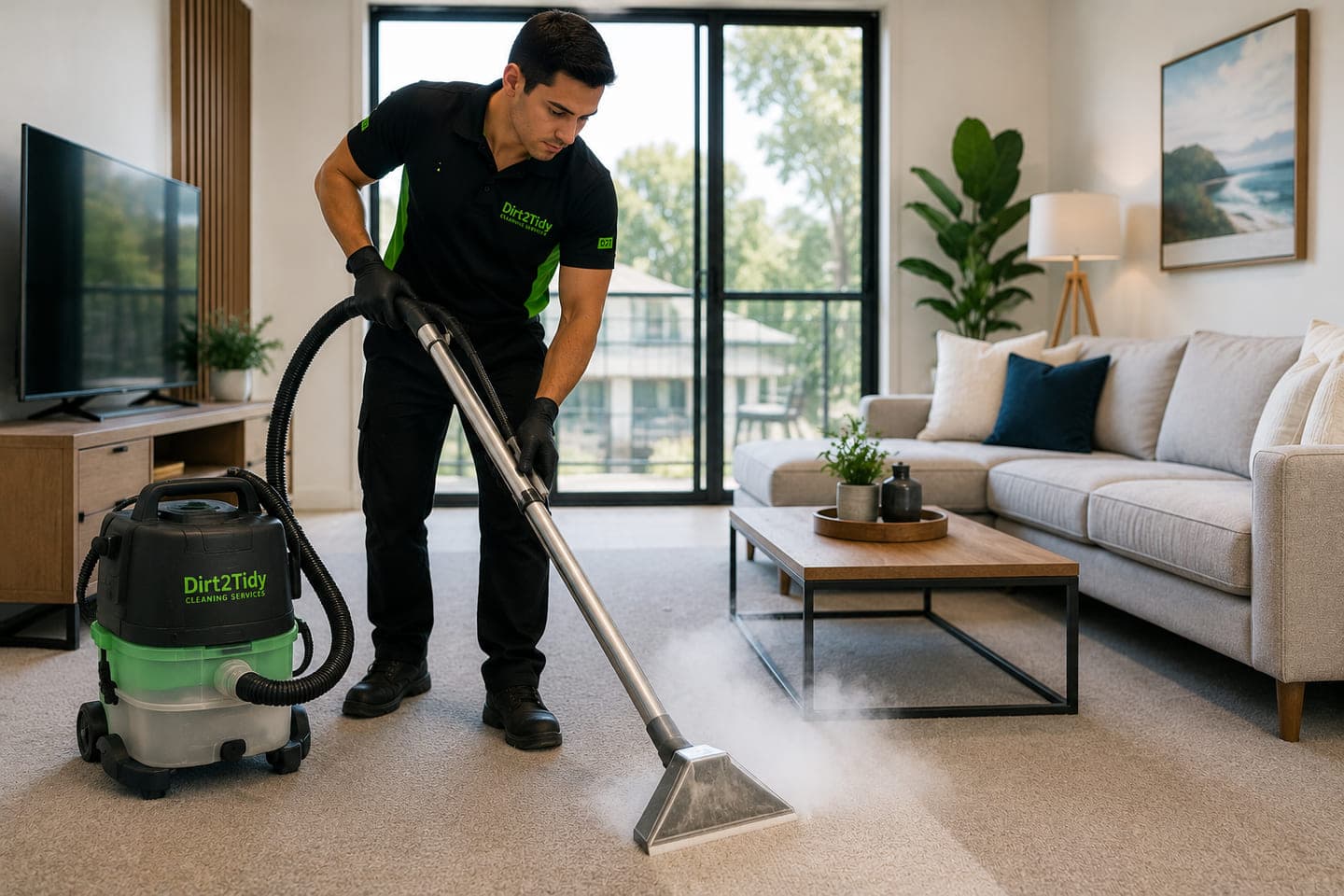
If you are deliberately doing the minimal-chemistry version, do it properly: vacuum far more aggressively than feels necessary before any moisture goes near the carpet, since extraction cannot retrieve dry soil that was never lifted, then work hot tap water through the machine in slow, overlapping passes and finish with two or three dry vacuum-only passes per line to pull moisture back out of the backing.
Keep the machine moving toward an exit, groom the pile with the wand or a carpet rake while damp, and force airflow for drying because a soaked carpet that stays wet overnight is how wicking, odour and backing damage begin, and remember that a household vacuum cannot rescue an over-wetted carpet, which is the equipment limit covered in the note on regular vacuums and wet carpet.
Expect improvement, not reset: grey traffic lanes and any oil-based marks will still be there when dry, and that is the chemistry, not your effort. Wool and natural-fibre carpets deserve extra caution around any moisture load, which is the care reasoning summarised against wool staining in the previously measured bremworth guidance.
The residue paradox that drives both camps
Industry argument around water-only service runs in two directions, and both are grounded in the same fact, that what you leave behind controls how fast the carpet re-soils.
The case for minimal chemistry is residue: leftover detergent acts like a dirt magnet, which is why cheap quick-service cleans visibly grey back within weeks, a point Australian chemical maker Actichem makes directly about clear-water myths, its measured technical position being that an un-neutralised pre-spray residue attracts soil precisely because it was never properly rinsed or emulsified out.
The case against pure water is that a rinse with no emulsifier leaves the deep sticky soil suspended too poorly to extract, so the carpet ends up both under-cleaned and still holding residue.
The professional middle is small, deliberate doses of well-formulated product followed by thorough, genuinely clean rinsing, not the absence of one or the worship of the other.
Deciding your actual case
Choose by soil type and stakes rather than ideology. A low-traffic synthetic lounge with recent dust and a spill or two is a reasonable water-and-vacuum project.
A hallway, a family room with pets, or anything oily, needs surfactant chemistry or it is decoration, and pet odour in particular is not a water problem, the urate salts and bacteria that generate it sit deep in backing and pad where blot-level moisture never reaches.
For rental exits the standard is set by the entry condition report, so a water-only pass that leaves traffic greys visible is risk you are choosing knowingly, and the receipt from a full extraction visit is often the line item the report rewards; the economics of hiring that proper carpet steam cleaning pass before handover are covered in the move-out guides, and the scope a technician should be held to is the same one the end-of-lease cleaning checklist describes.