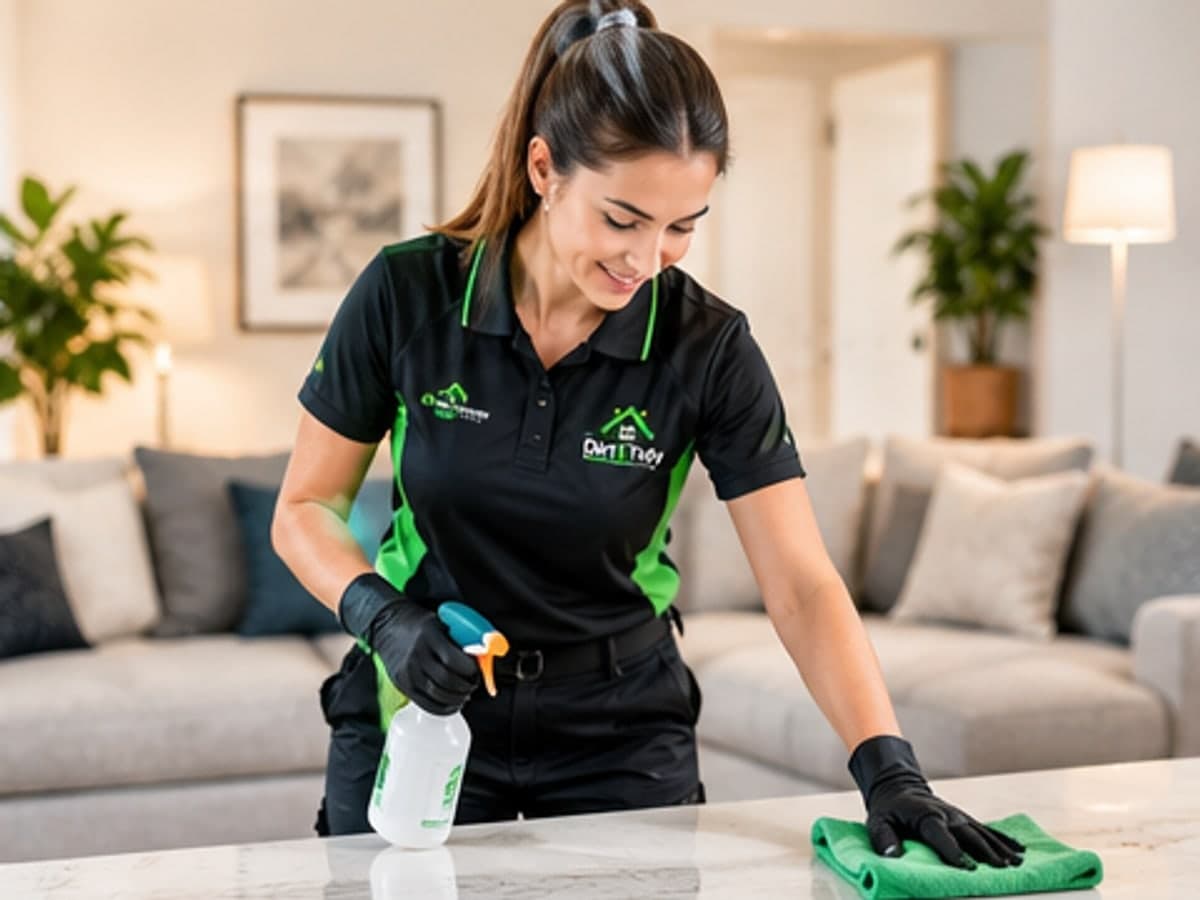
Match the cleaner to the surface and soil
Use a product only on surfaces named by its label. Timber, stone, glass, painted finishes, food-contact areas and electronics may need different methods. Test an unfamiliar product discreetly when appropriate and stop if the finish changes. For persistent or specialist residue, identify the material before choosing a stronger cleaner.
Read directions and use the right amount
Follow dilution, dwell time, ventilation, protective-equipment and rinsing instructions. More product is not necessarily more effective and can leave residue. Keep cleaners away from children, pets, food and heat sources as directed, and never combine products.
Do not confuse cleaning with disinfection
A general-purpose cleaner may remove visible soil but does not automatically claim to kill particular germs. Use a disinfectant only when the task calls for it and the label identifies that use and method. Do not assume a scent, plant-derived ingredient or ‘green’ phrase proves a health or safety benefit.
Avoid improvised recipes and broad rankings
Household ingredients can react with each other or damage surfaces, and product formulas vary. Do not mix vinegar, bleach, ammonia, peroxide or other cleaners. Compare current label directions and surface compatibility rather than relying on an old brand list or unverified product rankings.