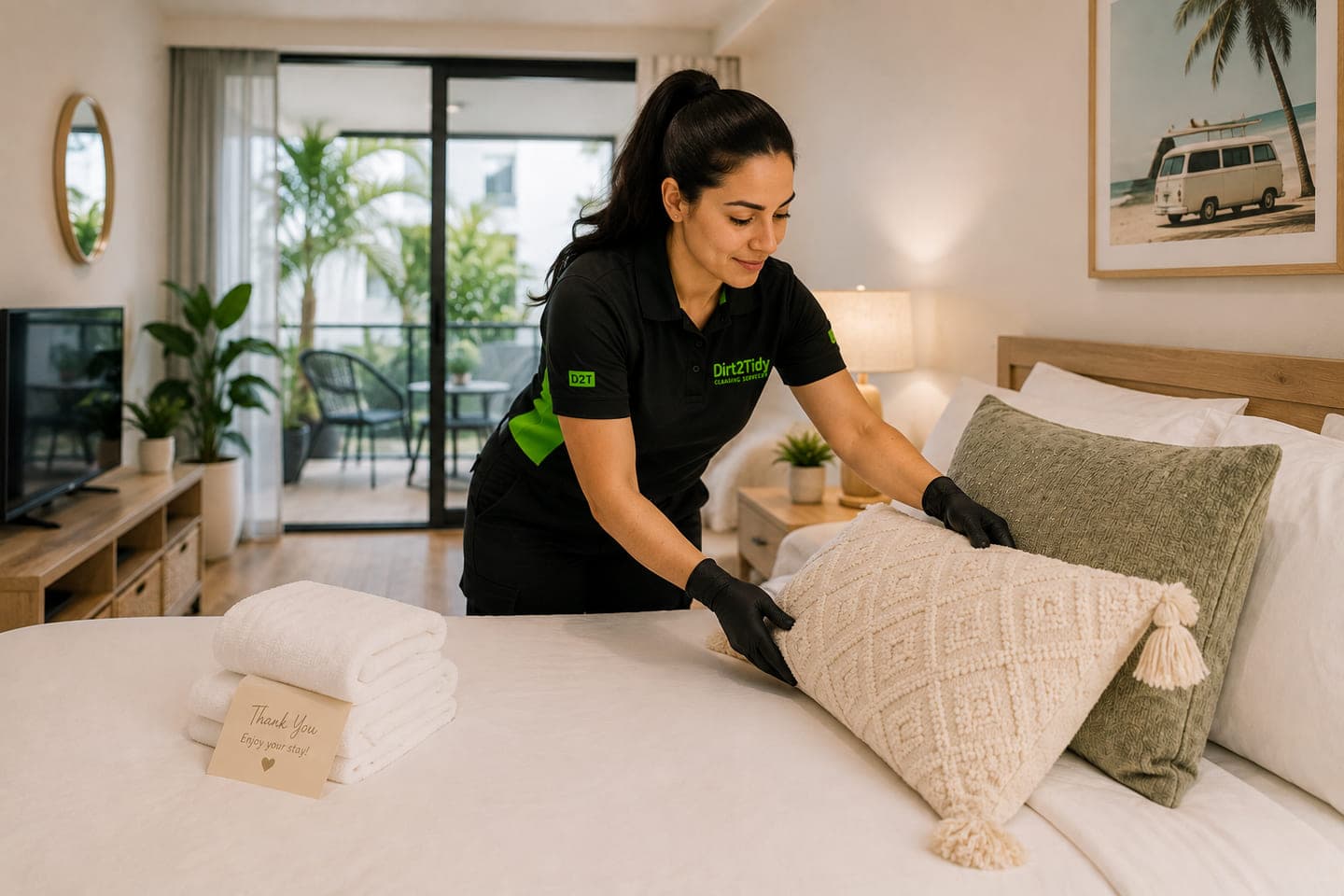

Short-stay turnover is its own trade
A domestic clean runs on a weekly rhythm at a comfortable pace; a turnover runs inside a hard window, often the five hours between ten am checkout and three pm check-in, graded by the next paying guest, with no client standing there to brief the cleaner.
Specialist operators build around that shape: checkout-peak staffing, weekend rotation, and the Victorian event calendar that compresses demand across the same weekend in a same city, the AFL finals, the Australian Open, the Grand Prix.
Holiday House Manager's Australian host guide, published by a Melbourne short-stay management team, states the distinction plainly: the job covers the full reset clean, fresh linen every change regardless of appearance, restocking consumables, damage and inventory checks, and working to a written checklist, and a candidate who treats any of those five as optional is quoting house cleaning, not turnovers.
The neighbouring confusion, turnover versus a bond-exit clean, is unpacked in the guide to Airbnb versus end-of-lease cleaning. When shortlisting, ask directly what share of the company's week is short-stay changeovers; a specialist talks naturally about checkout windows and calendar integration, a generalist offers an hourly rate and a Tuesday slot.
Capacity you can pin down in writing
Same-day capability is a logistics claim, so test it as one: can they take a ten am checkout with a three pm arrival at this address, how much notice does that need, and which suburbs do their teams live in?
Melbourne response time is geography, a crew based in the south-east covering a CBD apartment is a different promise than a Fitzroy team covering Collingwood, and operators that cannot state their coverage answer are sub-contracting outward invisibly.
Working turnarounds published by experienced providers run roughly sixty to ninety minutes for a one-bedroom, ninety to a hundred and twenty for a two, two to three hours at three bedrooms or up, treated as planning figures with buffer, not promises; ask what turnaround the company will commit for your property and size, and watch whether they give a number at all.
One cleaner with no bench is the common hidden failure: single-operator quoting looks premium right up to the first sick day, so the question that separates a company from a person with a vacuum is who covers, who is trained on your property specifically, and how much notice the host gets.

Verification, not vibes: the quality-control stack
Because the guest is the inspector, the host needs evidence produced before the review happens.
The standard that serious Melbourne operators now publish, and that specialist guides like Qbees' host checklist describe as the differentiator, is photo verification after every clean, sent before the job is marked complete, ideally with a second-person cross-check or random in-person inspection on a rotation.
Ask exactly what photos are standard, whether they include the beds stripped and remade, bathrooms, and the consumables shelf, and where they are stored.
Pair that with the damage question: the cleaner is the only person inside the property between guests, which makes them the host's inspection point, a cracked cooktop found today is a claim, found three bookings later is an expense; the right answer is a same-day reporting channel attached to the completion photos, not a monthly email.
A provider with none of these mechanisms is asking you to manage quality through review anxiety, which is not a system, and guest ratings themselves can never be promised, no cleaner controls them, and honest operators say so before you have to ask.
Linen, consumables and the quiet cost lines
Changeover pricing in Melbourne hides more variance here than anywhere else: does the per-turnover fee include laundering (where, at what temperature, what turnaround), linen hire with hotel-grade whites or restocking from your cupboard, or none of it, with towels re-hung because they look dry?
Silvers Laundry's Melbourne guide makes the practical point that a single clear scope beats a low base price with add-ons, and consumables ambiguity is the classic generator of the spotless-but-no-toilet-paper review.
Get written: who supplies consumables and replacements, linen laundering and replacement pricing, and the per-turnover rate card by bedroom count, because hourly pricing for a turnover punishes the host for the provider's inefficiency and rewards nothing.
Flat per-changeover pricing is the industry-standard shape for exactly that reason, and any quote dramatically under the field should be answered with the question the guides all anticipate: what is being skipped?

Trial, shortlist, and the paperwork that ends disputes
Run the hire like a hire: shortlist three providers rather than falling in love with one, because this role must be filled at every changeover and a shortlist of one is how hosts end up scrubbing grout on Sunday themselves.
Give the trial candidate the written property guide first, room-by-room checklist, where supplies live, bed configurations and linen counts, access and parking notes, and a staged photo of each room in its correct final state, then score the trial clean against the same list you would use on the guest's first night.
Before committing: ABN verifiable on the register, a certificate of currency for public liability from an insurer rather than a promise, one named communication channel that stays the channel, calendar or PMS integration if your bookings move fast, and a written cancellation and reschedule policy, since guests extend, leave late and vanish, and the changeover machine must absorb that without renegotiation.
Melbourne hosts comparing service options can see the turnover scope Dirt2Tidy runs on the Melbourne Airbnb cleaning page, the same checklist discipline the programme publishes for the full turnover checklist applies city-wide, and portfolio operators with ten doors should read the guide to managing Airbnb cleaning before signing any schedule.