Notice where the problem occurs
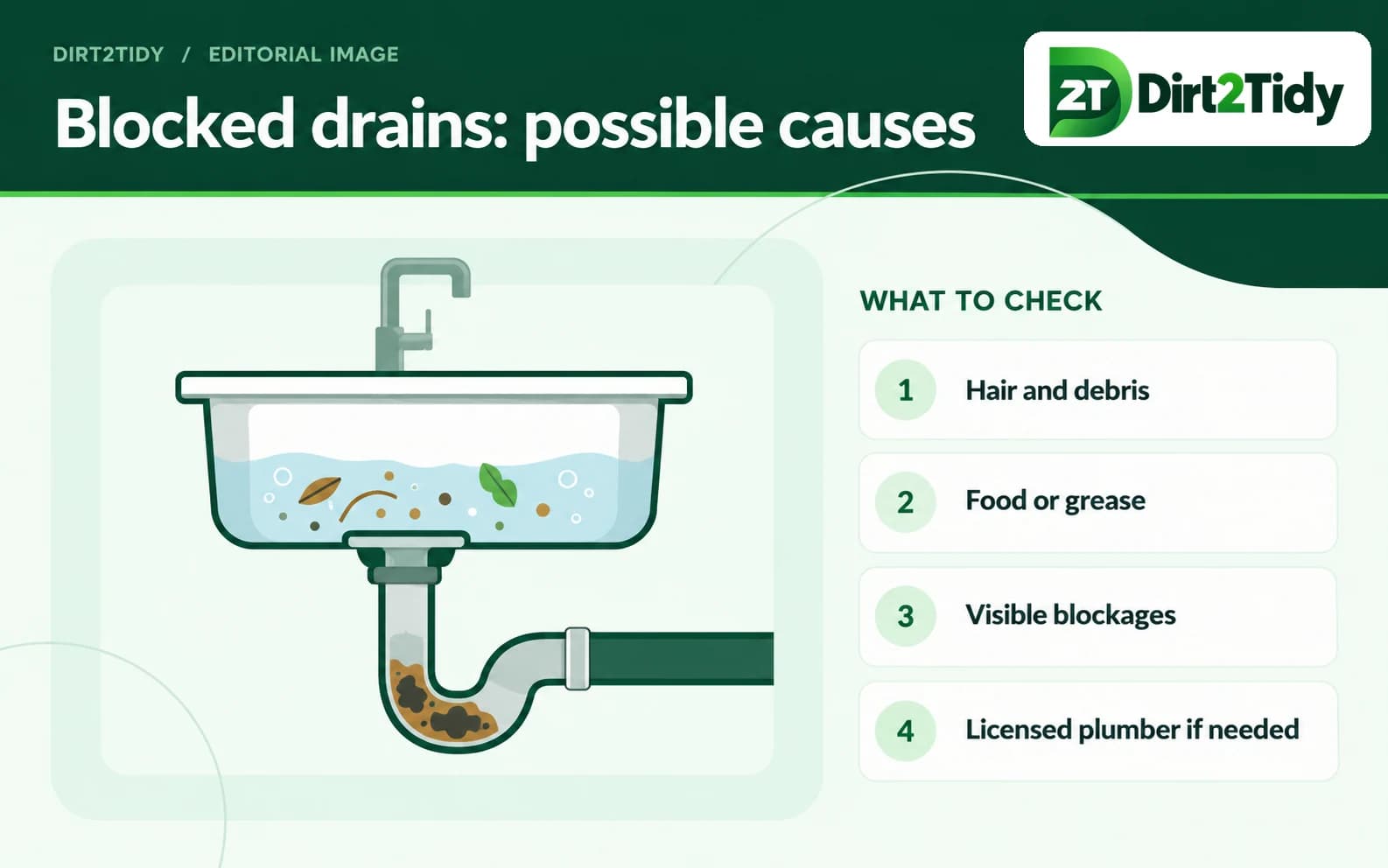
Record whether one sink or several fixtures are affected, when drainage changed and whether there is an odour, leak or recurring backup. In a bathroom, visible hair may collect around an accessible strainer. In a kitchen, food and grease may contribute to residue.
These observations do not establish where a blockage is located or rule out a plumbing defect.
Consider waste and surface residue separately
Hair, wipes, sanitary products, food scraps and other objects do not belong down a drain. Grease can collect in plumbing even when it looks liquid in the sink. Keep ordinary waste in the appropriate bin and clean an accessible removable strainer only as its instructions permit.
Do not dismantle pipework or force tools into the drain to confirm a suspected cause.

Recognise problems cleaning cannot diagnose
A recurring blockage, multiple slow fixtures, sewage backup, water entering another fixture or a leak needs the property manager or a licensed plumber. The cause may be beyond the visible opening. Stop using affected fixtures when continued use could cause an overflow, and tell the plumber about any product already poured into them.
Plan ordinary cleaning after the fault is resolved
Once the plumbing issue is controlled and the area is safe, clean suitable sink, bench and bathroom surfaces with material-compatible products. Keep sewage, contaminated waste and unknown chemicals outside an ordinary cleaning scope. Dirt2Tidy can discuss domestic cleaning of agreed accessible surfaces; plumbing diagnosis and drain unblocking are not part of that service.