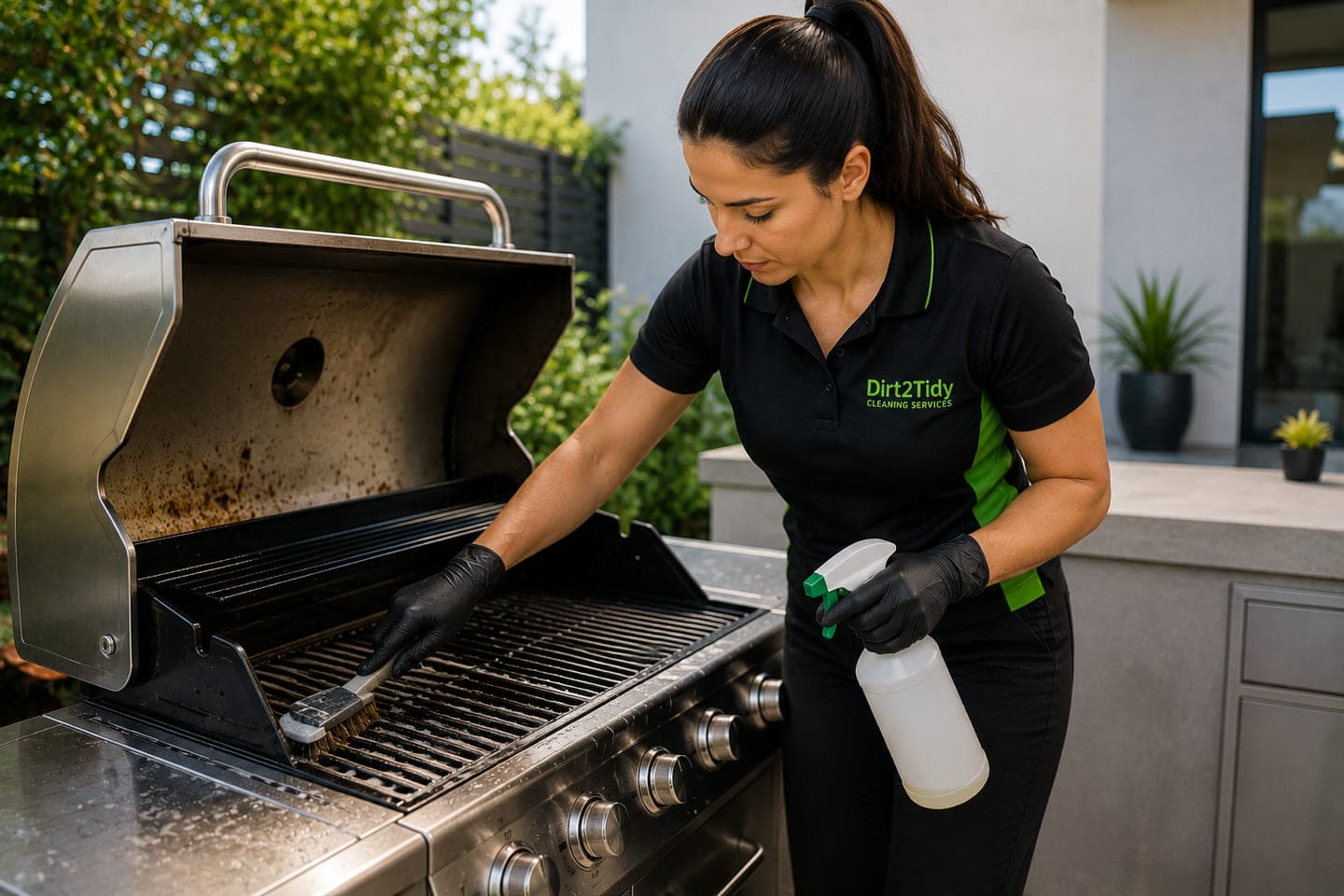
1. Identify the appliance
Record the brand, model and fuel type from the identification plate or purchase documents. Find the current manual for that exact BBQ. If the model or coating is unknown, do not infer care instructions from a similar-looking appliance.

2. Read preparation and cooling directions
Use the manual to determine how the appliance should be switched off, cooled and prepared. Do not clean while it is operating or disconnect fixed gas or electrical components. If you notice a gas smell, damaged hose or wiring, failed ignition or other fault, stop and contact the supplier or a qualified technician.
3. Plan the areas and parts separately
List the exterior, cooking surface, removable tray and accessories as separate items. The manual determines which components are user-removable and how they should be refitted. Do not dismantle burners, valves, ignition parts or gas connections, or force a component that will not release.
4. Match cleaner and tool to the task
Check the appliance maker’s directions and the exact product label for the surface, intended use and precautions. Do not assume a product suitable for a stainless panel also suits a coated grate or painted lid. Avoid unlabelled products and improvised mixtures; never mix cleaners.
5. Follow instructions for residue and re-use
Where the manual and product label permit a cleaner near a cooking surface, follow their directions for rinsing, residue, drying and return to use. A clean appearance does not certify food safety, disinfection or appliance condition.
6. Recheck before using the BBQ
Use the manual to confirm any user-removable parts are correctly refitted and the appliance is ready for its normal operation. If parts are damaged, missing, corroded or do not fit as instructed, do not operate the BBQ; contact the manufacturer or a qualified technician.